
Indoor Air Quality Testing Post Fire Damage

Table of Contents
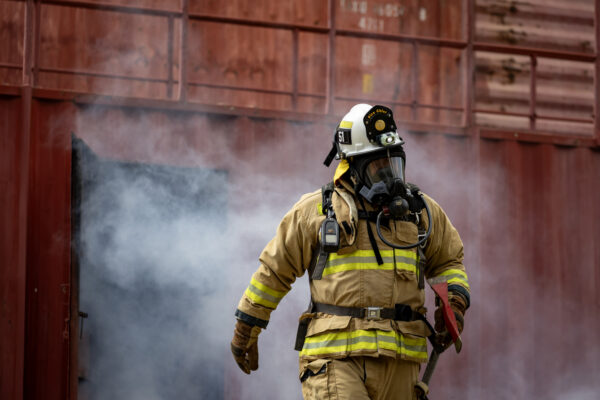
A fire doesn’t end when the flames go out. Combustion byproducts settle into surfaces, circulate through HVAC systems, and linger in the air long after a building looks clean. What appears safe on the outside can still carry a complex mix of contaminants that are impossible to detect by sight or smell alone.
For property owners, facility managers, EHS professionals, and restoration contractors, that creates one critical question: is the building actually safe to re-enter?
Post-fire indoor air quality is rarely straightforward. Smoke migrates unpredictably, materials burn into vastly different chemical profiles, and contamination can spread well beyond the original fire zone. Even wildfire smoke infiltration can leave measurable impacts in buildings that never experienced direct fire damage. Without structured testing, re-occupancy decisions are based on incomplete information.
Indoor air quality testing provides the objective data needed to move past that uncertainty, including confirming what is present, what has been removed, and whether a space is genuinely ready for re-occupancy.
Key Takeaways:
- Fire damage creates complex, multi-source indoor air contamination that varies based on what burned (synthetics, wood, plastics, electronics), how it burned, and how smoke migrated through the building and HVAC systems.
- Health risks range from immediate symptoms to long-term exposure concerns, including respiratory irritation, headaches, and potential chronic exposure to carcinogens like benzene, PAHs, VOCs, and heavy metals that can persist long after visible smoke clears.
- Air quality after a fire is highly variable and time alone is not a reliable indicator of safety—some contaminants dissipate within weeks, while others remain embedded in surfaces and dust for months, requiring professional verification.
- Accurate assessment depends on structured indoor air quality testing after fire damage, including proper sampling, laboratory analysis, and post-remediation verification rather than visual inspection or odor clearance.
- Choosing an independent, ISO 17025:2017 accredited testing laboratory is critical, especially for insurance, compliance, or legal contexts, ensuring defensible data that supports safe re-occupancy decisions.
Why Indoor Air Quality After a Fire Is More Complex Than It Appears
Post-fire air quality assessment is rarely straightforward. The risk profile depends on what burned, how intensely, how long exposure lasted, and how the building is constructed, meaning a residential structure fire, a wildfire event, and an industrial facility fire can each produce an entirely different contamination profile even when the visible aftermath looks similar.
Wildfire events add another layer of complexity. Buildings that never experienced direct flames can still be significantly impacted through smoke infiltration, because fine particulates and combustion gases enter through ventilation systems, building envelope gaps, and pressure differentials, leaving behind contamination that isn’t visible but remains a real health concern.
For these reasons, post-fire indoor air quality cannot be assessed through visual inspection alone. It requires targeted testing aligned to the specific fire event and building conditions.
What Burns Determines What You’re Breathing
The materials involved in a fire directly determine the chemical profile of the resulting contamination. Modern buildings are composed of a wide mix of synthetic, treated, and composite materials, each producing distinct byproducts when burned.
- Synthetic materials (plastics, upholstery, wiring insulation): Can release volatile organic compounds (VOCs), benzene, hydrogen cyanide, and dioxins. These compounds are often toxic at very low exposure levels and may persist as residual off-gassing after the fire is extinguished.
- Treated wood and construction materials: Often produce formaldehyde and other aldehydes, which are respiratory irritants and can contribute to long-term indoor air quality degradation.
- Plastics and polymers: Common in furniture, flooring, and fixtures, they generate a complex mix of VOCs and semi-volatile organic compounds that can bind to soot particles and settle on surfaces.
- Metals and electronic components (wiring, appliances, circuit boards): Can release heavy metals such as lead, as well as copper and other trace contaminants, which may become airborne in particulate form during combustion.
This variability means fire air quality hazards are never uniform. Two buildings exposed to “similar” fire conditions may require completely different testing strategies depending on their material composition and burn dynamics. Effective fire service air quality testing must therefore be tailored to the specific incident rather than relying on generalized assumptions.
How Smoke and Soot Migrate Through a Building
One of the most underestimated aspects of post-fire contamination is how far smoke and soot can travel beyond the visible damage zone. Fire byproducts often disperse rapidly through interconnected building systems.
HVAC systems are a primary distribution pathway. Once smoke enters ductwork, it can circulate fine particulate matter and odor-causing compounds throughout the entire structure, including rooms that were never directly exposed to flames or visible smoke.
In addition, contaminants can penetrate:
- Wall cavities and insulation layers
- Ceiling voids and subfloor spaces
- Electrical conduits and plumbing chases
- Elevator shafts and stairwells in multi-story buildings
This internal migration is especially important in wildfire air quality scenarios, where smoke infiltration occurs without any structural fire involvement. Buildings may appear unaffected externally while still accumulating measurable levels of particulate matter and VOCs indoors.
As a result, relying on visual cleanliness or odor dissipation alone is not a reliable indicator of safety. Contaminants can persist in hidden building systems long after the fire event, requiring structured indoor air quality testing post fire damage to confirm whether remediation has been effective.
Contaminant Categories by Fire Type
| Fire Type | Primary Contaminants | Health Concern Level | Key Testing Parameters |
| Structure Fire (Residential/Commercial) | VOCs (benzene, formaldehyde), soot (PM2.5/PM10), hydrogen cyanide, dioxins | High to Severe | VOC sampling, particulate monitoring, surface contamination testing |
| Wildfire Smoke Infiltration | Fine particulate matter (PM2.5), carbon monoxide traces, organic aerosols, ozone precursors | Moderate to High | Ambient particulate testing, indoor/outdoor air comparison, HVAC assessment |
| Industrial/Facility Fire | Heavy metals (lead, mercury), complex VOC mixtures, acid gases, combustion byproducts from chemicals | Severe | Targeted chemical speciation, metal screening, hazardous gas detection |
| Electrical/Equipment Fire | Plastic-derived VOCs, dioxins, carbon-based particulates, metal residues | High | VOC profiling, particulate load analysis, residue surface testing |
Health Risks Associated With Fire Damaged Indoor Air Quality
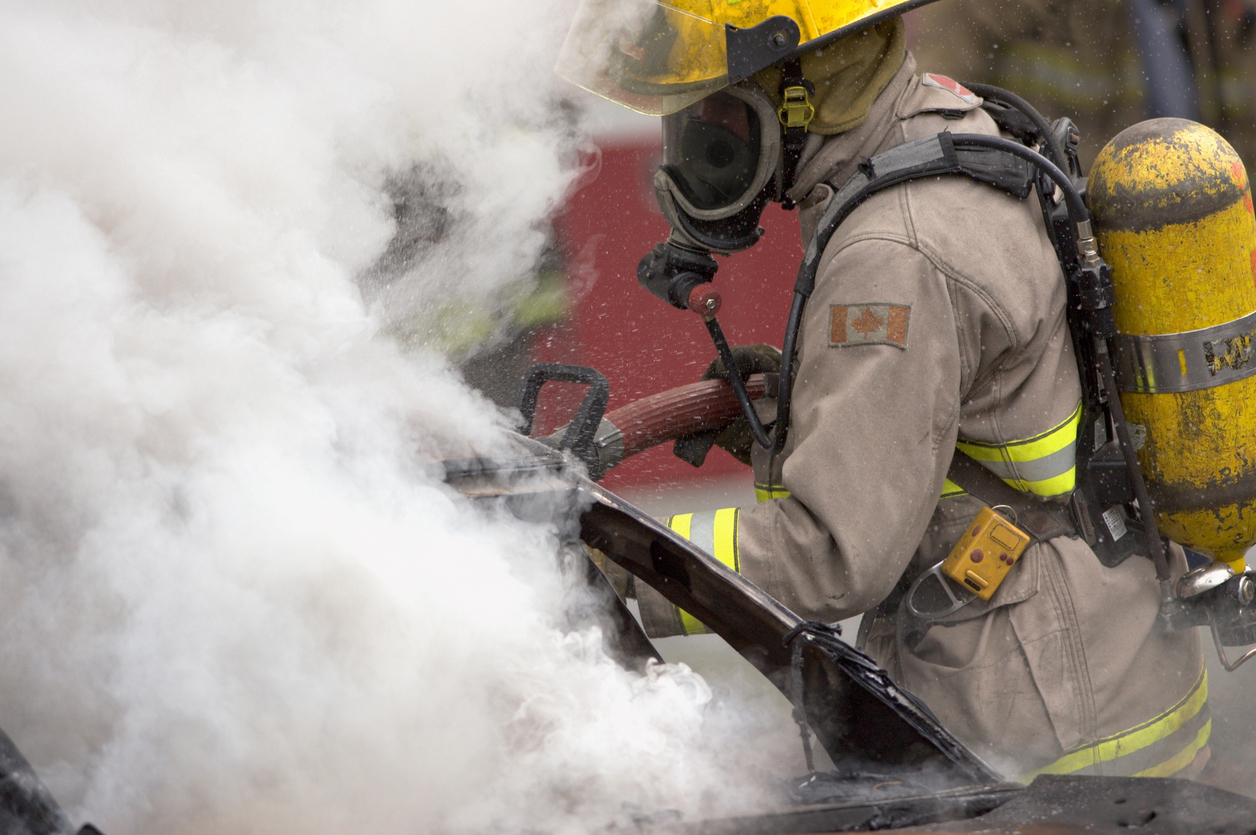
For property owners, facility managers, and restoration teams, the central question after a fire is straightforward: is the building actually safe to occupy?
The challenge is that post-fire health risks don’t present in a single, obvious way. In the short term, occupants may experience respiratory irritation, headaches, dizziness, or eye discomfort — even after visible smoke has cleared, making these symptoms easy to dismiss. Over the longer term, the concern shifts to chronic exposure from compounds that persist in dust, soot, and porous materials long after the fire event: benzene, polycyclic aromatic hydrocarbons (PAHs), heavy metals, and other carcinogenic substances that remediation may not fully address without verification.
Because of this dual-layer risk profile, post-fire safety cannot be assumed based on appearance or odor. It must be confirmed through structured indoor air quality testing.
Short-Term Symptoms After Fire Exposure
Acute health effects from fire-damaged indoor environments are often the first indicator that air quality has been compromised. These symptoms typically occur during or shortly after exposure and may include:
- Coughing or throat irritation
- Eye redness or burning sensation
- Headaches or lightheadedness
- Unusual or metallic taste in the mouth
- Mild nausea or general discomfort
Importantly, these symptoms are not limited to individuals inside directly burned structures. Research has shown that even occupants of nearby or adjacent buildings can experience measurable health effects following fire events.
One study of smoke-damaged homes found that headaches and unusual taste in the mouth were statistically significantly associated with proximity to destroyed buildings, highlighting how far-reaching smoke exposure can be in real-world conditions.
This reinforces a critical point for post-fire decision-making: absence of visible damage does not equal absence of exposure.
Long-Term Risks From Lingering Contaminants
While acute symptoms are often the most noticeable, the more serious concern in many fire-damaged environments is long-term exposure to residual contaminants that remain embedded in the building.
Key persistent hazards include:
- PAHs (polycyclic aromatic hydrocarbons): These compounds form during incomplete combustion and can adhere to surfaces, dust, and soot particles. Many PAHs are classified as carcinogenic or potentially carcinogenic with repeated exposure.
- Semi-volatile organic compounds (SVOCs): These chemicals can off-gas slowly over time and accumulate in indoor dust, particularly in porous materials such as carpets, drywall, and insulation.
- Heavy metals in ash and soot: Elements such as lead or other metallic residues can persist in settled particulates and may become resuspended through normal indoor activity.
- Residual VOCs: Volatile organic compounds often remain elevated in indoor air for days to weeks following a fire event before gradually declining, even with ventilation and cleaning.
Studies on post-fire environments indicate that VOC concentrations can remain elevated for weeks, with gradual reduction over an approximate five-week period depending on ventilation, remediation effectiveness, and material porosity. However, decline in airborne concentration does not necessarily mean full decontamination has occurred, especially when residues remain in building materials.
The key takeaway is that post-fire indoor air quality cannot be assumed to be safe simply because smoke has cleared or odors have dissipated. Chemical residues may continue to pose exposure risks long after visible signs of fire damage are gone.
How Long Is Air Quality Bad After a Fire?
There is no single fixed timeline for how long indoor air remains contaminated after a fire, because persistence depends entirely on the type of pollutants involved and the characteristics of the building environment.
In general:
- Volatile organic compounds (VOCs): Often decrease over a period of days to weeks, especially with effective ventilation and filtration.
- Fine particulate matter (PM2.5/soot): Can linger in settled dust and re-enter the air through disturbance if not properly removed.
- PAHs and semi-volatile compounds: Are significantly more persistent indoors due to their low vapor pressure and tendency to bind to surfaces, potentially remaining for months after the initial fire event .
This variability makes time an unreliable standalone indicator of safety. A building that “smells clean” or has been ventilated for several weeks may still contain embedded contaminants that are not detectable without testing.
For this reason, professional indoor air quality testing after fire damage is the only reliable method to confirm whether air quality has returned to safe, occupiable conditions. It provides objective data on whether contaminants have truly been removed or are still present at levels of concern.
Contaminant Persistence Timeline
| Contaminant Type | Typical Duration | Driving Factors | Remediation Approach |
| VOCs (e.g., benzene, formaldehyde) | Days to ~5 weeks | Ventilation rate, material off-gassing, temperature | Air exchange, activated carbon filtration, source removal |
| Fine Particulate Matter (PM2.5 / soot) | Weeks to months (if embedded) | Surface porosity, HVAC circulation, cleaning effectiveness | HEPA vacuuming, duct cleaning, surface decontamination |
| PAHs (polycyclic aromatic hydrocarbons) | Weeks to months+ | Combustion intensity, material type, surface absorption | Deep cleaning, material removal, encapsulation |
| Heavy Metals (lead, mercury, etc.) | Months to potentially long-term | Ash deposition, dust resuspension, poor containment | Specialized hazardous cleaning, dust control, surface testing |
Finding Local Fire Damage Indoor Air Quality Testing Services
In active fire recovery, decisions about re-entry, remediation scope, insurance documentation, and occupant safety move quickly. Choosing the right testing provider directly affects liability, timeline, and confidence in the outcome.
Not all fire restoration air quality services are equivalent. Some providers focus primarily on cleanup and remediation; others specialize in independent verification. Understanding that distinction matters before commissioning any testing.
Accreditation and Independence Matter
For properties involved in insurance claims, regulatory review, or potential litigation, laboratory accreditationis required. An ISO 17025:2017 accredited laboratory operates under internationally recognized standards for competence and analytical validity, meaning results are technically sound and defensible when scrutinized.
Independence matters equally. When a restoration contractor performs both remediation and post-cleanup testing, a conflict of interest exists—the same entity validating the work is responsible for it. That dynamic can weaken the credibility of findings in insurance or legal contexts.
TRI Air Testing operates as an ISO 17025:2017 accredited laboratory through A2LA and AIHA, providing objective, third-party analysis for situations where accuracy and defensibility are non-negotiable. For property owners, insurers, and legal teams, that independence ensures conclusions are grounded in science rather than operational incentives.
On-Site Sampling vs. Self-Collected Kits
When arranging fire damaged indoor air quality testing, there are generally two sampling approaches: professional on-site sampling or self-collected kits sent to a laboratory.
On-site professional sampling involves a trained technician collecting air and surface samples directly from the affected environment. This approach is particularly valuable in complex fire scenarios where:
- Multiple contaminant types are suspected (VOCs, PAHs, particulates, metals)
- HVAC systems or building-wide contamination is likely
- Insurance documentation or legal defensibility is required
- Results may influence occupancy decisions or remediation scope
Because sampling conditions, location selection, and chain-of-custody procedures are controlled by a qualified professional, the resulting data is typically more robust and defensible.
Self-collection kits, on the other hand, offer convenience and speed. These kits allow property owners or facility managers to collect samples themselves and send them to a laboratory for analysis. They can be appropriate for simpler scenarios or preliminary screening where the primary goal is to establish whether further investigation is needed.
TRI Air Testing supports both approaches, allowing clients to choose the level of involvement that matches their situation. whether that is rapid screening or fully documented, professionally collected sampling for formal reporting.
What to Ask a Fire Damaged Indoor Air Quality Testing Service
Before engaging any provider, it is important to ask targeted questions that clarify both technical capability and reporting quality.
A credible fire restoration air quality services provider should be able to answer these questions clearly:
- Is the laboratory ISO 17025:2017 accredited, and by which accreditation body?
- What specific contaminants are included in the testing panel (VOCs, PAHs, particulates, heavy metals, etc.)?
- What is the typical turnaround time for laboratory results and final reporting?
- Does the final report include interpretation and actionable recommendations, or only raw data?
- Does the provider have demonstrated experience with both structure fire and wildfire air quality scenarios?
These questions help distinguish between basic sampling services and providers capable of delivering defensible, decision-ready data. In post-fire environments where safety, insurance approval, and re-occupancy timelines are on the line, that distinction becomes critical.
Conclusion: Air Quality Testing After Fire: What Comes Next
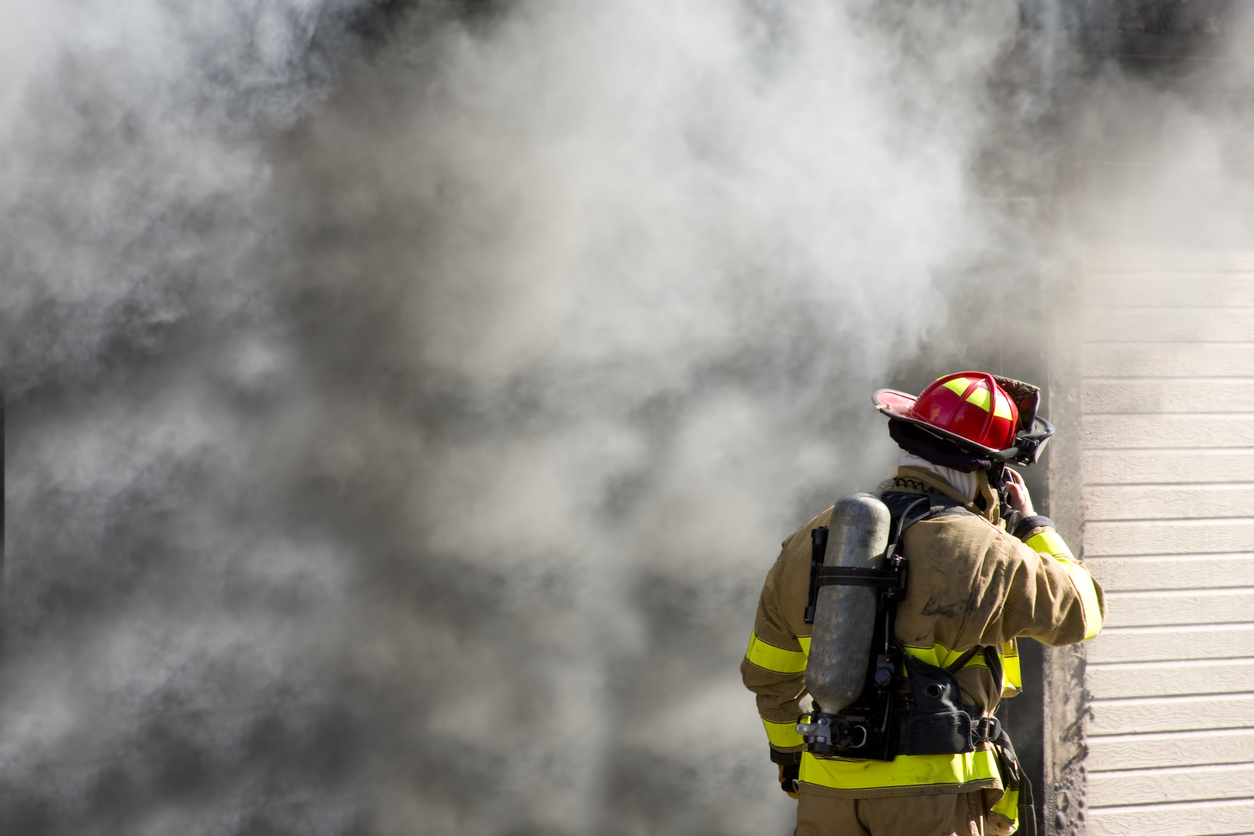
Visible damage can be repaired and odors can fade, but chemical and particulate contamination can persist in air, dust, HVAC systems, and porous building materials long after a space appears clean. The only reliable path to confident re-occupancy is structured, science-based testing — not assumptions based on time or appearance.
Effective post-fire recovery follows a clear sequence:
- Initial assessment: Identify the scope of fire impact, contaminant types, and affected zones, including hidden areas and HVAC pathways.
- Pre-remediation testing: Establish a contamination baseline to guide remediation strategy and ensure nothing is missed.
- Remediation: Remove soot, residues, and damaged materials; clean air systems and surfaces based on identified contaminants.
- Post-remediation verification: Independent testing to confirm contaminant levels have been reduced and the space is safe for re-occupancy.
Each stage depends on the quality of the data collected. Without reliable testing, remediation outcomes can’t be objectively verified and re-occupancy decisions remain exposed to challenge from occupants, insurers, and regulators.
TRI Air Testing is an ISO 17025:2017 accredited laboratory through A2LA and AIHA, providing independent, defensible analysis for structure fire and wildfire air quality scenarios.
Contact us today to schedule post-fire indoor air quality testing tailored to your facility’s needs.


The Original Compressed Air and Pure Gas Testing Laboratory

Related Articles

Review: FRI 2011, Atlanta
TRI Air Testing’s Sandra Dudek was in Atlanta recently for the International Association of Fire...
The 6th Industrial Fire, Safety & Security Show
The 6th Annual Industrial Fire, Safety & Security Show will be held November 30-December 1, 2011...
Happy Holidays to Our Overseas Soldiers & Firefighters
In its weekly e-newsletter, Fire Chief magazine highlighted American firefighters serving as soldiers in Iraq,...
