
Air Testing: The Complete Guide to Quality & Safety

Table of Contents
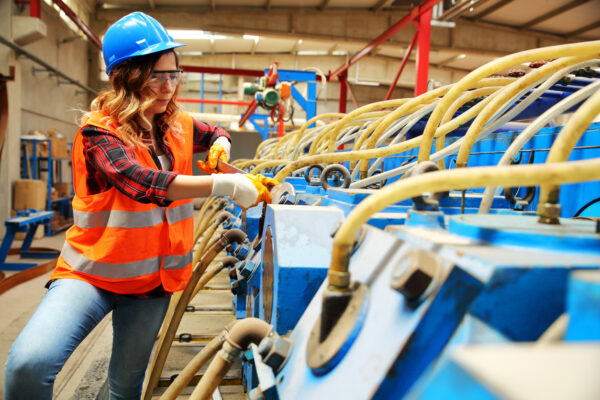
Every facility that relies on compressed air, controlled environments, or worker breathing zones is making a quiet assumption: that the air meets the standard it’s held to. Contaminants like oil aerosols, particulates, microbial growth, and toxic gases rarely signal a problem until one already exists — and by then, the compliance or safety consequences are already in motion.
Air testing is what closes that gap. It converts environmental conditions into measurable, documented data that connects directly to the standards regulators, auditors, and customers expect facilities to meet. From compressed air purity and breathing air verification to indoor environmental assessments and industrial exposure monitoring, the application varies, but the underlying need is the same.
For quality managers, Environmental Health and Safety (EHS) leaders, and facility engineers, the challenge is knowing how to apply the right methods, interpret the right standards, and select a testing partner whose results will hold up when it counts.
Key Takeaways
- Air testing detects and measures airborne contaminants across several disciplines: indoor air quality, industrial exposure monitoring, compressed air purity, and specialized contaminant analysis.
- The right approach depends on the environment. Indoor testing prioritizes occupant health, industrial testing addresses exposure limits, and compressed air testing targets compliance with standards like ISO 8573-1 and Grade D requirements.
- Accurate results require the right combination of sampling equipment, real-time sensors, and laboratory analysis, with each method serving a specific purpose.
- Standards like ISO 8573-1, OSHA Grade D, USP <670>, and GFSI frameworks define acceptable limits across industries, making standardized testing essential for audits and certification.
- Methodology matters, but so does who performs the testing. Laboratory accreditation and expertise directly affect whether results will hold up under regulatory or audit scrutiny.
What Is Air Testing? Definitions, Scope, and Why It Matters
Air testing is the structured scientific process of sampling, analyzing, and interpreting what is present in the air within a given environment. That includes airborne contaminants, gases, particulates, vapors, and biological agents that may impact human health, product integrity, or regulatory compliance.
In practice, “air testing” is not a single test but an umbrella term covering multiple specialized disciplines. Depending on the environment and risk profile, it may involve:
- Particulate and dust measurement (e.g., fibers, aerosols, dust loads)
- Chemical and gas analysis (e.g., VOCs, carbon monoxide, solvents, process gases)
- Biological contamination screening (e.g., mold spores, bacteria, bioaerosols)
- Compressed air purity verification for systems used in manufacturing or breathing applications
- Specialized contaminant detection such as asbestos fibers or industrial toxins
The core objective is consistent across all applications: to determine whether air quality meets defined safety, health, and regulatory standards and to provide defensible data for compliance, risk management, and operational control.
Because air is both invisible and constantly changing, testing becomes the only reliable method of validating conditions that otherwise cannot be observed. For regulated industries, it also forms the evidence base behind certifications, audits, and occupational safety programs.
The Difference Between Indoor Air Testing, Industrial Air Testing, and Compressed Air Testing
Although often grouped under the same “air testing” umbrella, different environments require very different methodologies, standards, and regulatory frameworks.
- Indoor air testing focuses on the quality of air in occupied spaces such as offices, schools, commercial buildings, warehouses, and residential environments. The primary concern here is human comfort and long-term health. Testing typically evaluates carbon dioxide levels, volatile organic compounds (VOCs), humidity, allergens, and microbial contaminants. These assessments are often tied to building performance, occupant complaints, or wellness standards rather than strict industrial regulation.
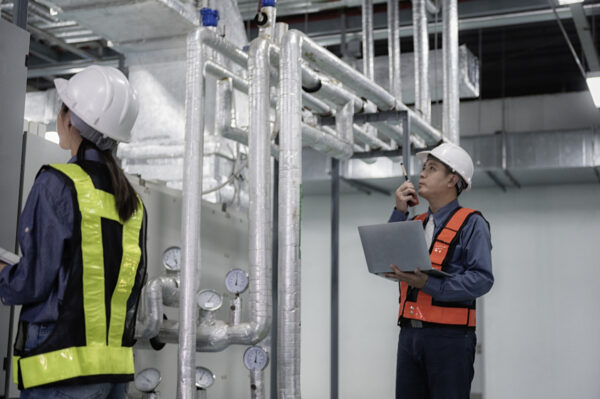
- Industrial air testing is driven by occupational health and safety requirements. It applies to environments such as factories, processing plants, confined spaces, and heavy industrial operations. Here, the focus is on worker exposure limits and regulatory compliance, particularly standards set by bodies like OSHA or equivalent national regulators. Monitoring may include hazardous gases, respirable dust, welding fumes, solvent vapors, and real-time exposure tracking in high-risk areas.
- Compressed air testing evaluates the purity of air used in production systems, process lines, or breathing air applications. This is one of the most strictly controlled categories because contamination can directly impact product safety or human life. Standards such as ISO 8573-1 define allowable levels of particulates, water, and oil content in compressed air. In sectors like food and beverage, pharmaceuticals, and medical device manufacturing, compressed air is often treated as critical, requiring validated testing to ensure it is safe for direct or indirect product contact, or for breathing systems such as supplied air respirators.
Each of these categories operates under different risk assumptions, testing frequencies, and compliance requirements, but all rely on the same foundational principle: verified air quality data as the basis for safety and accountability.
Who Needs Air Testing Services?
Air testing is essential across a wide range of industries where air quality directly affects health, regulatory compliance, or product integrity. While it’s often associated with regulatory inspections, in practice it is most valuable when used proactively as part of routine quality and safety management systems.
Key users include:
- Food and beverage manufacturers, where compressed air and ambient air can directly or indirectly contact products, making contamination control critical for food safety certifications and audits.
- Pharmaceutical and biotech facilities, where air cleanliness impacts sterile production environments, cleanroom classification, and regulatory compliance.
- Industrial manufacturing plants, where airborne particulates, fumes, and gases can pose occupational hazards and trigger exposure limit violations.
- Co-packers and packaging facilities, where shared production environments require consistent verification of air purity to protect multiple client brands.
- Military and defense installations, where breathing air quality and operational safety in controlled environments are mission-critical.
- EHS managers, responsible for identifying risks, maintaining compliance programs, and ensuring worker protection.
- Quality managers and compliance officers, who rely on validated air data to support audits, certifications, and customer requirements.
- Facility engineers and maintenance teams, who monitor system integrity, especially in compressed air systems and HVAC infrastructure.
Importantly, air testing is not always triggered by visible contamination or a clear failure event. In regulated and high-performance environments, it’s typically conducted as a preventive measure used to verify system integrity, maintain certification status, and reduce the risk of non-compliance before it occurs.
Types of Air Testing Equipment and How They Work
Air testing relies on specialized equipment designed to capture, measure, and analyze contaminants across different environments and regulatory requirements. The type of equipment used directly affects the accuracy, reliability, and compliance value of the results, especially in industrial and safety-critical applications.
Industrial Air Testing Equipment and Sampling Technology
Industrial air testing equipment is engineered for controlled sampling of airborne contaminants under real-world operating conditions. These tools are designed to collect representative samples without altering airflow characteristics or contaminant concentrations.
Common technologies include:
- Isokinetic sampling probes: Used to ensure air enters the sampling device at the same velocity as the surrounding airflow, preventing particle bias during collection.
- Impingers: Devices that draw air through a liquid medium to capture soluble gases and microbial contaminants for laboratory analysis.
- Cascade impactors: Multi-stage instruments that separate airborne particles by size, allowing detailed particulate profiling (critical in pharmaceutical and cleanroom environments).
- Filter-based collection systems: High-efficiency filters capture particulates, fibers, and aerosols for gravimetric or microscopic analysis in a laboratory setting.
A key differentiator in high-reliability environments is the quality and origin of the sampling hardware itself. TRI Air Testing uses patented air and gas sampling equipment originally engineered in 1975 for U.S. Navy Divers, designed specifically for mission-critical environments where sampling accuracy cannot be compromised.
Unlike off-the-shelf systems, this purpose-built instrumentation is optimized for stability, repeatability, and performance in demanding industrial and confined-space conditions.
Air Testing Sensors and Real-Time Monitoring Devices
Air testing sensors provide immediate, on-site insight into air quality conditions, making them essential for hazard detection and operational safety decisions.
Key device types include:
- Photoionization detectors (PIDs): Detect volatile organic compounds (VOCs) in real time by ionizing gas molecules and measuring resulting current.
- Electrochemical sensors: Used for detecting specific toxic gases such as carbon monoxide, hydrogen sulfide, and chlorine.
- Direct-reading instruments: Multi-gas monitors and particulate counters that provide instant exposure readings in the field.
Real-time sensors are highly effective for identifying immediate risks, validating safe entry conditions, or monitoring dynamic environments. However, their outputs are often screening-level rather than fully validated compliance data. In most regulated contexts, laboratory confirmation is still required to produce legally defensible results for audits or certification.
It is also important to differentiate between calibrated industrial-grade sensors and consumer indoor air quality devices. Consumer-grade monitors may provide general trend data but often lack the precision, calibration standards, and regulatory traceability required for OSHA, ISO, or GFSI-aligned programs.
Understanding Air Testing Standards and Purity Classifications

Air testing is only meaningful when results are interpreted against defined regulatory benchmarks. These standards establish what “clean” or “safe” air actually means in practice, translating raw analytical data into compliance decisions. Across industries, air quality requirements are structured around contaminant thresholds, exposure limits, and purity classifications that determine whether systems, environments, or breathing air sources are fit for use.
ISO 8573-1 Purity Classes and Compressed Air Quality Standards
The most widely recognized framework for compressed air quality is ISO 8573-1, which defines acceptable contamination limits across three primary categories:
- Particulates (solid particles such as dust, rust, and fibers)
- Moisture (water content measured as vapor or liquid)
- Oil (aerosols, vapors, and liquid hydrocarbons)
Each category is assigned a purity class ranging from 0 to 6 (and X for custom-defined limits), with lower numbers indicating cleaner air and tighter control requirements. For example, Class 1 air is significantly cleaner than Class 5 air in terms of allowable particulate size and concentration.
In regulated environments such as food production, pharmaceutical manufacturing, and precision industrial processes, compressed air is not treated as a utility alone. It’s a controlled input. Facilities are often required to demonstrate documented conformance to a specific ISO 8573-1 class as part of their quality systems and audit readiness programs. This makes validated air testing a critical component of certification and ongoing compliance.
Grade D Breathing Air Testing Requirements
Grade D breathing air is the minimum standard recognized by OSHA for supplied-air respirator systems under 29 CFR 1910.134. It defines the baseline quality required when air is delivered directly to workers through respirators or breathing systems in hazardous environments. The specific contaminant limits are governed by ANSI/CGA G-7.1, which OSHA references as the defining specification for Grade D compliance.
Grade D air must meet strict composition limits for:
- Oxygen content
- Carbon monoxide levels
- Carbon dioxide concentration
- Oil mist and aerosol hydrocarbons
- Condensed hydrocarbons and particulates
This standard is designed to ensure that breathing air doesn’t introduce additional risk in environments where ambient air is already hazardous.
Grade D air testing is essential for roles such as:
- Confined space entry workers
- Industrial painters using spray systems or coatings
- Abrasive blasting and media operators
- Military and tactical personnel using supplied-air systems
Because these applications involve direct inhalation, testing must be both highly accurate and consistently documented to maintain occupational safety compliance.
Grade D Compressed Air Composition Limits
| Contaminant | Maximum Allowable Concentration |
| Oxygen | 19.5% – 23.5% |
| Carbon Monoxide (CO) | ≤ 10 ppm |
| Carbon Dioxide (CO₂) | ≤ 1,000 ppm |
| Oil Mist (hydrocarbon vapor) | ≤ 5 mg/m³ |
| Odor | No pronounced odor |
Industry-Specific Standards: Pharma, Food, and Military Applications
- USP <670> for pharmaceutical compressed air: USP <670> addresses auxiliary packaging components and is referenced in compressed air contexts. However, microbiological control considerations are more directly addressed under USP <1116>.
- GFSI / SQF / BRCGS (Food Industry Standards): Global food safety schemes that require controlled compressed air systems to prevent product contamination. Air must be routinely tested where it contacts food, packaging, or food-contact surfaces.
- U.S. Navy and Coast Guard D.C.A.T. Program Standards: Military breathing air protocols that govern Diving and Compressed Air Testing (DCAT) to ensure air supplied to divers and personnel meets strict safety and operational readiness criteria.
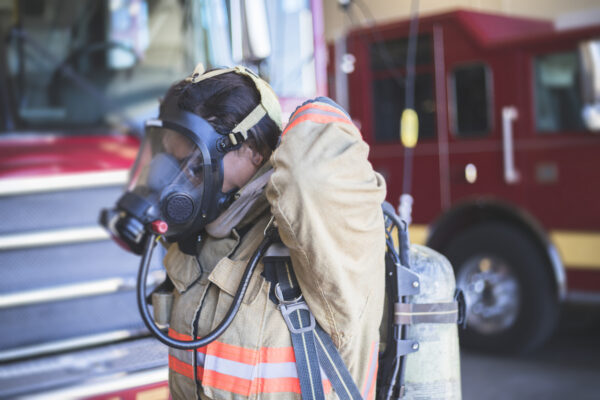
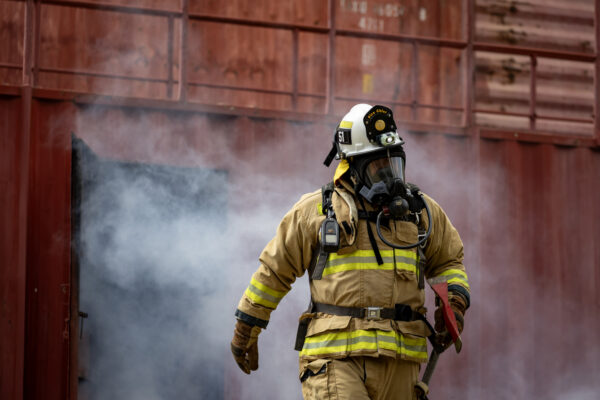
- NFPA 1989 (Emergency Services Breathing Air Quality): The National Fire Protection Association’s NFPA 1989 defines the purity standards that supplied breathing air must meet for firefighters and emergency personnel operating in immediately dangerous to life or health (IDLH) environments.
How Air Testing Services Work: From Sampling to Final Report
Professional air testing follows a structured, traceable workflow designed to ensure accuracy, regulatory defensibility, and actionable insight. While the underlying science is highly technical, the service process itself is intentionally systematic so that facilities can integrate testing into compliance programs without operational disruption.
Step 1: Scope Definition and Sampling Plan
Every reliable air testing program begins with defining what needs to be measured and why. This step establishes the foundation for the entire testing process.
A proper scope definition includes:
- Identification of the testing environment (e.g., cleanroom, production floor, confined space, HVAC system)
- Selection of applicable standards (such as ISO 8573-1, OSHA exposure limits, Grade D requirements, or industry-specific GMP frameworks)
- Determination of target contaminants (particulates, VOCs, moisture, oil, microbial agents, or gases)
- Mapping of sampling locations and number of sample points based on airflow patterns, risk zones, and regulatory requirements
A critical distinction in professional air testing is that sampling is not random or generic. It is engineered. The accuracy of results depends heavily on whether the sampling plan correctly represents real operating conditions.
Step 2: On-Site Collection or Customer-Supplied Sampling
Once the sampling plan is established, air collection can proceed through two validated pathways depending on operational needs and facility structure.
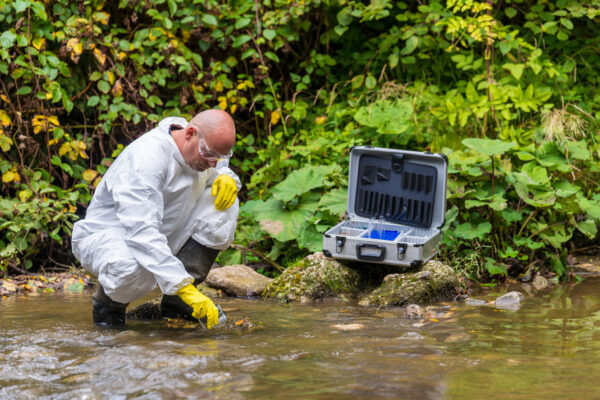
- On-site professional collection: TRI technicians perform sampling using calibrated, industrial-grade air testing equipment to ensure precise flow control, environmental consistency, and compliance with required standards. This approach is typically used in high-risk or regulated environments where accuracy and traceability are critical.
- Customer-supplied sampling kits: TRI provides pre-configured air testing kits with detailed instructions, sampling media, and chain-of-custody documentation. Facility personnel collect samples on-site and return them to the laboratory for analysis. This model is commonly used for routine monitoring, remote locations, or cost-optimized compliance programs.
Both approaches maintain strict chain-of-custody protocols, ensuring that every sample is traceable from collection through final reporting, an essential requirement for audits and regulatory acceptance.
Step 3: Laboratory Air Testing and Analysis
After collection, samples are processed in an accredited air testing laboratory operating under ISO 17025:2017 standards, which define competence requirements for testing and calibration laboratories.
Accreditation through recognized bodies such as:
- A2LA (American Association for Laboratory Accreditation)
- AIHA Laboratory Accreditation Programs
- NATA (National Association of Testing Authorities)
ensures that analytical results are internationally recognized, technically validated, and suitable for compliance documentation across multiple jurisdictions.
Within the lab, samples undergo specialized analytical procedures depending on contaminant type, ranging from gravimetric particulate analysis to gas chromatography and microbial culturing.
Step 4: Reporting and Compliance Interpretation
The final stage transforms laboratory data into actionable compliance intelligence.
Rather than simply delivering raw measurements, TRI’s reporting includes:
- Clear pass/fail determinations against applicable regulatory standards
- Interpretation of results within the context of the selected framework (e.g., ISO class, OSHA limit, Grade D criteria)
- Identification of likely contamination sources when elevated levels are detected
- Corrective action recommendations to guide remediation or system optimization
This approach reflects a “clarity, not just results” philosophy, ensuring that decision-makers can immediately understand what the data means for compliance, safety, and operational risk.
Air Testing Process Overview
| Step | Activity | Key Output | TRI Differentiator |
| Scope Definition | Identify environment, standards, contaminants, and sampling points | Structured sampling plan aligned to regulatory requirements | Engineering-led planning aligned to audit expectations |
| Sample Collection | On-site technician sampling or customer kit-based collection | Physical air samples with full chain-of-custody | Dual-model flexibility (field + kit) without accuracy loss |
| Laboratory Analysis | ISO 17025-accredited testing of collected samples | Verified contaminant concentration data | Accredited lab network with internationally recognized validity |
| Reporting & Interpretation | Compliance evaluation and results interpretation | Actionable compliance report with pass/fail status | Context-driven reporting with corrective guidance, not just data |
Why TRI Air Testing Is the Trusted Choice for Quality Air Testing

In a field where data accuracy directly impacts safety, compliance, and operational continuity, the credibility of the testing provider matters as much as the testing itself. TRI Air Testing is built on decades of technical development, regulatory alignment, and field-proven performance, positioning it as a specialized partner rather than a general service provider.
Rather than presenting claims in isolation, TRI’s value is demonstrated through its engineering history, accreditation depth, and consistent role in mission-critical environments.
- Pioneer credibility: TRI did not enter the air testing space as an integrator—it helped define it. The company’s foundation is rooted in patented compressed air sampling technology developed in 1975 for U.S. Navy Divers, engineered for extreme reliability in environments where sampling errors were not acceptable.
- Military-grade validation: TRI’s methodologies continue to be trusted in high-stakes applications, including ongoing sponsorship and support of U.S. Navy and Coast Guard D.C.A.T. programs, along with additional military branch testing initiatives. These programs require strict adherence to breathing air quality standards and leave no margin for uncertainty.
- World-class accreditations: TRI operates within a globally recognized quality framework, including ISO 17025:2017 accreditation supported by organizations such as A2LA, AIHA, and NATA. This ensures that laboratory air testing results are defensible across international regulatory environments and suitable for audits, certification bodies, and multinational operations.
- Flexible service models: Facilities are not forced into a single workflow. TRI provides both on-site professional sampling and customer-supplied air testing kits, allowing organizations to align testing strategy with operational constraints, budget considerations, and scheduling demands without compromising data integrity or traceability.
- Reporting that drives action: Test results are not delivered as raw data alone. Every report is interpreted against relevant standards, providing clear pass/fail determinations, compliance context, and corrective action guidance. This ensures that technical results translate into operational decisions.
- Comprehensive scope: TRI functions as a consolidated partner for multiple critical testing domains, including compressed air testing, breathing air quality, mold analysis, and potable water testing. This eliminates fragmented vendor management and reduces gaps in compliance oversight.
For organizations seeking quality air testing in Ohio and surrounding regions, TRI’s national laboratory infrastructure combines localized responsiveness with the depth and rigor of a specialized accredited testing provider, supporting both regional facilities and complex multi-site operations with consistent standards.
Conclusion: Partner With a Certified Air Testing Lab You Can Trust
Air testing is a foundational control point rather than a procedural checkbox. Every result influences decisions that affect worker health, product safety, and regulatory standing, which means the quality of the testing program matters as much as the conditions being measured.
Whether the requirement is Grade D breathing air verification, GFSI audit preparation, asbestos investigation, or a multi-contaminant industrial program, the principle is the same: reliable outcomes depend on a qualified, accredited testing partner. In regulated environments, the difference between passing an audit and facing corrective action often comes down to sampling integrity, laboratory accuracy, and how clearly the results are interpreted.
For facilities that need defensible data and consistent compliance support, contact us to discuss your requirements and request a quote.


The Original Compressed Air and Pure Gas Testing Laboratory

Related Articles
Air Sampling Kits – Video
TRI Air Testing offers sampling kits for use on free loan or for purchase. All...

Why wait? TRI Offers 24-Hour Turnaround Time
Compressed air testing is a vital component of many industries, both for verifying equipment functionality...
TRI’s Quality Program
At TRI Air Testing, quality is built into everything that we do. Our documented quality system...
