
Ambient Air Solutions: Testing, Monitoring & Quality

Table of Contents
In industrial facilities, pharmaceutical cleanrooms, food production lines, and military operations, air quality is a direct compliance and safety requirement. The air in and around these environments affects worker health, product integrity, and regulatory standing.
The challenge is that contaminated air is often invisible and odorless. Even low-level exposure to particulates, gases, or microbial contaminants can trigger regulatory violations, compromise sterile processes, or create long-term occupational health risks.
Filtration and ventilation alone aren’t enough. Organizations need to know what’s actually present in the air, whether it meets applicable standards, and what to do when it doesn’t. Without reliable data, they’re operating without visibility into one of their most significant environmental risk factors.
That’s where ambient air solutions come in: a structured approach integrating monitoring, sampling, analysis, and system design to deliver clear, actionable insight into air quality conditions.
Key Takeaways
- Ambient air quality is a critical compliance and safety factor across regulated and high-risk industries
- Harmful contaminants are often invisible and require scientific monitoring and analysis to detect
- Effective air quality management goes beyond filtration. It depends on measurement, interpretation, and response
- Integrated ambient air solutions combine monitoring, sampling, and systems design into one framework
- Data alone is not enough. Organizations need actionable insights to maintain compliance and protect operations
The Science Behind Ambient Air Quality Monitoring
Ambient air quality monitoring is built on a straightforward principle: you can’t manage what you don’t measure. Modern monitoring systems are designed to capture the constant fluctuations in air quality caused by environmental conditions, industrial activity, traffic emissions, and atmospheric chemical reactions with precision and consistency.
How Ambient Air Quality Monitoring Works
Ambient air quality monitoring involves the systematic collection and analysis of air samples to determine pollutant concentrations over time, using two primary approaches:
- Continuous Monitoring: Fixed or portable analyzers provide real-time pollutant data, commonly used in industrial zones, urban environments, and compliance-monitoring stations where immediate detection matters.
- Grab Sampling: Air samples are collected at specific points in time and sent to a laboratory for detailed chemical analysis, useful for identifying complex pollutant mixtures or validating continuous monitoring data.
In practice, many monitoring programs combine both: continuous monitoring for trend detection, grab sampling for verification and deeper chemical characterization.
The Role of Ambient Air Analyzers and Sensors
Ambient air analyzers are the technical backbone of modern monitoring systems. Using technologies such as optical particle counters, electrochemical sensors, infrared absorption, and gas chromatography, these devices quantify pollutant concentrations with precision.
Sensors calibrated to specific compounds or particle sizes convert environmental signals into measurable data, allowing operators to track pollution levels in real time, identify exceedances, and trigger corrective action when thresholds are breached.
Key Measurement Parameters in Ambient Air Monitoring
Effective ambient air quality monitoring focuses on a defined set of key pollutants and environmental indicators, including:
- Particulate Matter (PM2.5 and PM10): Fine inhalable particles that pose significant respiratory and cardiovascular risks
- Carbon Monoxide (CO): A toxic gas produced by incomplete combustion processes
- Nitrogen Dioxide (NO₂): Emitted from vehicle exhausts and industrial combustion sources
- Ozone (O₃): A secondary pollutant formed through chemical reactions in sunlight
- Volatile Organic Compounds (VOCs): A broad group of chemicals originating from fuels, solvents, and industrial emissions
- Humidity: Influences pollutant behavior and sensor accuracy
- Temperature: Affects chemical reaction rates and dispersion of pollutants in the atmosphere
Each parameter provides a different layer of insight, and together they form a comprehensive picture of ambient air quality conditions.
Why Methodology Matters as Much as Equipment
Advanced equipment alone doesn’t guarantee accurate results. Sampling location, height, frequency, calibration, and data validation protocols all directly affect reliability.
Without a sound monitoring design, even sophisticated instruments can produce misleading data. Proper methodology ensures measurements are representative, defensible, and compliant, the foundation of any credible ambient air quality assessment.
Common Triggers for Ambient Air Quality Monitoring by Industry
| Industry | Common Trigger | Relevant Standard/Regulation | Recommended Monitoring Type |
| Manufacturing & Industrial Plants | New production line commissioning or process change | Local environmental authority limits; ISO 14001 environmental management systems | Continuous monitoring with periodic grab sampling validation |
| Construction & Infrastructure Development | Dust generation complaints or excavation activities | National ambient air quality standards; occupational health regulations | Portable particulate (PM2.5/PM10) monitoring |
| Oil & Gas | Hydrocarbon leak risk or refinery emissions monitoring | EPA-equivalent emissions standards; industry-specific air permits | Continuous gas analyzers + VOC monitoring |
| Mining Operations | Blasting, crushing, and haul road dust emissions | Environmental impact assessment (EIA) requirements | Dust monitoring stations (PM10/PM2.5) |
| Healthcare & Laboratories | Indoor/outdoor contamination risk or sterilization emissions | Occupational exposure limits (OELs); WHO air quality guidelines | VOC and gas-specific monitoring with lab confirmation |
| Urban Planning & Smart Cities | Traffic congestion and pollution mapping initiatives | National ambient air quality standards; WHO guidelines | Fixed ambient air monitoring networks |
| Power Generation Plants | Stack emissions compliance and combustion efficiency checks | Clean Air Act-type regulations; emissions trading schemes | Continuous emissions monitoring systems (CEMS) |
| Waste Management & Landfills | Methane/VOC emissions and odor complaints | Environmental protection regulations; landfill gas standards | Multi-gas monitoring + odor/VOC tracking systems |
Ambient Air Sampling: Methods, Equipment, and Best Practices
Effective ambient air sampling starts with selecting the right method, equipment, and operational approach for the specific environment and regulatory context. Here’s what that looks like in practice.
What Is Ambient Air Sampling?
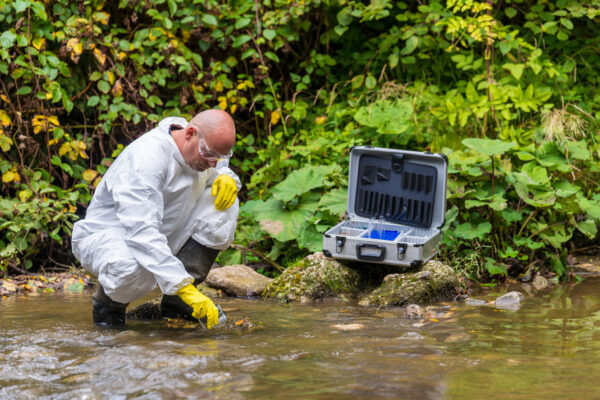
Ambient air sampling involves collecting air from a defined environment to evaluate pollutant concentrations. Unlike continuous monitoring, sampling captures point-in-time or time-averaged conditions for field or laboratory analysis. There are three primary methods:
- Grab Sampling: A single sample collected at a specific moment, which is useful for identifying short-term exposures or verifying suspected contamination events.
- Integrated Sampling: Air collected continuously over a defined period (8 hours, 24 hours, or longer) to produce an average concentration value, which is the standard for compliance reporting and exposure assessment.
- Passive Sampling: Uses natural diffusion rather than active pumping, which is more cost-effective, low-maintenance, and well-suited for long-term or wide-area monitoring networks.
Choosing the wrong method can lead to under- or overestimation of exposure, with real consequences for compliance and risk assessment. At TRI Air Testing, sampling methodology and results interpretation are treated as equally important as the sampling itself.
Ambient Air Monitoring Equipment: What You Need and Why
Effective ambient air monitoring requires specialized equipment matched to the environment and application:
- Ambient Air Analyzers (Fixed and Portable): High-precision instruments measuring gas or particulate concentrations in real time. Fixed units serve permanent stations; portable units support field investigations and short-term assessments.
- Air Ambient Sensors (Electrochemical, Photoionization, Infrared): Detect specific pollutants based on chemical or physical properties—electrochemical sensors for toxic gases, PIDs for VOCs, and infrared sensors for CO₂ and hydrocarbons.
- Ambient Air Pollution Monitors: Broader systems combining multiple sensing technologies to track a range of pollutants simultaneously, commonly used in compliance and environmental impact programs.
- Ambient Air Quality Monitoring Stations: House multiple instruments for either temporary project-based deployment or long-term regulatory monitoring networks.
- Data Loggers and Telemetry Systems: Collect, store, and transmit monitoring data to support real-time visibility and automated compliance reporting.
Regardless of equipment type, calibration, routine maintenance, and accredited procedures are essential to data integrity and audit defensibility.
Ambient Air Monitoring Systems: Integrated vs. Standalone Solutions
Ambient air monitoring can be implemented with standalone instruments or fully integrated systems, depending on scale and complexity.
Standalone instruments measure specific pollutants at a single point without connecting to a broader data network, which is practical for spot checks, localized investigations, or short-term studies where mobility matters.
Integrated systems connect multiple sensors, analyzers, and data loggers into a unified network, enabling centralized data collection, real-time analytics, threshold alerts, and remote access. They also simplify audit preparation through standardized, traceable reporting. Because they’re scalable, either from a single monitoring point to a facility-wide or multi-site network, and they suit industries with evolving regulatory requirements or expanding operations.
TRI AIR Testing supports both approaches, with flexible deployment models that allow clients to scale monitoring capabilities without maintaining full-time on-site technical teams.
Ambient Air Monitoring Equipment Comparison
| Equipment Type | Technology Level | Typical Application | Key Parameters | Deployment |
| Federal Reference Method (FRM) Analyzers | High (Regulatory) | National air quality networks, legal compliance | Single gas per unit (O₃, SO₂, NOₓ) | Fixed (Climate controlled) |
| Low-Cost Sensor Systems (LCS) | Medium (Node-based) | High-density urban mapping, “fenceline” monitoring | Multi-pollutant (PM + Gases) | Fixed (Solar/Battery) |
| Electrochemical Sensors | Functional (Safety) | Industrial hygiene, leak detection, H₂S safety | Toxic gases (CO, H₂S) | Portable / Personal |
| Photoionization Detectors (PID) | Functional (Screening) | Hazmat response, VOC leak detection | Total VOCs (non-specific) | Portable Handheld |
| Optical Particle Counters (OPC) | Medium | Dust monitoring at construction sites | PM1.0, PM2.5, PM10 | Fixed or Portable |
Ambient Air Applications Across Industries
Ambient air monitoring plays a critical role wherever air quality directly impacts human health, product integrity, or regulatory compliance. Requirements vary by industry, but the need for accurate, defensible data is constant.
Pharmaceutical and Healthcare Facilities
In pharmaceutical and healthcare environments, ambient air quality is directly tied to patient safety, product sterility, and regulatory compliance. Cleanrooms must adhere to ISO 14644 classification standards, and both FDA regulations and USP pharmacopeial standards require ongoing environmental monitoring programs as part of drug manufacturing and sterile compounding validation.
When air quality control fails in these environments, the consequences are severe:
- Batch contamination
- Production shutdowns
- Regulatory citations
- Large-scale product recalls
These operational disruptions carry significant financial and reputational risk. Comprehensive ambient air monitoring is essential to maintaining ISO-classified conditions and staying ahead of compliance requirements.
Food and Beverage Manufacturing
In food and beverage production, ambient air quality directly affects product safety, shelf life, and compliance with FDA, USDA, SQF, and BRC standards. Airborne contaminants settling on exposed ingredients or finished products can introduce spoilage risks or trigger sanitation violations.
Microbiological contamination is a particular concern. Airborne mold spores, yeast, and bacteria can proliferate in humid or poorly filtered environments, often going undetected until product quality issues surface downstream. Effective contamination control requires monitoring for both chemical and biological threats.
TRI Air Testing’s capabilities extend beyond ambient air testing to include mold and environmental testing, providing a more complete picture of facility air quality conditions.
Industrial and Manufacturing Environments
In industrial settings, ambient air monitoring is fundamental to occupational safety and regulatory compliance. OSHA’s Permissible Exposure Limits (PELs) set thresholds for airborne contaminants generated by welding, painting, machining, and material handling, and ambient air analysis is how facilities demonstrate they’re meeting them.
Common industrial contaminants include:
- Silica dust
- Solvent vapors
- Metal fumes
- Isocyanates
All pose serious long-term health risks when exposure goes uncontrolled. Ambient air testing provides the baseline and ongoing exposure data that feeds occupational health records, safety audits, and regulatory reporting programs.
Military and High-Stakes Operational Environments
TRI Air Testing has a long-standing history supporting mission-critical environments, including U.S. Navy and Coast Guard DCAT programs and other military branches, which have some of the most stringent air quality and testing protocols in the world. In these settings, air quality directly affects:
- Operational safety
- Equipment performance
- Personnel readiness
Precision, traceability, and procedural discipline are non-negotiable. That same standard of analytical rigor carries through to every ambient air sample TRI processes, regardless of industry or project scale.
Ambient Air Cooling Systems in Facility Design
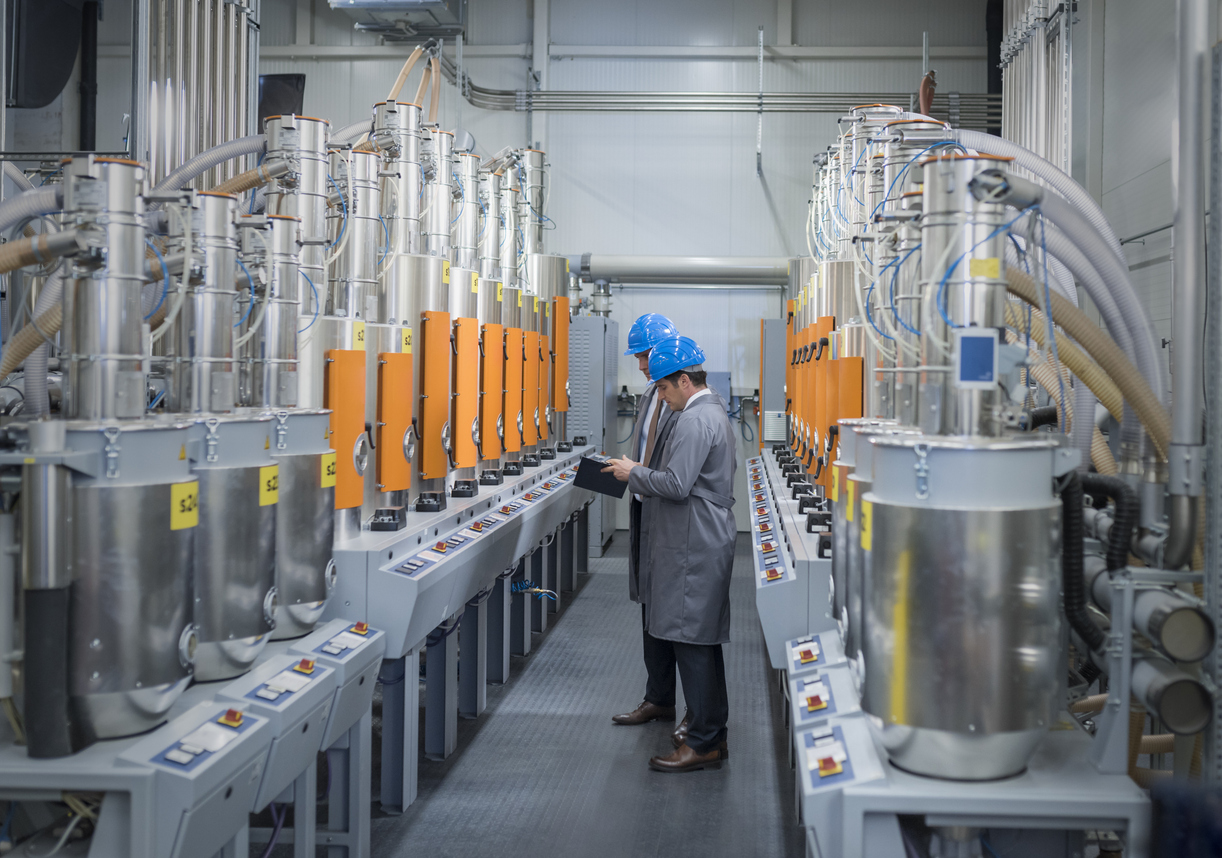
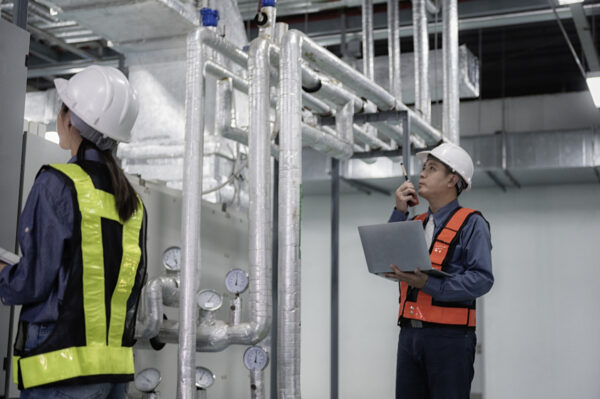
Ambient air cooling systems use outside or controlled facility airflows as a primary or supplemental heat exchange medium, reducing reliance on mechanical refrigeration. They’re commonly used in data centers, industrial facilities, and HVAC-integrated building systems where energy efficiency and thermal stability are priorities.
The key air quality consideration: intake air must be evaluated to prevent particulates, gases, or moisture from compromising equipment performance or product integrity. Poor filtration or siting decisions can introduce contaminants directly into controlled environments.
This is why ambient air cooling system design is increasingly tied to upstream air quality assessment. Understanding local environmental conditions through monitoring helps engineers build systems that balance thermal performance with contamination control.
Ambient Air Monitoring Systems: Building a Compliance-Ready Program
A compliance-ready ambient air monitoring program integrates monitoring, sampling, and reporting into a unified system that supports regulatory compliance, operational decision-making, and long-term risk management.
Components of an Effective Ambient Air Monitoring System
An effective ambient air monitoring system relies on four interconnected components:
- Sensors and analyzers detect and measure specific pollutants, feeding data into data acquisition systems (DAS) that collect, store, and organize readings.
- Alarm and notification protocols trigger real-time responses when pollutant levels exceed predefined thresholds, which is critical in regulated environments where exceedances may require reporting or operational shutdowns.
- Calibration schedules and QA procedures keep instruments accurate over time. Without them, even advanced systems can produce unreliable, non-defensible data.
- Reporting infrastructure transforms raw data into structured outputs for regulators, auditors, and internal stakeholders.
These components must function as a unified ecosystem. A failure in any single area, such as sensor accuracy, data storage, or reporting integrity can compromise the entire program. The goal isn’t just data collection; it’s audit-ready intelligence that contextualizes air quality for compliance and operational decision-making.
Ambient Air Quality Monitoring Stations: Fixed vs. Mobile Deployments
Ambient air quality monitoring stations are deployed in two configurations:
- Fixed stations are permanent installations for continuous, long-term data collection, primarily used in regulatory compliance networks, industrial fence-line monitoring, and urban air quality surveillance. They’re ideal for identifying seasonal patterns, long-term exposure risks, and ongoing compliance tracking.
- Mobile stations are designed for flexibility as they are rapidly deployable to construction sites, incident response areas, or short-term projects where temporary data is needed without permanent infrastructure investment.
Siting is critical for both. Monitoring locations must account for proximity to emission sources, prevailing wind direction, terrain, and regulatory guidelines. Poor siting distorts data and leads to misleading conclusions about actual exposure conditions.
Selecting Ambient Air Monitoring Equipment: Key Criteria
Choosing the right ambient air monitoring equipment requires a structured evaluation based on performance, compliance, and lifecycle considerations:
- Detection range and sensitivity: Equipment must be capable of accurately measuring pollutant concentrations at relevant regulatory thresholds
- Calibration requirements and frequency: More sensitive instruments often require more frequent calibration to maintain accuracy
- Data connectivity and integration capability: Modern systems should support remote access, cloud integration, or SCADA compatibility
- Regulatory acceptance of the measurement method: Instruments must meet recognized standards for compliance reporting and audit defensibility
- Maintenance burden and lifecycle cost: Long-term operational cost often outweighs initial purchase price in total cost of ownership
Equipment selection should always be driven by the specific monitoring objective, such as regulatory compliance, exposure assessment, or process optimization, rather than cost alone or equipment availability. The wrong instrument choice can lead to data gaps, non-compliance, or misinformed operational decisions.
What to Look for in Ambient Air Testing Companies

Selecting an ambient air testing partner is as much about expertise and credibility as it is about instrumentation. Compliance managers and safety officers should evaluate providers using a structured set of questions.
Key considerations include accreditation status, such as ISO 17025:2017, A2LA, AIHA, or NATA, which indicate that a laboratory meets internationally recognized standards for testing competence and quality systems.
The most effective providers deliver not just testing, but complete ambient air solutions that support compliance from sampling through interpretation.
Turnaround time is also critical, particularly for projects where results impact operational continuity or regulatory reporting deadlines.
Beyond logistics, the quality of reporting matters significantly. A strong testing partner provides clear, structured reports that go beyond raw data to include:
- Interpretation
- Compliance context
- Actionable recommendations
The breadth of service offerings and industry specialization also matter, especially in complex environments where multiple contaminant types must be assessed simultaneously.
TRI Air Testing differentiates itself in this space through its core focus on air quality and gas testing, rather than treating it as a secondary or ancillary service. This specialization translates into deeper technical expertise, more precise methodologies, and stronger compliance alignment.
Ultimately, a testing report that only presents numbers is insufficient. Organizations need a partner who can explain what those numbers mean, whether they indicate risk or compliance, and what corrective actions should follow.
What to Evaluate When Choosing an Ambient Air Testing Company
| Evaluation Criterion | Why It Matters | Questions to Ask | Red Flags |
| Accreditation (ISO 17025, A2LA, AIHA, NATA) | Ensures technical competence and regulatory acceptance of results | Is your lab accredited for ambient air testing methods? | No formal accreditation or expired certifications |
| Turnaround Time | Impacts compliance reporting and operational decisions | How quickly are results delivered for standard and rush samples? | Unclear timelines or frequent delays |
| Reporting Quality | Determines usability of data for audits and decision-making | Do reports include interpretation and compliance context? | Raw data-only reports with no explanation |
| Technical Expertise | Ensures accurate sampling design and analysis | Do you specialize in ambient air or general environmental testing? | Generalist lab with no air quality focus |
| Service Breadth | Supports complex, multi-contaminant environments | Can you test for gases, particulates, and VOCs in one program? | Limited testing scope requiring multiple vendors |
| Interpretive Support | Converts data into actionable insights | Will your team help interpret results and recommend actions? | No consultation or post-report support |
| Methodology Transparency | Ensures defensible results in audits | What standards and methods are used for sampling and analysis? | Vague or undocumented testing procedures |
Ambient Air Analysis: Interpreting Results and Taking Action
Collecting ambient air data is only the first step. The real value lies in how that data is interpreted, communicated, and acted upon. Without clear analysis and a defined response strategy, even the most precise measurements fail to drive meaningful outcomes. This is where ambient air analysis becomes a decision-making tool, not just a reporting exercise.
From Data to Decision: How to Read Ambient Air Analysis Reports
A professional ambient air analysis report is designed to do more than present numbers. It provides a complete, traceable record of how data was collected, analyzed, and validated.
The core elements of a high-quality report include:
- Sample Identification: Documents the exact location, date, time, and environmental conditions of each sample, ensuring full traceability and context for the results.
- Chain of Custody: Provides a documented record of how samples were handled from collection through analysis, ensuring data integrity and legal defensibility.
- Analytical Method: Specifies the standardized procedures used to measure pollutants, confirming alignment with recognized regulatory and scientific methods.
- Detection Limits: Defines the minimum concentration levels that can be reliably detected, which is critical for interpreting “non-detect” results accurately.
- Results vs. Regulatory Limits: Compares measured concentrations against applicable standards, making it immediately clear whether conditions are compliant or exceed allowable thresholds.
- QA/QC Documentation: Verifies that calibration, procedures, and analytical processes met required quality standards, ensuring the reliability of the data.
Despite this level of detail, many organizations encounter a common problem: reports that deliver raw data without interpretation. Numbers alone do not answer the most important question—what does this mean for compliance, safety, and operations?
Without this context, even advanced ambient air solutions fail to deliver meaningful operational value.
A genuinely useful report bridges that gap by translating technical data into clear, actionable insights. TRI Air Testing prioritizes this clarity, delivering results that are always paired with interpretation, context, and practical next steps—not just numbers on a page.
When Results Exceed Limits:What Happens Next?
Exceedances in ambient air quality are high-stakes events that require a structured and immediate response. The goal is not only to restore compliance but to identify and eliminate the root cause of the issue.
A typical response protocol includes:
- Immediate Corrective Action: Rapid steps to control the source of contamination, such as adjusting ventilation systems, isolating emission points, modifying processes, or implementing enhanced worker protection measures (e.g., PPE).
- Root Cause Investigation: A systematic review of operations, equipment, environmental conditions, and external factors to determine why the exceedance occurred and prevent recurrence.
- Retesting and Verification: Follow-up sampling and analysis to confirm that corrective actions were effective and that air quality has returned to acceptable levels.
- Documentation and Reporting: Comprehensive documentation of findings, actions taken, and final results for regulatory reporting, internal compliance records, and audit readiness.
During these situations, organizations need more than data—they need clarity and direction. TRI Air Testing acts as a steady, expert partner throughout the process, helping translate results into action and ensuring that every step is handled with technical rigor and compliance in mind.
Building a Long-Term Ambient Air Quality Management Program
A sustainable ambient air quality program is proactive, not reactive. Core elements include:
- Baseline testing to establish initial conditions and benchmarks
- Scheduled monitoring to detect trends, seasonal variations, and emerging risks
- Corrective action tracking to document issue resolution and maintain a clear audit trail
- Annual review cycles to reassess monitoring strategies and adjust scope as operations evolve
A well-documented program provides meaningful protection during regulatory inspections, demonstrating due diligence, operational control, and commitment to environmental and occupational health standards.
TRI Air Testing serves as a long-term partner in environmental compliance, not just a testing provider. With capabilities spanning compressed air testing, gas purity analysis, mold assessment, and ambient air monitoring, TRI delivers the clarity and confidence organizations need to stay compliant and in control.
Ready to build a monitoring strategy tailored to your facility? Contact TRI Air Testing today to speak with an expert.



The Original Compressed Air and Pure Gas Testing Laboratory

Related Articles

Why the Best Partner for Your Food Safety Audit Is One That’s Audited Too
When preparing for a critical food safety audit, choosing the right testing partner can make...

National Food Safety Education Month: Protecting What Matters Most
As September 2025 ends, we reflect on National Food Safety Education Month, a timely reminder...

Third-Party Testing for Compressed Air: A Guide
Compressed air is easy to overlook. You can’t see it, and when systems are running...
