

SCBA: Air Quality, Fit Testing & Compliance Guide

Table of Contents
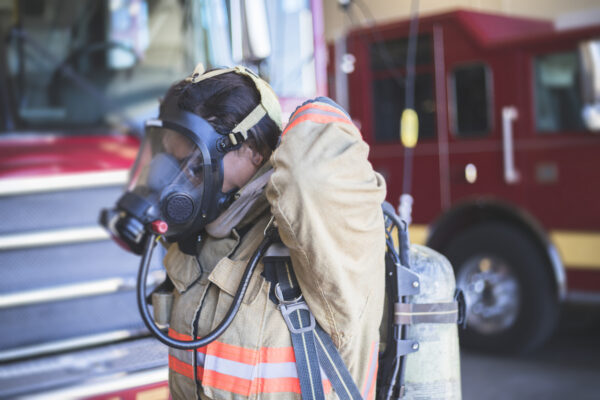
A self-contained breathing apparatus (SCBA) is the last line of defense between workers and atmospheres that can turn fatal within seconds. Used in fire operations, confined space entry, hazardous materials response, and industrial emergencies, an SCBA supplies breathable air in environments where toxic contaminants, oxygen deficiency, or unknown airborne hazards make ambient air unsafe. These conditions are classified as immediately dangerous to life or health (IDLH).
Because SCBA is a life-safety system, every component must perform exactly as designed: the facepiece must seal securely, regulators must deliver consistent airflow, cylinders must remain structurally sound, and the breathing air inside must meet strict purity standards.
This guide covers how SCBA works, how compressor systems supply breathing air, the regulations governing fit testing, inspection, and maintenance, and why accredited breathing air analysis is essential to any compliant respiratory protection program.
Key Takeaways
- Self-contained breathing apparatus (SCBA) provides the highest level of respiratory protection with an Assigned Protection Factor (APF) of 10,000, but only when the equipment is properly maintained, fitted, and supplied with verified breathing air.
- SCBA fit testing, routine inspections, SCBA testing, and breathing air analysis all play equally important roles in ensuring respiratory protection programs remain compliant and effective.
- Compressor maintenance alone does not guarantee breathing air quality. Accredited laboratory testing is the only reliable way to verify compliance with ANSI/CGA G-7.1 Grade D breathing air requirements.
- Fire departments and industrial employers should treat SCBA breathing apparatus as a complete life-safety system that requires documented maintenance, recordkeeping, and ongoing air quality verification.
What Is a Self-Contained Breathing Apparatus (SCBA)?
A self-contained breathing apparatus supplies compressed breathing air from a portable cylinder worn by the user. Unlike air-purifying respirators, which filter ambient air, or supplied-air (airline) systems, which draw from a stationary remote compressor, SCBA breathing apparatus systems carry the entire air supply with the wearer, making them the only viable option in IDLH atmospheres, oxygen-deficient environments, and conditions where contaminant identity or concentration is unknown.
The National Institute for Occupational Safety and Health (NIOSH) assigns SCBA units an APF of 10,000, the highest level for any respirator category. That protection factor assumes a properly fitted facepiece, maintained equipment, and verified air quality. Any gap in those three conditions degrades actual protection.
Open-Circuit vs. Closed-Circuit SCBA Breathing Apparatus
Open-circuit systems, which are the dominant type in firefighting and industrial applications, vent exhaled air directly into the atmosphere. The user draws fresh air from the cylinder on each breath. These units are straightforward to maintain and inspect, which contributes to their widespread adoption.
Closed-circuit systems (rebreathers) recirculate exhaled air through a CO₂ scrubber and reintroduce oxygen from a supply cylinder, enabling significantly longer durations, sometimes several hours, at the cost of substantially greater mechanical complexity and maintenance demands. Mine rescue and military operations are the primary closed-circuit use cases.
Industries That Depend on SCBA Breathing Apparatus
SCBA is mandatory wherever the atmosphere cannot sustain life or where toxic exposure would occur without an independent air supply.
Primary sectors include:
- Structural firefighting
- Hazmat response
- Industrial confined space entry
- Military and defense operations
- Emergency medical services in contaminated environments
- Chemical or petrochemical processing
SCBA vs. Other Respiratory Protection Equipment
| Equipment Type | Protection Level (APF) | Air Supply Source | Typical Use Case | Limitations |
| Open-Circuit SCBA | 10,000 (pressure-demand, full facepiece) | Compressed air cylinder worn by user | Firefighting, confined space entry, IDLH atmospheres | Limited cylinder duration (30–60 min); weight burden |
| Closed-Circuit SCBA (Rebreather) | 10,000 (pressure-demand, full facepiece) | Oxygen cylinder + CO₂ scrubber | Mining rescue, military operations, long-duration entry | Greater complexity; higher maintenance requirements |
| Supplied-Air Respirator (Airline) | 1,000 (continuous flow or pressure-demand, full facepiece) | Remote compressor via air hose | Spray painting, long-duration industrial tasks | Restricted mobility; hose length limits range |
| Half-Mask Respirator with Cartridge | 10 | Filtered ambient air | Nuisance-level dusts, organic vapors in non-IDLH conditions | Not suitable for IDLH or oxygen-deficient atmospheres |
| Full-Face Respirator with Cartridge | 50 | Filtered ambient air | Chemical processing, pesticide application | No oxygen supply; canister breakthrough risk |
Note: OSHA’s Table 1 (29 CFR 1910.134) doesn’t formally distinguish open-circuit from closed-circuit SCBA. Both fall under the same pressure-demand, full-facepiece SCBA class at an APF of 10,000. A supplied-air respirator in demand mode alone (not continuous flow or pressure-demand) carries a lower APF of 50.
How Does an SCBA Work? Core Principles and Operation
Understanding how a self-contained breathing apparatus (SCBA) functions helps safety professionals troubleshoot equipment issues, train users effectively, and identify potential failure points before they become emergencies. The following sections explain the airflow process and the safety features built into modern SCBA systems.
Pressure Regulation and Airflow
Compressed air is stored at either 2,216 psi (low-pressure) or 4,500 psi (high-pressure). A first-stage pressure reducer drops this high cylinder pressure to a manageable working pressure of approximately 80–100 psi before the air reaches the mask-mounted regulator (demand valve).
The regulator opens on inhalation and closes on exhalation, delivering air only when the user breathes. In positive-pressure SCBA, which is strictly required under NFPA 1981 and NIOSH certifications, the regulator maintains a slight positive pressure inside the facepiece at all times. This design ensures that if the facepiece seal is compromised, air will leak outward, preventing toxic ambient gases from entering. A manual bypass valve provides an emergency override if the regulator mechanism fails, but because it delivers a constant flow that depletes the cylinder rapidly, it is strictly an emergency measure.
The Low Air Alarm: What It Signals and What to Do
Under current NFPA 1981 standards, the End-of-Service Time Indicator (EOSTI), or low air alarm, must activate when cylinder pressure falls to 33% of its rated capacity, roughly 1,485 psi on a 4,500 psi cylinder. Manufacturers calculate the exact activation pressure based on rated cylinder volume rather than a straight percentage of psi, so the real number can vary slightly by model. The system utilizes redundant indicators meeting NFPA decibel minimums alongside a vibrotactile (vibrating) alert or Heads-Up Display (HUD) inside the mask.
When the alarm activates, the only correct response is immediate egress from the hazardous environment. Under heavy physical exertion, the remaining 33% of air can be exhausted in just a few minutes. Accountability officers and incident commanders must ensure personnel treat alarm activation as a mandatory withdrawal order, never as an advisory warning to finish a task.
Core Components of a Self-Contained Breathing Apparatus
Each SCBA breathing apparatus component has a defined function, and failure of any single component compromises the entire system. A facepiece with a marginal seal undermines positive-pressure protection regardless of cylinder pressure or regulator condition. Safety managers conducting inspections must evaluate components independently and recognize early failure indicators.
SCBA Component Overview
| Component | Function | Key Inspection Points | Common Failure Signs |
| Facepiece | Creates airtight seal; protects eyes and airways; houses exhalation valve. | Lens clarity; seal integrity; exhalation valve seating; head-harness strap elasticity. | Cracked/crazed lens; warped or dry-rotted silicone seal; stuck or torn exhalation valve. |
| Pressure-Demand Regulator (MMR) | Delivers continuous positive-pressure airflow; prevents ingress of toxic ambient air. | Positive-pressure lock; bypass valve operation; purge button responsiveness. | Inhalation resistance; constant “free-flowing” of air; missing or torn gasket seals. |
| Pressure Gauge & HUD | Displays real-time cylinder pressure via mechanical gauge and in-mask LED readouts. | Gauge accuracy (must match cylinder gauge within 100 psi); HUD light function. | Inaccurate/fogged gauge; HUD fails to illuminate or desynchronizes from actual pressure. |
| Harness & Backframe | Distributes cylinder weight ergonomically; secures the unit to the operator. | Buckle engagement; rapid-adjustment tracking; cylinder band latch integrity. | Straps that slip under load; frayed or burned fabric webbing; cracked or bent backframe. |
| Air Cylinder | Stores compressed breathing air safely at rated pressure (2,216 or 4,500 psi). | Hydrostatic test date (every 3 or 5 years); valve handwheel function; exterior wrap integrity. | Expired hydro date; loose valve threads; gouges, cuts, or fraying in the carbon-fiber wrap. |
| PASS Device | Emits loud audible and visual tracking beacons if the user becomes motionless. | Battery level; automatic activation upon cylinder opening; manual override button. | Alarm fails to sound; faint pre-alarm audio; low-battery chirp; damaged pressure switch. |
SCBA Air Compressor Systems: Filling, Storing, and Maintaining Cylinders
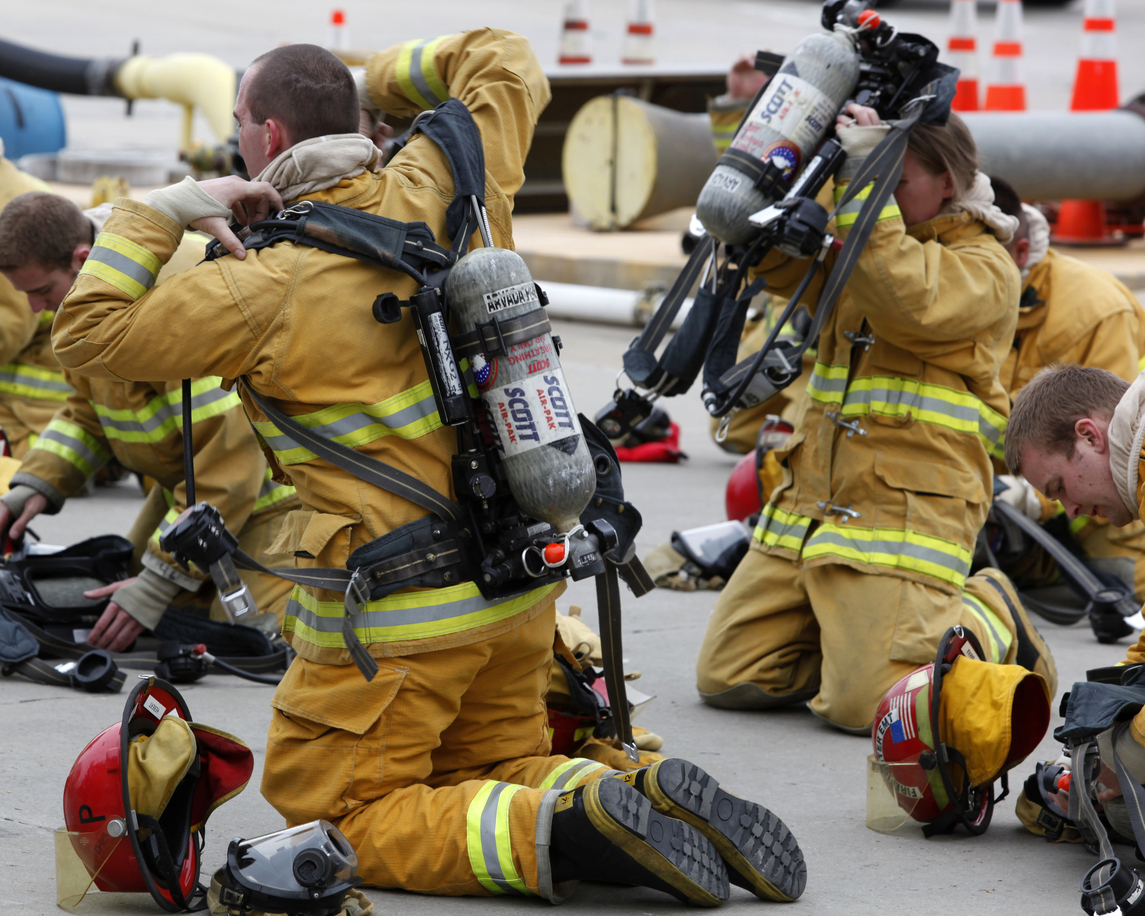
An SCBA air compressor supplies breathable air that meets strict purity standards. Understanding how compressors operate, how cylinders are filled, and why laboratory verification matters is essential for maintaining a compliant SCBA program.
How the SCBA Air Compressor Works
An SCBA air compressor fills cylinders to their rated working pressure, typically 2,216 psi or 4,500 psi, depending on the SCBA system. Before air reaches the cylinder, it passes through multiple filtration stages designed to remove contaminants and moisture.
A typical filling process includes:
- Ambient air enters the compressor intake.
- The compressor mechanics pressurize the air through multiple stages.
- Coalescing filters remove bulk liquid contaminants and large particulates from the pressurized stream.
- High-pressure desiccant dryers strip out remaining moisture.
- Activated carbon filters eliminate hydrocarbons, oil vapors, and odors before the air enters the cylinder.
Although these filtration systems are highly effective, they cannot guarantee breathing air quality indefinitely. Saturated filters, compressor wear, degraded seals, or contaminants entering through the intake can all compromise the final air supply without producing any visible warning.
Cascade Systems vs. Standalone Compressors
Cascade systems store compressed air in banks of high-pressure cylinders that can rapidly refill multiple SCBA cylinders. These systems are commonly found in busy fire departments and large industrial facilities where multiple fills occur throughout the day.
Standalone SCBA air compressor systems compress breathing air directly into portable cylinders as needed. They are well-suited for smaller departments and industrial operations but still require regular maintenance, filter replacement, and laboratory verification of breathing air quality.
Regardless of the filling method, compressor age, maintenance records, or recently replaced filters, you can’t confirm breathing air purity. Only laboratory analysis verifies that compressed air meets applicable breathing air standards.
Air Quality Standards for SCBA Cylinders
While OSHA allows standard industrial respirators to utilize ANSI/CGA G-7.1 Grade D breathing air, emergency services SCBA programs must adhere to the stricter NFPA 1989 standard. Because firefighters operate under extreme physiological stress, NFPA 1989 tightens key contamination limits far beyond Grade D.
It requires carbon monoxide (CO) levels to not exceed 5 ppm (compared to Grade D’s 10 ppm) and condensed oil mist to be capped at 2.0 mg/m³ (compared to Grade D’s 5.0 mg/m³). Carbon dioxide (CO₂) stays at a maximum limit of 1,000 ppm. Grade D also specifies oxygen content between 19.5% and 23.5%, a dew point of -50°F (-45.6°C) or lower at cylinder pressure, and no detectable odor. International emergency response programs outside North America typically reference EN 12021 (which mandates CO ≤ 5 ppm, CO₂ ≤ 500 ppm, and oil mist ≤ 0.5 mg/m³) to establish equivalent high-purity breathing air requirements.
Carbon monoxide is the contamination risk that demands the most attention. CO is odorless, colorless, and undetectable without instrumentation. A compressor drawing intake air near vehicle exhaust, operating in a poorly ventilated area, or experiencing internal degradation can introduce CO at concentrations that cause rapid incapacitation, without any indication at the fill station.
TRI Air Testing: Accredited Breathing Air Analysis
ISO 17025:2017-accredited laboratories with A2LA recognition apply the same scientific precision to breathing air analysis as they do to compressed air in pharmaceutical or food-grade environments, ensuring results are defensible and traceable, not just a checkbox.
TRI Air Testing’s accredited analysis verifies SCBA breathing air against ANSI/CGA G-7.1 Grade D specifications, providing documented evidence that regulators, auditors, and legal proceedings require.
SCBA in Firefighting: Design, Use, and Regulatory Requirements
Fire service applications place unique thermal and operational demands on SCBA fire equipment. These conditions require specialized certifications, disciplined air management, and rigorous maintenance practices beyond many industrial applications.
How SCBA Fire Applications Differ from Industrial Use
Firefighting imposes demands on SCBA breathing apparatus that have no parallel in industrial applications. Radiant heat, direct flame contact, physical impact, and structural collapse create an operating environment where equipment must perform at design extremes, often for personnel near their physiological limits.
NFPA 1981 governs open-circuit SCBA for emergency services, requiring units to pass rigorous performance tests before certification, including:
- Heat and flame resistance
- Total heat load
- Facepiece lens optical performance (preventing bubbling or melting)
- Voice communication clarity
Safety managers selecting equipment must also distinguish between structural firefighting SCBA and units intended for proximity or fire entry suit applications, where thermal protection requirements for the cylinder and harness assembly differ significantly.
TRI Air Testing has participated in NFPA respiratory protection committees that help shape industry guidance for breathing air quality and respiratory protection programs. This involvement supports TRI’s commitment to delivering accredited breathing air analysis that aligns with the expectations of fire departments, emergency response organizations, and regulatory agencies.
Cylinder Duration and Practical Working Time in Fire Conditions
The rated duration on an SCBA cylinder (30, 45, or 60 minutes) is a NIOSH certification figure derived under controlled laboratory conditions at a moderate breathing rate of 40 liters per minute.
In the field, firefighters performing heavy exertion or experiencing high stress frequently consume air at two to three times the standard laboratory rate. A 30-minute cylinder can deliver as little as 15 to 20 minutes of actual working time. Body weight, physical conditioning, task intensity, and environmental stress all heavily dictate consumption.
Because of this rapid depletion, air management is strictly governed by NFPA 1404 (Standard for Fire Service Respiratory Protection Training). NFPA 1404 mandates that personnel exit the hazardous environment before their low-air alarm activates, a principle fire service trainers commonly refer to as the Rule of Air Management (ROAM). The low-air alarm (which triggers at 33% of cylinder capacity) is classified as an emergency reserve for unexpected delays during egress, not an advisory exit cue.
SCBA Cylinder Duration by Rated Time and Activity Level
| Cylinder Rating | NIOSH Rated Duration | Estimated Working Time (Heavy Exertion) | Mandatory Egress Trigger (Before Emergency Reserve) | Emergency Reserve (33% Alarm Activation) |
| 30-Minute | 30 minutes | 15–20 minutes | Exit path must begin before gauge drops to 1,500 psi. | ~10 minutes remaining (1,485 psi) |
| 45-Minute | 45 minutes | 22–30 minutes | Exit path must begin before gauge drops to 1,500 psi. | ~15 minutes remaining (1,485 psi) |
| 60-Minute | 60 minutes | 30–40 minutes | Exit path must begin before gauge drops to 1,500 psi. | ~20 minutes remaining (1,485 psi) |
*Note on Pressures: Whether a cylinder is rated for 30, 45, or 60 minutes, if it is a 4,500 psi high-pressure system, the modern NFPA 33% low-air alarm will always activate at approximately 1,485 psi. Therefore, the physical pressure gauge reading dictates the egress trigger, regardless of the cylinder’s volume size.
SCBA Fit Testing: Requirements, Methods, and Frequency
Even the highest-performing SCBA breathing apparatus cannot protect the wearer without an effective facepiece seal. SCBA fit testing verifies that the equipment performs as intended and satisfies OSHA respiratory protection requirements.
Why SCBA Fit Testing Is Non-Negotiable
OSHA 29 CFR 1910.134 requires fit testing for all tight-fitting respirators before initial use and annually thereafter. For SCBA breathing apparatus, this is not procedural. It’s the mechanism that verifies the facepiece can perform its protective function.
A facepiece that fails to seal against a user’s facial geometry provides no meaningful protection regardless of cylinder pressure or air quality. The APF of 10,000 assumes an adequate seal; without one, actual protection may be orders of magnitude lower.
Qualitative fit testing (QLFT), which relies on the wearer’s subjective detection of a test agent, is acceptable for half-mask respirators at APF 10 or lower, but not for full-facepiece SCBA. OSHA’s Appendix A to 1910.134 requires quantitative fit testing (QNFT) for full-facepiece respirators. QNFT uses instrumentation (typically a PortaCount device) to measure particle counts inside and outside the facepiece, generating a numerical fit factor.
Facial hair in the sealing zone is among the most common fit failure causes and is treated unambiguously by OSHA. Any facial hair that contacts the sealing surface invalidates protection. Significant weight changes, facial structure changes, and dental procedures are also grounds for off-cycle re-testing.
Fit Testing Process and Documentation
The standard OSHA QNFT protocol includes eight sequential exercises:
- Normal breathing
- Deep breathing
- Head side to side
- Head up and down
- Talking (reciting a passage or counting)
- Grimace (smiling or frowning broadly for 15 seconds to intentionally stress the seal)
- Bending over (or jogging in place)
- Normal breathing again
This progression is designed to thoroughly replicate the mechanical strains placed on a facepiece during dynamic field operations. A passing fit factor for SCBA full-facepiece units is 500 or greater; many programs utilize a score of 2,000 or higher as a more conservative internal safety target.
Documentation must strictly capture the test date, the individual’s name, the facepiece make, model, and size, the exact fit factor achieved, the testing method/instrumentation used, and the identity of the qualified tester. Programs that cannot produce these records for active SCBA users violate 29 CFR 1910.134 and face clear regulatory citations and evidentiary liability.
SCBA Fit Testing Requirements at a Glance
| Requirement | Regulatory Source | Frequency | Key Documentation Criteria | Non-Compliance Consequence |
| Initial Fit Test | OSHA 29 CFR 1910.134(f)(2) | Prior to first operational SCBA use. | Numerical fit factor score, test method, and specific facepiece size/model. | Immediate prohibition from SCBA use; serious OSHA citations. |
| Annual Fit Test | OSHA 29 CFR 1910.134(f)(2) | Every 12 months. | Updated record showing continuous compliance and zero facial seal interference. | OSHA citation; massive exposure liability in a line-of-duty injury case. |
| Quantitative Test (QNFT) | OSHA 1910.134 Appendix A | Required for all full-face SCBA. | Verified instrument printout showing a minimum fit factor of 500. | Subjective qualitative methods (taste/smell) are legally void for APF 10,000 units. |
| Off-Cycle Re-Test | OSHA 29 CFR 1910.134(f)(3) | As needed (following major weight changes, dental work, or facial surgery). | New baseline fit test record generated to overwrite the prior year’s data. | Voided protection; mask may fail or leak under physical strain in IDLH zones. |
SCBA Management for Fire Departments: Inspection, Maintenance, and Recordkeeping
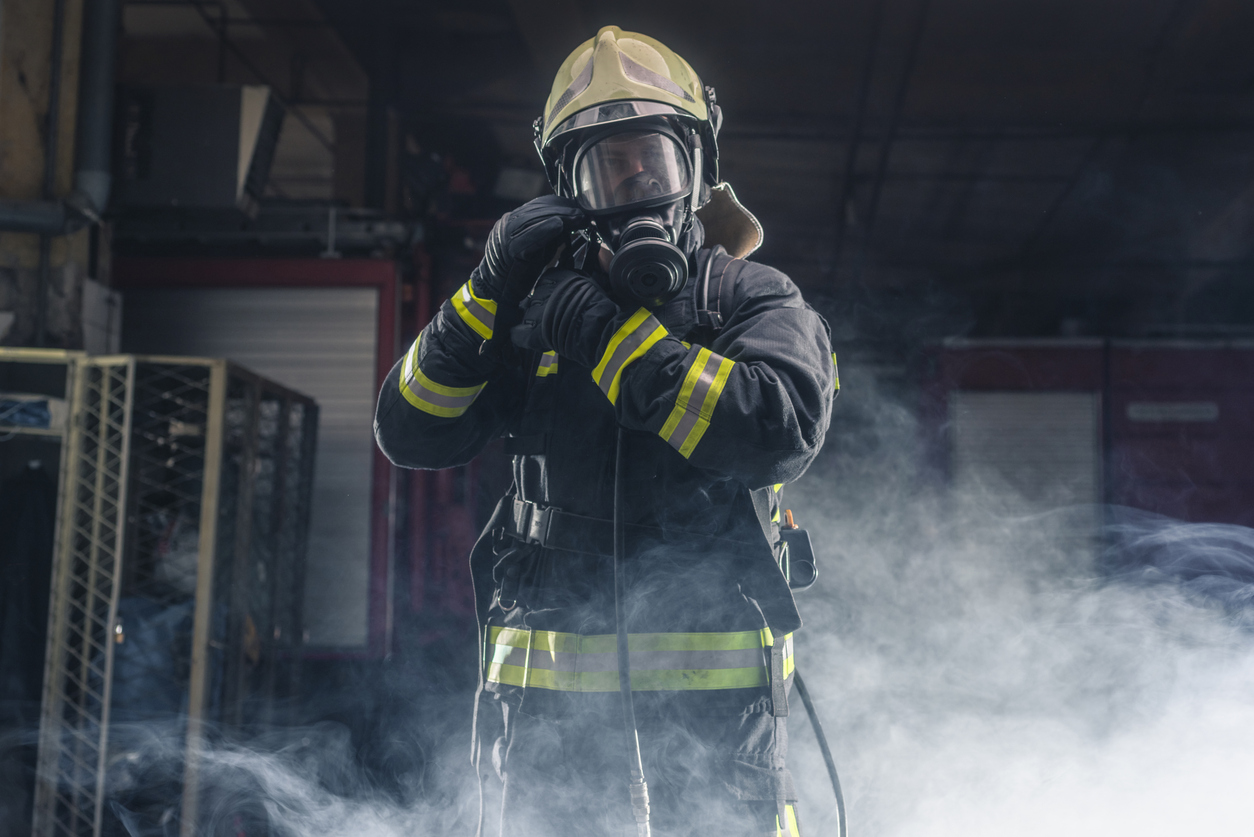
Effective SCBA management extends beyond basic checks after emergency responses. Ongoing maintenance, mandatory breathing air verification, and thorough documentation work together to ensure every unit remains ready for immediate deployment into hazardous environments.
Daily, Monthly, and Annual Inspection Requirements
NFPA 1852 defines a strict inspection framework for fire service SCBA programs. This framework requires user inspections at the start of each duty period, periodic inspections at least monthly, and advanced performance testing at least annually.
- Daily/Shift Checks: Must confirm cylinder pressure is at or above the department’s minimum operational threshold, inspect the facepiece seal and exhalation valve, test and arm the PASS device, and verify harness strap integrity.
- Monthly Inspections: Extend to evaluating regulator connection mechanisms, checking cylinder hydrostatic test dates, and ensuring structural parts show no cracks or heat warping.
- Annual Inspections: NFPA 1852 explicitly mandates a computerized functional flow test (bench test) performed by a certified technician using a specialized breathing machine to measure dynamic airflow performance. Mechanical overhaul and disassembly are performed concurrently based on manufacturer-specific component lifespans.
Composite cylinder hydrostatic testing, required every five years under DOT regulations, must be actively logged, and any out-of-test or 15-year expired cylinders must be permanently removed from service.
Breathing Air Quality Testing as Part of SCBA Management
An SCBA program that meticulously inspects physical hardware but neglects to verify the air inside the cylinder is fundamentally incomplete. Regular air quality testing is a vital liability shield; without it, personnel may enter IDLH atmospheres relying on air contaminated by system failures.
To remain compliant with NFPA 1989, fire departments must submit breathing air samples to a third-party accredited laboratory at least quarterly. Additional testing is strictly required following major compressor maintenance, purification filter swaps, or if a contamination event is suspected.
While portable, in-house gas detectors can catch massive spikes in toxic gases, only full-spectrum laboratory analysis satisfies NFPA 1989 audit criteria and proves compliance in legal or insurance proceedings.
TRI Air Testing: Military-Grade Precision for Fire Department Breathing Air
With patented sampling equipment originally developed for U.S. Navy Divers and an unbroken chain of military-sponsored testing programs, TRI Air Testing brings a caliber of precision to fire department breathing air testing that in-house methods cannot replicate.
TRI’s accredited laboratory provides analysis that meets ANSI/CGA G-7.1 specifications and generates documentation that satisfies NFPA 1852 recordkeeping requirements and withstands regulatory scrutiny.
Frequently Asked Questions About Self-Contained Breathing Apparatus
What is the difference between SCBA used in hazmat and firefighting?
Fire service SCBA units must comply with NFPA 1981, which subjects the equipment to extreme testing for thermal performance, direct flame resistance, physical impact, and facepiece voice-communication clarity. Structural fire SCBAs inherently include NIOSH CBRN (Chemical, Biological, Radiological, and Nuclear) protection. Standalone industrial Hazmat SCBAs are certified under NIOSH’s general SCBA standard and may carry additional CBRN certification for chemical permeability resistance, but they lack the structural heat/flame ratings required to survive a structural building fire.
How often should compressed breathing air in SCBA cylinders be tested?
The required testing interval depends heavily on your regulatory framework. For industrial facilities governed strictly by OSHA, third-party laboratory analysis is recommended quarterly to semi-annually based on usage. However, for fire departments and emergency services, NFPA 1989 strictly mandates that air purity must be tested at least quarterly (every 3 months). Additional testing must immediately follow any compressor maintenance, purification filter changes, or changes to the air intake environment.
What triggers the low air alarm on an SCBA?
Under modern NFPA 1981 standards for emergency services, the low-air alarm—technically known as the End-of-Service Time Indicator (EOSTI)—triggers automatically when 33% of the cylinder’s rated pressure remains (approximately 1,485 psi on a 4,500 psi cylinder). Some legacy or industrial-grade non-NFPA units may still trigger at 25%. Regardless of the threshold, activation is an emergency indicator, and personnel must begin immediate egress before entering their emergency reserve air.
Can I use an SCBA air compressor without testing the output air quality?
Routine mechanical maintenance and filter changes improve a compressor’s reliability, but they cannot verify breathing air purity. Critical hazards such as carbon monoxide spikes, microscopic oil mist from degraded internal seals, and excessive moisture cannot be seen, smelled, or tasted. Regular, accredited laboratory testing is the only legally defensible and scientifically sound method to confirm your system produces compliant breathing air.
What records do fire departments need to maintain for SCBA compliance?
To satisfy NFPA 1852, OSHA 1910.134, and municipal audit criteria, departments must maintain complete documentation logs. This includes daily/shift inspection checklists, monthly deep-checks, annual computerized functional flow tests (bench tests), composite cylinder hydrostatic testing dates (every 3 to 5 years), quarterly laboratory breathing air analysis certificates, and annual employee quantitative fit-testing records.
Conclusion
A self-contained breathing apparatus (SCBA) is much more than protective equipment. It’s a complete life-safety system whose effectiveness depends on every component working together exactly as intended. The facepiece must seal correctly, regulators must deliver consistent airflow, SCBA air tanks must remain structurally sound, and breathing air must consistently meet recognized purity standards.
Maintaining that level of protection requires more than routine inspections. It requires documented SCBA fit testing, preventive maintenance, SCBA flow testing, comprehensive SCBA testing, and accredited breathing air analysis that verifies compressor performance rather than assuming it.
TRI Air Testing helps fire departments, industrial facilities, emergency response organizations, and safety professionals protect personnel through ISO 17025:2017-accredited compressed breathing air analysis. With decades of experience, patented sampling technology, and active involvement in NFPA respiratory protection initiatives, TRI provides the defensible laboratory results organizations need to maintain compliant respiratory protection programs.
Contact TRI Air Testing today to schedule accredited compressed breathing air testing for your SCBA program and verify that every breath your personnel takes is backed by scientifically validated air quality.


The Original Compressed Air and Pure Gas Testing Laboratory

Related Articles

Review: FRI 2011, Atlanta
TRI Air Testing’s Sandra Dudek was in Atlanta recently for the International Association of Fire...
The 6th Industrial Fire, Safety & Security Show
The 6th Annual Industrial Fire, Safety & Security Show will be held November 30-December 1, 2011...
Happy Holidays to Our Overseas Soldiers & Firefighters
In its weekly e-newsletter, Fire Chief magazine highlighted American firefighters serving as soldiers in Iraq,...
