

Laser Particle Counters: Cleanroom and Compressed Air Guide

Table of Contents
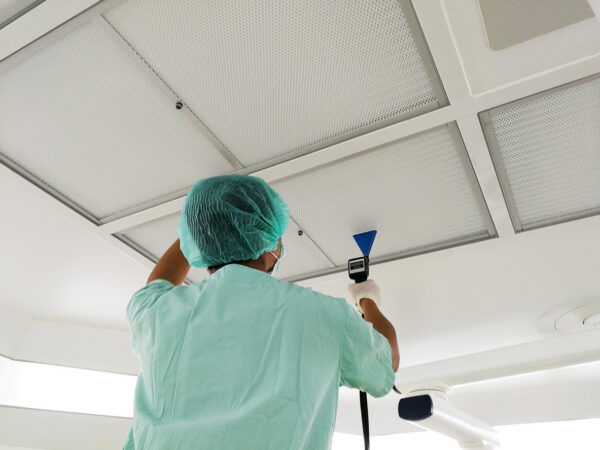
A cleanroom can pass its particle-count checks and still have a contamination problem. The source may be compressed air carrying particles through a pipe and depositing them directly onto a product, beyond the reach of routine room monitoring.
Laser particle counters help quality managers and cleanroom operators measure airborne particulate contamination and verify environmental conditions against established limits. However, the usefulness of the results depends on the instrument, sampling method, and standards governing the application.
This guide explains how laser particle counters work, which specifications matter, and how to choose between handheld, portable, and fixed instruments. It also covers cleanroom and compressed air standards, practical sampling considerations, and when independent laboratory testing can strengthen your compliance evidence.
Key Takeaways
- Laser particle counters use light scattering to measure airborne particles, but sensitivity, counting efficiency, and sampling conditions affect the results.
- ISO 14644-1 governs cleanroom classification, while ISO 8573-1 and ISO 8573-4 address compressed air purity and particle-testing methods.
- Cleanroom monitoring does not establish compressed air purity. Both environments require appropriate testing when they can affect product quality.
- Handheld, portable, and fixed counters serve different purposes, from troubleshooting to certification and continuous monitoring.
- In-house monitoring supports routine control, while testing from an appropriately accredited laboratory can provide independent evidence for audits and investigations.
How a Laser Particle Counter Works
A laser particle counter draws air through a laser beam, measures the light scattered by particles, and sorts detected particles into size channels. These counts help operators assess contamination and compare results with applicable limits.
Inside the Laser Particle Counter Sensor
A laser particle counter contains four main components: a laser diode, an optical chamber, a photodetector, and a pump that controls airflow.
- Laser diode: Generates a focused beam of light inside the optical chamber. The laser’s characteristics help determine how effectively the instrument detects small particles.
- Optical chamber: Directs the sampled air through the laser beam, where airborne particles scatter light as they pass through.
- Photodetector: Converts scattered light into an electrical signal that the instrument processes to estimate particle size. Detector sensitivity and signal processing affect how reliably it distinguishes small particles from background noise.
- Pump: Draws air through the chamber at a controlled flow rate, allowing the counter to calculate particle concentration based on the volume sampled. An unstable or inaccurate flow rate can compromise measurement results.
From Scattered Light to Size Data
Under comparable optical conditions, larger particles generally scatter more light and produce stronger signals. The counter converts signal intensity into an estimated particle size and assigns the particle to the appropriate channel.
Two specifications affect measurement reliability:
- Counting efficiency describes the proportion of particles of a given size that the instrument detects under defined conditions. Efficiency can decrease near the instrument’s smallest detectable size.
- Coincidence loss occurs when particles pass through the sensing volume too close together to be counted separately. This can cause undercounting or incorrect sizing at high concentrations.
Manufacturers specify operating limits to help prevent these problems. Highly concentrated samples may require dilution or a different sampling arrangement.
Particle counts should therefore be interpreted in the context of the instrument’s capabilities, operating conditions, and sampling method.
Particle Size Channels and What They Reveal
A particle-size channel groups detected particles according to a specified size threshold or interval. Most counters offer several channels so operators can assess fine particles and larger contamination within the same sample.
Cleanroom classification commonly uses a threshold of 0.5 micrometers (µm), alongside other specified sizes. Compressed air testing may require detection down to 0.1 µm for stringent purity requirements.
An instrument that measures only particles of 0.3 µm and larger cannot independently establish compliance with a requirement covering particles from 0.1 µm upward.
Table 1: Common Size Channels and Where They Matter
| Size channel | Cleanroom relevance | Compressed air relevance |
| 0.1 µm | Useful for highly sensitive applications, including semiconductor manufacturing. | Important for evaluating fine particles under stringent purity requirements. |
| 0.3 µm | Helps characterize fine airborne contamination where this threshold is relevant. | Provides useful particle data but may not meet every class’s measurement requirements. |
| 0.5 µm | A key threshold in cleanroom classification and monitoring. | Helps assess the 0.5-1.0 µm range when required by the test method. |
| 1.0 µm | Helps identify larger particles associated with people, materials, and equipment. | Relevant to the 1.0-5.0 µm range in compressed air testing. |
| 5.0 µm | Helps identify larger particles, subject to the applicable classification rules. | Detects larger particles that may contaminate products or affect equipment. |
These thresholds are a general guide, not a substitute for the applicable standard. Confirm the required size ranges and whether the instrument reports cumulative counts or differential size intervals before comparing results.
More channels don’t automatically make a counter better. The instrument must measure the sizes relevant to the contamination risk with suitable performance.
Standards for Particle Counters in Cleanrooms and Compressed Air
The applicable standard depends on what you are sampling: room air, compressed process air, or the particle counter itself. These requirements are distinct, and meeting one doesn’t establish compliance with the others.
ISO 14644-1: Cleanroom Classification
ISO 14644-1 classifies cleanrooms and clean zones according to airborne particle concentrations. It defines ISO Classes 1 through 9, with lower numbers representing cleaner environments.
Classification involves measuring particles at or above specified size thresholds at designated sampling locations. The required number and placement of sampling points depend on the area and the standard’s sampling rules.
Table 2: ISO 14644-1 Class Limits for ISO 5 to ISO 8
| ISO class | Maximum particles/m³ ≥0.5 µm | Maximum particles/m³ ≥5.0 µm | Typical use |
| ISO 5 | 3,520 | Not Specified* | Critical aseptic operations and controlled manufacturing |
| ISO 6 | 35,200 | 293 | Pharmaceutical support and sensitive manufacturing |
| ISO 7 | 352,000 | 2,930 | Pharmaceutical production and controlled assembly |
| ISO 8 | 3,520,000 | 29,300 | General controlled manufacturing |
*Source: ISO 14644-1:2015. *ISO 14644-1:2015 sets no ≥5.0 µm limit for ISO 5. Facilities that need to track larger particles at this class can use the standard’s macroparticle (M) descriptor. These are classification limits, not universal operational action limits. Confirm the applicable edition and sampling requirements before using the values for certification.
Classification establishes whether an environment meets its specified cleanliness class under defined conditions. Routine monitoring and requalification help determine whether it remains under control.
EU GMP Annex 1 and USP Requirements
Pharmaceutical and sterile-compounding facilities may face requirements beyond ISO cleanroom classification.
The 2022 revision of EU GMP Annex 1 addresses sterile medicinal product manufacturing. It establishes airborne particle monitoring expectations for Grades A through D, with limits and monitoring requirements that vary by grade and operating condition. Grade A zones receive particularly rigorous controls because they protect exposed sterile products and critical processing steps.
In the United States, USP General Chapter <797> covers sterile compounding, including facility and environmental requirements. USP <1116> provides guidance on microbiological control and monitoring in aseptic processing environments.
Particle counts and microbiological monitoring aren’t interchangeable. A laser particle counter measures nonviable airborne particles but can’t determine whether detected particles are microorganisms or whether they are viable.
ISO 8573-1 and ISO 8573-4: Particles in Compressed Air
Compressed air needs separate evaluation when it contacts products, packaging, equipment, or process surfaces.
ISO 8573-1 defines compressed air purity classes for solid particles, water, and oil. ISO 8573-4 specifies methods for testing solid-particle content, including optical particle counting.
Classes 1 through 5 use maximum particle counts across specified size ranges. Classes 6, 7, and X use mass concentration criteria instead. Class 0 covers user- or supplier-defined requirements more stringent than Class 1.
Table 3: ISO 8573-1 Particle Purity Classes 1 to 5
Maximum particle concentration in particles/m³ at the standard’s reference conditions.
| Class | 0.1-0.5 µm | 0.5-1.0 µm | 1.0-5.0 µm |
| 1 | 20,000 | 400 | 10 |
| 2 | 400,000 | 6,000 | 100 |
| 3 | Not specified | 90,000 | 1,000 |
| 4 | Not specified | Not specified | 10,000 |
| 5 | Not specified | Not specified | 100,000 |
Source: ISO 8573-1:2010. A range listed as not specified doesn’t mean zero particles or unlimited contamination under other requirements. Verify the applicable edition and class limits before using this table to establish compliance.
The counter must support the required size ranges and sampling conditions. Compressed air testing also requires appropriate pressure reduction and flow control. A standard room-air counter connected directly to a pressurized line isn’t a suitable substitute for a properly configured sampling system.
Cleanroom Particle Counters: What They Catch and What They Miss
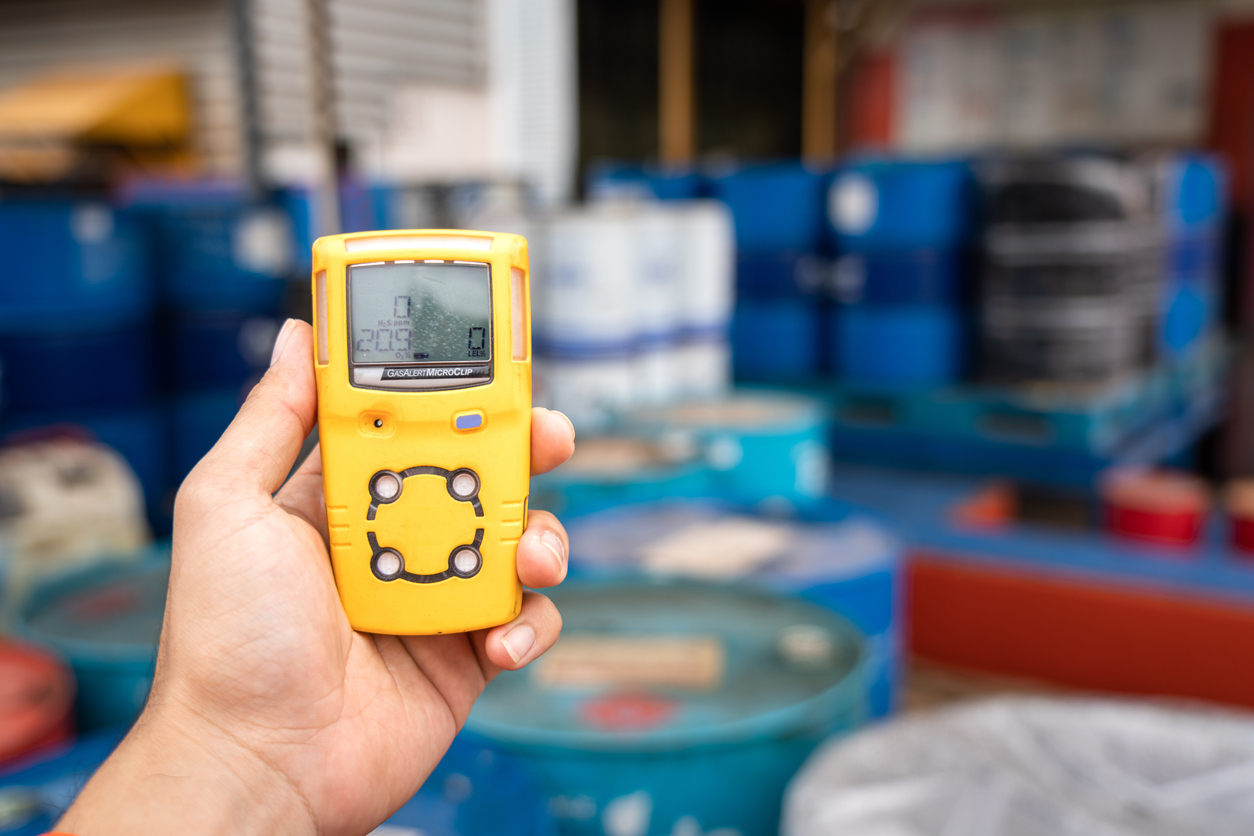
Particle counters help facilities understand airborne contamination, but a measurement represents only the sampled air at a particular location and time. It does not automatically reflect every potential contamination source.
Room Classification and Routine Monitoring
Cleanroom particle monitoring typically supports three activities: initial classification, periodic requalification, and routine monitoring.
- Classification establishes whether an environment meets its specified cleanliness class.
- Requalification checks whether it continues to meet requirements after changes or maintenance, or at defined intervals.
- Routine monitoring identifies changes during normal operations.
Each activity serves a different purpose. Classification follows the standard’s sampling rules, while routine monitoring can focus on locations and operating conditions identified through risk assessment.
For example, a quality manager might use a portable counter to investigate rising particle counts near a filling line. Fixed sensors may monitor critical zones continuously, while scheduled measurements assess the wider facility.
Record the sampling location, operating state, particle-size channels, sample volume, and instrument identification. Consistent documentation makes trends easier to interpret and helps distinguish process changes from measurement differences.
Compressed Air: The Particle Source Room Counts Miss
A cleanroom may meet its airborne particle limits while compressed air introduces contamination directly into a process.
Consider a packaging line in a controlled environment. Room monitoring shows acceptable conditions, but a compressed air nozzle used to clean a component releases particles from the distribution system onto the component’s surface. Because the particles travel through a closed pipe, the room counter may never detect them.
Potential sources include:
- Compressor wear that releases particles from internal components.
- Damaged or improperly installed filters that allow particles downstream.
- Corrosion in distribution pipes that releases rust and other debris.
- Dead legs and poorly designed pipe sections where contamination accumulates.
- Maintenance activities, leaks, or deteriorating connections that introduce particles.
The risk depends on the system design and how the air is used. Air powering a pneumatic actuator may have different requirements from air blown directly onto exposed pharmaceutical ingredients or food packaging.
Identify critical contact points, establish the applicable purity requirements, and sample those locations using a suitable method.
A passing cleanroom result doesn’t prove compressed air compliance with ISO 8573-1. Similarly, compliant compressed air does not establish that the surrounding room meets its cleanroom classification. Each requires its own assessment.
Particle Counters, Cleanrooms, and Industry Requirements
The consequences of particulate contamination vary by industry:
- Pharmaceuticals and biotechnology: Particles can compromise controlled processing conditions. Monitoring supports contamination control but must be combined with appropriate microbiological testing.
- Semiconductors: Fine particles can damage wafers, disrupt manufacturing, and reduce product yield, making sensitivity and measurement reliability critical.
- Medical devices: Contamination can affect cleanliness and product performance, depending on the device and manufacturing process.
- Food and beverage: Particles introduced through processing air can contaminate exposed products or contact surfaces, depending on the application.
The common principle is to measure contamination where it can affect the product, not only where sampling is convenient.
Handheld, Portable, and Fixed Laser Particle Counters
Handheld, portable, and fixed counters serve different purposes. The best option depends on whether you need quick troubleshooting, formal testing, compressed air analysis, or continuous monitoring.
Handheld Laser Particle Counter: Spot Checks and Troubleshooting
Handheld counters are compact and useful for checking multiple locations quickly. Technicians can use them to investigate unexpected readings, compare areas, and identify potential contamination sources.
Many operate at approximately 0.1 cubic feet per minute (CFM). This is convenient for spot checks but can mean longer sampling times in very clean environments, where larger sample volumes may be needed.
At 0.1 CFM, collecting 1 cubic foot takes approximately 10 minutes. Actual measurement time depends on the required sample volume and applicable protocol.
Handheld counters are useful for routine inspections and troubleshooting. Before using one for formal classification, confirm that its performance meets the relevant requirements.
Portable Laser Particle Counter: Certification and Compressed Air Testing
Portable counters generally offer higher sampling capacity and greater flexibility. Models operating at 1.0 CFM or higher can collect larger volumes more quickly, making them useful for classification, requalification, and investigations.
At 1.0 CFM, collecting 1 cubic foot takes approximately 1 minute, excluding setup and other procedural steps.
Portable instruments can also support compressed air testing when paired with suitable pressure-reduction equipment. A high-pressure diffuser or equivalent assembly brings the sample to appropriate conditions without compromising the measurement.
Incorrect pressure reduction, contaminated connections, or particle losses inside the sampling assembly can distort results. Confirm that the complete setup meets the applicable method.
Fixed Remote Sensors: Continuous Monitoring
Fixed counters monitor designated locations continuously or at configured intervals. They can record trends, trigger alarms, and integrate with facility monitoring systems.
These systems are particularly useful in critical pharmaceutical and aseptic processing zones where continuous monitoring is required or justified by risk. Sensors may be positioned near exposed products, filling points, or other critical operations.
Their main advantage is continuity. Operators can identify changes between manual measurements and correlate excursions with production activities.
Placement, tubing length, sample transport, maintenance access, and alarm thresholds all influence performance. Remote sampling lines must be designed and maintained to minimize delays and particle losses.
Table 4: Handheld vs. Portable vs. Fixed Laser Particle Counters
| Type | Typical flow rate | Best use | Compressed air capable? | Data and compliance features |
| Handheld | Often 0.1 CFM | Spot checks and troubleshooting | Only with a suitable configuration | Basic logging and model-dependent reporting |
| Portable | Commonly 1.0 CFM or higher | Classification and investigations | Yes, with appropriate pressure-reduction equipment | Data storage, reports, multiple channels |
| Fixed remote | Model-dependent | Continuous monitoring | Only with a suitable sampling configuration | Continuous records, alarms, system integration |
These are typical examples, not universal specifications. Check manufacturer documentation and applicable standards before selecting an instrument for compliance testing.
How to Choose a Particle Counter for Cleanroom and Compressed Air Work
Start with the measurement requirement rather than the product catalog. Define the contamination risk, required particle sizes, sampling conditions, and documentation needs before comparing instruments.
Specifications That Matter
Four specifications deserve particular attention.
- Smallest detectable particle size: A 0.1 µm threshold may be necessary for stringent compressed air applications, while many cleanroom tasks focus on 0.5 µm and other specified sizes. Match sensitivity to the actual requirement.
- Flow rate: Higher flow rates can reduce the time needed to collect a specified sample volume. However, flow rate alone does not determine accuracy. Counting efficiency, sampling losses, and concentration limits also matter.
- Pressure rating and sampling compatibility: Room air and pressurized process air require different sampling arrangements. Confirm that the counter and its accessories support the intended pressure, flow, and connection requirements.
- Counting efficiency and concentration limits: Review the instrument’s detection efficiency at relevant particle sizes and its susceptibility to coincidence loss. These factors matter when measurements are close to compliance thresholds.
Data Integrity and 21 CFR Part 11 Support
Regulated facilities may need records showing when measurements occurred, which instrument produced them, who performed the test, and whether records were altered or reviewed.
User access controls, timestamps, audit trails, secure storage, and controlled exports can support data integrity. Some facilities may also require electronic records and signatures that meet applicable regulatory expectations.
21 CFR Part 11 addresses electronic records and electronic signatures within its scope. Buying a counter that advertises Part 11 support doesn’t automatically make a facility compliant. The system must be appropriately configured, validated, and used within documented procedures.
Before purchasing, ask manufacturers to demonstrate the relevant controls and explain which features are included. Establish how calibration records, maintenance histories, deviations, and corrective actions will be retained.
What a Laser Particle Counter Cannot Measure
A laser particle counter measures optically detectable particles. It can’t independently establish their chemical composition, biological identity, or the full purity of the sampled air.
It doesn’t directly measure:
- Oil vapor concentration in compressed air.
- Moisture content or pressure dew point.
- Gaseous contaminants such as carbon monoxide.
- Whether a particle is a bacterium, mold spore, or non biological contaminant.
- Whether a product or environment is sterile.
Compressed air purity programs may require separate testing for particles, water, and oil, with additional analyses determined by the application.
A sample may have an acceptable particle count but excessive moisture or oil. Conversely, low moisture and oil readings do not prove that the system is free from particulate contamination.
A comprehensive testing plan combines particle counting with the other analyses required by the applicable standard, customer specification, or risk assessment.
Best Practices for Accurate Particle Counts
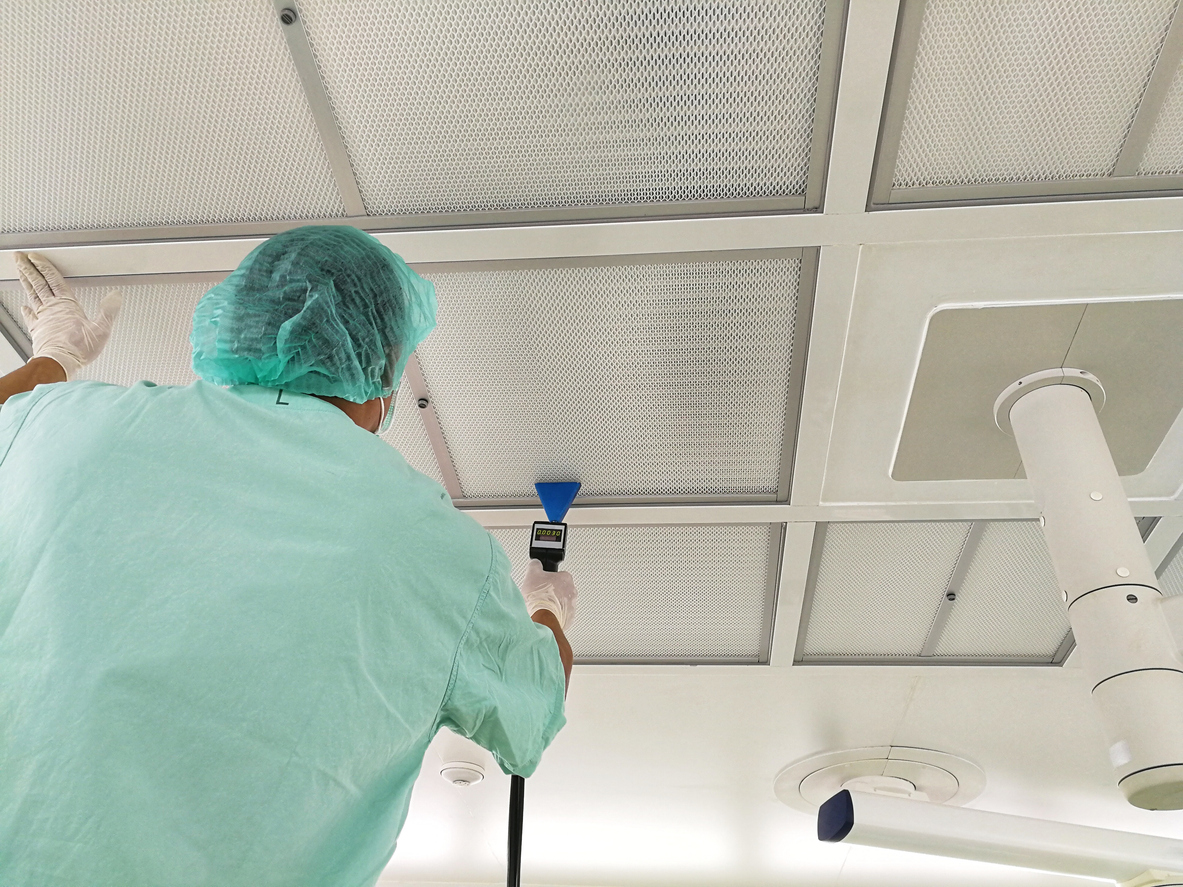
Reliable measurements require representative sampling, sufficient sample volume, controlled handling, and current instrument records.
Sample Location, Volume, and Statistical Confidence
Choose sampling locations according to contamination risk. In cleanrooms, these may include areas near exposed products, critical equipment, or airflow disturbances. For compressed air, sample relevant points of use rather than relying exclusively on measurements at the compressor outlet.
Sample volume matters, particularly when particles are scarce. A zero count in a small sample does not prove that the air contains no particles. It means only that none were detected in the measured volume, subject to the instrument’s performance and sampling method.
When particle arrivals can reasonably be approximated by a Poisson process, observing zero particles gives an approximate 95% upper confidence bound of three particles in the sampled volume. This is known as the rule of three and illustrates why larger samples can provide stronger evidence at low concentrations.
Follow the sample volume and location requirements. Don’t substitute a convenient sampling duration for a required protocol.
Isokinetic Sampling and Pressure Reduction
Isokinetic sampling aims to match the velocity of air entering a sampling probe to the surrounding airflow at the probe opening. This helps reduce sampling bias when particle size and inertia affect how particles enter the probe.
Probe orientation, airflow, tubing, and sample transport should suit the method. Compressed air requires additional care because the sample is pressurized. Appropriate pressure reduction is necessary before air enters an instrument not designed for line pressure.
Keep connections clean, minimize unnecessary tubing, and follow the equipment manufacturer’s instructions. Document the sampling configuration so results can be compared consistently over time.
Calibration Intervals and Records
Calibration and verification help establish that particle counters remain reliable.
ISO 21501-4 specifies calibration and verification methods for light-scattering airborne particle counters used in clean spaces. It addresses parameters such as size-setting error, counting efficiency, flow-rate error, false counts, and maximum particle concentration.
Annual calibration is common practice, but the correct interval depends on the applicable requirements, manufacturer guidance, instrument use, and facility quality system.
Maintain calibration certificates, instrument identification, maintenance records, performance checks, and any adjustments. Record the sampling method, location, date, operating conditions, and results.
If an instrument is found to be out of tolerance, assess whether previously collected data may have been affected and whether earlier compliance decisions require review.
When to Use an Accredited Lab Instead of an In-House Counter
In-house counters are useful for routine monitoring, troubleshooting, and trend analysis. Independent laboratory testing can provide additional evidence when results must support an audit, customer qualification, supplier approval, or contamination investigation.
A third-party laboratory can provide documented results generated under defined methods and quality controls. Testing by a laboratory accredited to ISO/IEC 17025 can add confidence when the relevant measurement and method fall within its accreditation scope.
Why Independent Testing Adds Value
Consider a manufacturer whose in-house counter shows stable compressed air readings. A customer audit then requires documented evidence that the air meets a specified particle-purity class.
Internal data may help demonstrate process control, but the customer may require a defined test method and results from an appropriately accredited laboratory.
Independent testing can also help when investigating recurring contamination, verifying filtration changes, establishing baseline conditions, or resolving unexpected in-house readings.
The objective is not to replace internal monitoring. In-house instruments help teams maintain control, while independent testing provides additional evidence for decisions that require documented verification.
TRI Air Testing: Independent Compressed Air and Gas Analysis
TRI Air Testing provides compressed air and gas analysis for organizations evaluating contamination and supporting quality requirements.
Its credentials include ISO/IEC 17025:2017 and A2LA accreditation. Before commissioning a test, confirm that the relevant measurement and method fall within the laboratory’s current accreditation scope.
TRI’s history also includes sampling equipment originally developed for U.S. Navy divers, reflecting its experience with applications where dependable sampling matters.
Customer-collected sampling kits provide an option for organizations that cannot accommodate an on-site visit. Teams collect samples according to the supplied instructions and send them to the laboratory. Suitability depends on the test method and applicable requirements.
TRI’s reports help quality teams interpret results and determine whether further investigation may be necessary. Combined with maintenance records and corrective actions, these findings can help organizations investigate contamination and document their response.
Frequently Asked Questions
How often should a cleanroom particle counter be calibrated?
Annual calibration is common, but the appropriate interval depends on manufacturer guidance, applicable standards, and the facility’s quality system. ISO 21501-4 provides relevant calibration and verification requirements for airborne particle counters used in clean spaces.
Can a laser particle counter test compressed air?
Yes, if the counter and sampling system are suitable for compressed air testing. The setup generally requires appropriate pressure reduction and flow control, and testing must follow the applicable method, such as ISO 8573-4.
What is the difference between 0.1 µm and 0.3 µm sensitivity?
A counter with a 0.1 µm detection threshold can measure smaller particles than one with a 0.3 µm threshold, assuming suitable performance at both sizes. Choose sensitivity according to the applicable standard, purity class, and contamination risk.
Does a particle counter detect bacteria or mold?
It can count particles that include bacteria-bearing particles or mold spores, but it cannot identify their biological composition or viability. Microbiological sampling and appropriate laboratory analysis are necessary when biological contamination is the concern.
Do I need both room monitoring and compressed air testing?
If compressed air or process gas can contact your product, equipment, or critical surfaces, assess it separately from the room environment. Room monitoring measures airborne particles at designated locations, while compressed air testing evaluates contamination within the gas supply.
Conclusion: Get the Full Picture of Particulate Contamination
Laser particle counters are essential tools for measuring airborne contamination, but reliable compliance decisions require more than choosing the right detection threshold.
Facilities must understand the applicable standards, select suitable instruments, control sampling conditions, and maintain calibration records. They must also assess contamination pathways beyond the room itself, particularly compressed air and process gas that can reach products directly.
In-house monitoring helps teams identify changes and maintain control. When independent evidence of compressed air or gas quality is needed, testing by an appropriately accredited laboratory can provide additional confidence.
TRI Air Testing helps organizations evaluate compressed air and gas contamination through laboratory analysis, documented results, and practical sampling options.
Contact TRI Air Testing to discuss your testing requirements and determine which analyses can support your quality program and compliance objectives.





Related Articles
Air Sampling Kits – Video
TRI Air Testing offers sampling kits for use on free loan or for purchase. All...

Why wait? TRI Offers 24-Hour Turnaround Time
Compressed air testing is a vital component of many industries, both for verifying equipment functionality...
TRI’s Quality Program
At TRI Air Testing, quality is built into everything that we do. Our documented quality system...
