

What Makes an Indoor Air Quality Testing Service Great for Regulated Industries?

Table of Contents

For a regulated facility, indoor air quality testing is more than a routine check of what’s floating through the air. The results can become part of an audit trail, support worker-safety decisions, help verify environmental controls, or determine whether a facility is ready for occupancy or production.
That makes the choice of testing provider important.
A company may offer “air quality testing” without having the laboratory capabilities, accreditation, sampling discipline, or industry knowledge needed to produce results you can confidently defend. When the authorities question the results, the difference between a competent testing laboratory and a generalist becomes significant for facilities operating under strict quality, safety, or production requirements.
A great indoor air quality testing service combines technical competence with transparent methods, appropriate accreditation, reliable turnaround, and documentation that stands up to scrutiny. It also understands that industrial and regulated environments rarely fit a one-size-fits-all testing package.
Key Takeaways
- Accreditation matters. Look beyond logos and marketing claims and verify the laboratory’s current accreditation and specific testing scope.
- Methodology matters as much as equipment. Representative sampling, calibrated equipment, documented procedures, and appropriate analytical methods are essential for defensible results.
- Good reports provide context. A useful report explains methodology, sampling details, results, applicable criteria, and what the findings mean.
- Industrial facilities require specialized planning. Multiple zones, production schedules, HVAC systems, and access restrictions can make industrial indoor air quality testing substantially more complex.
- The right provider should make compliance easier. Look for a testing partner that can explain its standards, answer technical questions clearly, and maintain consistent quality over time.
Why Indoor Air Quality Testing Services Matter for Regulated Industries
Discussions often frame indoor air quality as a comfort issue. In regulated environments, however, it can also become a workplace safety, quality, operational, and documentation issue.
Healthcare facilities, food production plants, pharmaceutical manufacturers, laboratories, industrial workplaces, and other controlled environments can have complex requirements that govern the conditions under which people work, and under which products are manufactured, handled, or stored.
Poor indoor air quality can create concerns around occupant health, exposure to airborne contaminants, building conditions, and the effectiveness of ventilation or other environmental controls. Depending on the facility and contaminant involved, results may also become relevant to an organization’s internal quality program or external audit process.
It’s important to be precise about what “compliance” means. The Occupational Safety and Health Administration (OSHA), for example, does not have a single comprehensive indoor air quality standard covering every workplace. Instead, OSHA provides indoor air quality guidance and has standards addressing particular hazards, contaminants, ventilation requirements, and workplace responsibilities.
That distinction makes provider expertise even more important.
A competent testing company shouldn’t simply arrive with a generic indoor air quality package. It should also understand the facility’s goals, relevant contaminants, applicable standards, sample collection methods, and result documentation procedures.
So, what separates a great indoor air quality testing service from a mediocre one?
The answer starts with the laboratory itself.
What Sets Air Purity Experts Apart from General Contractors
There is a fundamental difference between a company whose main strength is laboratory testing and a general contractor, environmental service provider, or maintenance worker that offers indoor air quality testing as an additional service.
A generalist may be perfectly capable of performing certain basic measurements. But regulated facilities often need more than a reading from a handheld instrument. They need a defensible process from sampling through analysis and reporting.
A dedicated testing laboratory should be able to demonstrate:
- Appropriate laboratory accreditation
- Defined analytical methods
- Calibrated and maintained equipment
- Qualified personnel
- Quality-control procedures
- Documented sample handling
- Traceable reporting
- Experience with applicable industry standards
- Technical support when results require interpretation
Reviewers find that distinction especially important when they review results months or years after collecting samples.
Accreditation and Certification Standards to Verify

Accreditation is one of the first things facility managers should investigate, but it’s also one area where marketing language can become confusing.
What does ISO 17025:2017 mean?
ISO/IEC 17025:2017 establishes general requirements for the competence of testing and calibration laboratories. In practical terms, accreditation to this standard demonstrates that assessors have evaluated a laboratory’s technical competence and quality-management practices relevant to its accredited activities.
This does not imply that a laboratory automatically receives accreditation for every test it offers.
That distinction is critical.
A laboratory’s accreditation applies to its defined scope. Customers should therefore check the actual scope of accreditation to ensure it includes the relevant testing activities.
What is A2LA accreditation?
The American Association for Laboratory Accreditation, or A2LA, is an accreditation body that evaluates laboratories against recognized standards, including ISO/IEC 17025.
For a customer, the important question is not simply whether a provider displays an A2LA logo. The question is whether the laboratory currently holds accreditation and whether the specific tests you require fall within its scope.
What does AIHA accreditation mean?
AIHA Laboratory Accreditation Programs, LLC, provides laboratory accreditation programs covering areas such as industrial hygiene and environmental microbiology. AIHA-LAP requires accredited laboratories to meet ISO/IEC 17025 requirements along with applicable program-specific requirements.
Again, scope matters. Customers can see exactly which fields of testing and analytical methods an accredited laboratory covers.
Don’t take accreditation claims at face value. Ask for the current certificate and scope, then verify that the testing you need is included.
Sampling Methodology and Equipment Calibration
Sophisticated equipment cannot compensate for poor sampling.
If the sample does not accurately represent the environment being evaluated, even a highly precise laboratory analysis may produce a misleading picture.
A credible provider should be able to explain:
- Where samples will be collected
- Why those locations were selected
- How many samples are required
- What sampling methods will be used
- How equipment is calibrated or verified
- How samples are identified and handled
- What quality-control procedures are followed
- How samples are transported and analyzed
This level of transparency shouldn’t require a technical investigation from the customer.
Purpose-built instruments and laboratory sampling equipment also have an important role. Depending on the contaminant, different collection methods may be appropriate. A provider should select equipment and methods based on the analytical objective rather than simply using whatever handheld sensor is available.
Turnaround Time and Report Clarity
Fast results matter when an organization is waiting on an occupancy decision, looking into a possible exposure, preparing for an audit, or deciding whether operations can move forward, but that speed shouldn’t come at the expense of quality. A credible provider will give you a realistic turnaround time before testing even begins and explain what could affect that timeline.
The final report matters just as much as how quickly it arrives. A useful indoor air quality report goes beyond a list of numbers. Depending on the testing program, it may include:
- Sampling dates and locations
- Sample identification
- Sampling methods
- Analytical methods
- Laboratory results
- Applicable criteria or reference values
- Quality-control information
- Units of measurement
- Detection or reporting limits where relevant
- Interpretation or technical comments
- Any limitations affecting the results
The goal is simple. Anyone reviewing the report later should be able to understand what was tested, how it was tested, what was found, and what the findings mean.
Core Testing Parameters an Air Quality Testing Company Should Cover
OSHA notes that there is no single test for identifying every indoor air quality problem. An effective investigation can involve evaluating ventilation, temperature, humidity, specific contaminants, building conditions, and other potential sources.
The testing parameters appropriate for a regulated facility depend on its operations, building characteristics, potential exposure pathways, and compliance objectives.
Still, a capable indoor air quality testing company should have the technical breadth to address a range of common concerns.
Mold and Microbial Contaminants
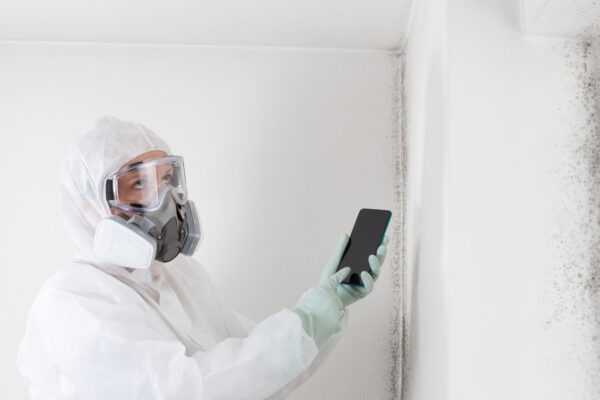
Mold and other microbial contaminants can become concerns following water intrusion, HVAC problems, elevated humidity, construction activity, or other building conditions.
Testing may involve airborne or surface sampling, depending on the investigation. The appropriate approach should be determined by the question being answered rather than by automatically applying the same sampling package to every building.
For regulated facilities, the value of microbial testing is not simply identifying whether a microorganism exists, but interpreting what that presence means. Interpretation requires consideration of the building, sampling conditions, locations, background conditions, and reason for testing.
A strong provider should therefore explain why particular samples are being collected and how the results will be evaluated.
VOCs and Chemical Off-Gassing
Volatile organic compounds (VOCs) are another important consideration.
They can originate from paints, adhesives, furnishings, cleaning products, solvents, manufacturing processes, building materials, and other sources. Renovated spaces may also warrant attention to chemical off-gassing.
In an industrial environment, the potential sources can be considerably more complex.
A proper VOC assessment should be based on the suspected sources and the purpose of testing. Rather than promising that a generic “VOC test” will identify every chemical present, a qualified provider should discuss the analytical panel, sampling method, detection capabilities, and relevant comparison criteria.
Particulate Matter and Radon
Particulate matter can include dust and fine airborne particles generated by indoor activities, manufacturing processes, construction, combustion, or outdoor sources entering a building.
The appropriate particle measurement depends on the question being investigated. A facility may need information about particle concentration, particle size, occupational exposure, source identification, or another specific concern.
Radon differs from many routine indoor air quality parameters because it’s a naturally occurring radioactive gas that can accumulate indoors. Testing may be particularly relevant where site conditions and building use warrant it.
The important point is that the testing program should be designed around the facility’s actual risk profile.
Common IAQ Testing Parameters
| Testing parameter | Standard or guideline to consider* | Typical testing approach | Why it matters in regulated facilities |
| Mold and microbial contaminants | Applicable industry/building guidance and project criteria | Air, surface, or bulk sampling with laboratory analysis | Helps investigate moisture-related or microbial concerns |
| VOCs | Applicable occupational exposure limits, project criteria, or industry requirements | Sorbent-based or other validated sampling and laboratory analysis | Identifies potential chemical exposure or off-gassing concerns |
| Particulate matter | Applicable OSHA limits, occupational criteria, or facility requirements | Direct-reading instruments, filter sampling, or other appropriate methods | Helps evaluate airborne particles and potential exposure sources |
| Radon | EPA and applicable state/local guidance | Long- or short-term radon measurement using appropriate devices | Identifies potential long-term radioactive gas exposure |
| Carbon monoxide | OSHA and applicable exposure criteria | Direct-reading or integrated sampling | Helps identify combustion-related exposure risks |
| Carbon dioxide | Ventilation/building guidance and project criteria | Direct-reading instrumentation | Can help evaluate ventilation conditions |
| Temperature and humidity | Building-specific requirements and applicable guidance | Calibrated direct-reading instruments | Supports assessment of comfort, ventilation, and moisture conditions |
How to Evaluate Air Quality Testing Companies Before You Sign a Contract

You should treating choosing a testing provider like any other decision involving a regulated vendor.
Before signing a contract, ask questions that reveal how the company actually operates.
Ask About the Regulatory Frameworks They Test Against
A strong provider should ask about your facility before recommending tests.
For example, a food production facility may have different priorities from a pharmaceutical manufacturing site, healthcare facility, laboratory, or industrial plant.
Ask:
- Which standards or guidelines apply to this testing?
- What information do you need about our facility before designing the sampling plan?
- Are you accredited for the tests you are recommending?
- Which methods will you use?
- How will the results be evaluated?
- What documentation will be included in the final report?
Be cautious of companies that immediately recommend a generic package without asking what your facility does or why you need testing.
Confirm What Documentation You Will Receive
Ask to see a sample report before purchasing the service.
A bare spreadsheet of results may not be enough for a regulated operation.
Find out whether the provider documents:
- Sampling locations
- Dates and times
- Sample IDs
- Sampling methods
- Analytical methods
- Equipment information
- Chain of custody
- Quality-control procedures
- Laboratory results
- Applicable standards or criteria
- Interpretive comments
- Limitations and recommendations
Documentation is especially important when test results need to be shared with auditors, regulators, corporate quality teams, safety professionals, or other stakeholders.
Red Flags That Signal a Weak Air Quality Testing Service
Knowing what a good provider looks like is only half the evaluation.
You should also know what to hesitate over.
Vague or Unverifiable Accreditation Claims
Be cautious when a provider says it’s “certified,” “compliant,” or “accredited” without identifying:
- The accreditation body
- The applicable standard
- The certificate number
- The current status
- The accredited location
- The specific testing scope
A legitimate accreditation claim should be verifiable.
Remember that accreditation is scope-specific. A company may be accredited for some laboratory activities while offering other services outside that scope.
Suspiciously Fast or Cheap Testing
Price matters, but the cheapest quote isn’t necessarily the lowest-cost option once you factor in what a complex testing program actually requires: qualified personnel, proper equipment, laboratory analysis, quality control, documentation, and reporting that holds up.
If a provider promises extensive testing at an unusually low price, or guarantees immediate results regardless of how complex the project is, it’s worth asking how they’re pulling that off. Fast service can be entirely legitimate, but the real question is whether that speed comes from efficiency or from shortcuts.
Inconsistent Sampling Protocols
If a provider can’t clearly explain its sampling strategy, that’s worth pausing on. When a company can’t tell you why samples will be collected in particular locations, how many are needed, or what method will be used, it’s hard to know whether the results will actually be representative of your facility.
This matters even more for industrial facilities, where sampling design should account for real differences between production areas, offices, storage zones, HVAC systems, and other relevant spaces.
Poor Communication and Confusing Reports
A report packed with dozens of numbers but no meaningful context shifts the entire interpretation burden onto the customer, which is especially difficult when that customer is a facility manager rather than an industrial hygienist or laboratory scientist.
A good testing company bridges that gap. It should be able to explain technical results in plain language without oversimplifying them.
What Industrial Air Quality Testing Companies Handle Differently
Industrial facilities can make IAQ testing considerably more complicated than a typical office investigation, since a single site might contain multiple production areas, enclosed processes, warehouses, laboratories, clean areas, administrative spaces, mechanical rooms, and different HVAC zones, each with its own air characteristics.
On top of that, the air environment itself can shift throughout the day as production activity, ventilation systems, equipment, and staffing levels change.
Facility Complexity and Multiple Sampling Points
One sample rarely tells the whole story in a large industrial facility.
A strong industrial testing program considers:
- Facility layout
- Production processes
- HVAC zones
- Potential emission sources
- Employee work locations
- Material handling areas
- Areas with known complaints
- Outdoor background conditions
- Differences between production and non-production spaces
Sampling locations should be selected for a reason.
For example, if a manufacturing process creates airborne contaminants, sampling near the process, in employee breathing zones, and in adjacent areas may answer very different questions.
The provider should be able to explain that strategy before arriving on site.
Coordinating Testing with Production Schedules
Industrial testing has an operational side too, and it doesn’t always run on the customer’s ideal schedule. Getting representative data often means sampling during specific production conditions, which means technicians have to work around whatever the facility actually has going on: shift changes, restricted-access areas, safety requirements, planned downtime, cleaning schedules, maintenance windows, equipment operation, and visitor restrictions.
An experienced industrial testing company talks through these variables during project planning, not on sampling day when it’s too late to adjust. The goal is straightforward: get the data that actually answers the question, while disrupting the facility as little as possible.
Questions to Ask an Air Purity Specialist Before You Hire One
A vendor call should give you enough information to judge the provider’s technical competence before you commit.
Use the following questions during an RFP, quote review, or introductory call.
| Vendor evaluation question | What a strong answer sounds like | What a weak or evasive answer signals |
| Are you accredited for the testing we need? | Provides current certificate and scope and explains which activities are covered | Relies on generic “certified” language |
| Which methods will you use? | Names appropriate sampling and analytical methods and explains why | Cannot explain methodology |
| How will you determine sampling locations? | Bases locations on facility layout, sources, HVAC, occupancy, and project objectives | Offers a fixed number of locations without explanation |
| How is your equipment maintained? | Explains calibration, verification, maintenance, and quality controls | Treats calibration as an afterthought |
| What will the final report contain? | Includes methodology, samples, results, QC information, and interpretation | Promises a basic results sheet |
| Which standards apply to our facility? | Asks about industry and project requirements before identifying applicable criteria | Offers a generic compliance package |
| What is your normal turnaround time? | Gives a realistic timeline and identifies variables affecting delivery | Promises implausibly immediate results |
| Can you explain results after the report is issued? | Provides technical support and discusses findings with the customer | Treats report delivery as the end of the relationship |
| Can you handle multiple facilities? | Describes consistent procedures and centralized quality controls | Can only support one location or uses different standards by site |
Why Air Purity Specialists Interpret Data Instead of Just Reporting It
Testing produces data, but good testing produces useful information, and that difference matters. A facility manager shouldn’t have to become an air-quality specialist just to understand whether a result requires attention. While the customer remains responsible for decisions about its facility, the testing provider should be able to explain what the results indicate and what limitations should be considered.
That could mean explaining whether:
- A result exceeds a relevant occupational criterion
- Additional sampling would clarify an issue
- Results vary significantly between facility zones
- A potential source should be investigated
- Corrective action may warrant follow-up testing
- The original sampling plan has limitations
The provider shouldn’t exaggerate what a laboratory result proves. Nor should it leave customers alone with unexplained numbers.
The best relationship is collaborative: technically rigorous testing combined with clear communication.
Finding Professional Air Quality Testing Near Me for Regulated Facilities
A nearby provider may be convenient, but convenience alone doesn’t establish laboratory competence, so it’s worth weighing local responsiveness alongside:
- Accreditation
- Testing scope
- Industry experience
- Sampling capabilities
- Laboratory methods
- Reporting quality
- Turnaround time
- Technical support
This matters even more for organizations with multiple facilities. A company operating plants or buildings across different locations may benefit more from a single testing partner that applies consistent quality standards across every site than from picking a different local provider for each one, since that consistency makes recurring monitoring, trend analysis, internal reviews, and corporate quality programs much easier to manage.
I also fixed “convenience doesn’t not establish” to “convenience alone doesn’t establish,” since the double negative looked like the same slip as the earlier “shouldn’t not” one.
What Makes an Indoor Air Quality Testing Company Worth Trusting?
Trust in laboratory testing comes from repeatable processes, not from taking a provider’s word for it. A trustworthy provider proves the quality of its results through accreditation, documented procedures, competent personnel, appropriate equipment, quality controls, transparent reporting, and responsive technical support.
It should also be willing to tell you when a particular test isn’t necessary, or when more information is needed before testing even begins. That approach may not produce the largest possible testing package, but it produces a more useful one, and for regulated facilities, that distinction matters.
You’re not simply purchasing a number. You’re purchasing confidence in how that number was generated and documented.
Heritage, Accreditation, and Military Ties
TRI AIR Testing provides one example of how long-term technical experience can become part of a laboratory’s credibility.
TRI was established in 1975, and its patented air/gas sampling equipment was originally developed for U.S. Navy Diver air sampling. The company has continued its involvement with Navy and Coast Guard air-sampling programs over the years.
That history is relevant not simply because of the military connection, but because it illustrates a broader principle: technical credibility is built through demanding applications, repeatable processes, and sustained quality expectations.
TRI’s laboratory currently holds A2LA accreditation to ISO/IEC 17025:2017 under Certificate/Scope No. 7418.01. TRI states that its laboratory has maintained continuous accreditation since 1980 and transitioned to A2LA accreditation in 2025.
For customers, the practical takeaway is the same regardless of which laboratory they choose: verify the accreditation, review the scope, and make sure it covers the testing activities relevant to your project.
Comprehensive Testing Under One Roof
Regulated organizations often have more than one air-quality concern.
- A manufacturing facility may need to evaluate indoor environmental conditions while also managing compressed air requirements.
- A pharmaceutical operation may have facility air considerations alongside highly controlled compressed gases.
- Food and beverage facilities can have their own air, water, and production-environment testing requirements.
Using a qualified laboratory that can support multiple testing needs can simplify vendor management and help maintain consistency.
TRI’s broader laboratory capabilities include compressed air and pure gas testing alongside services for industries such as pharmaceutical, food and beverage, medical, manufacturing, industrial, fire service, and government/military organizations.
The benefit of a comprehensive provider is not simply having more services available. It’s having a testing partner that understands how different environmental and process-quality requirements can intersect within the same organization.
Conclusion: Choosing an Indoor Air Quality Testing Service You Can Trust

For regulated facilities, great indoor air quality testing means more than accurate measurements. The right provider combines accreditation, sound methodology, calibrated equipment, clear documentation, and technical expertise to deliver results you can confidently use for safety, compliance, and operational decisions. Look beyond price and proximity. Verify credentials, and choose a laboratory that can demonstrate how it produces defensible results.
When IAQ testing supports compliance, workplace safety, or operational decisions, you need reliable testing and results you can stand behind. TRI Air Testing provides accredited laboratory testing and technical expertise for regulated industries, including IAQ, microbial, particulate, VOC, and industrial testing.
Need confidence in your indoor air quality results?
Contact TRI Air Testing today to discuss your testing requirements and build an IAQ testing program suited to your facility.



Related Articles
Air Sampling Kits – Video
TRI Air Testing offers sampling kits for use on free loan or for purchase. All...

Why wait? TRI Offers 24-Hour Turnaround Time
Compressed air testing is a vital component of many industries, both for verifying equipment functionality...
TRI’s Quality Program
At TRI Air Testing, quality is built into everything that we do. Our documented quality system...
