

What Is Air Purity & How Is It Measured?

Table of Contents
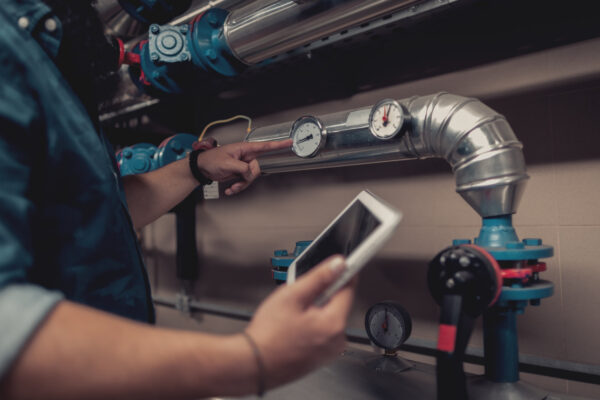
Not all air is created equal. And in industrial and occupational environments, what you can’t see can hurt you, your processes, or your audit results. Compressed air may look clean at the point of use, but it can carry hidden contaminants that compromise product quality, worker safety, and regulatory compliance without any visible warning.
For Safety and EHS Managers, understanding air purity is not optional. It is a core responsibility tied directly to compliance obligations, operational risk management, and legal liability. Whether you operate in food production, pharmaceuticals, healthcare, or manufacturing, compressed air quality is often a silent variable in audits, until it becomes a finding.
This article breaks down what air purity really means in industrial and compressed air contexts, how it is measured, the standards that define acceptable limits, and why reliable air purity testing matters more than the monitoring equipment alone. It is designed to help EHS leaders move from uncertainty to defensible control over their compressed air systems.
Key Takeaways
- Air purity in industrial settings refers to measurable contamination in compressed air, not just general indoor air quality
- Common contaminants include particulates, moisture, oil, microbes, and gases, each requiring different air purity testing methods
- ISO 8573-1:2010 is the global standard used to classify compressed air purity across particles, water, and oil
- Monitoring tools provide operational insight, but accredited testing is required for audit-defensible compliance
- Ongoing air purity testing and monitoring are essential because air systems degrade and contamination levels change over time
What Is Air Purity? Defining Air Purity in Industrial & Occupational Contexts
Air purity refers to the level and type of contaminants present in an air or gas supply, measured against defined quality standards for a specific application.
Most people think of “air purity” in terms of ambient or indoor air quality: dust, pollen, or pollution in the air we breathe in homes or offices. But for Safety and EHS Managers, air purity has a far more critical and technical meaning. It refers specifically to the quality of compressed air and process gases used in operational environments, where contamination can directly impact product integrity, worker safety, and regulatory compliance.
In industrial and occupational contexts, air purity is defined by the presence and concentration of key contaminants, including:
- Particulates (dust, rust, pipe scale)
- Moisture (water vapor and liquid condensate)
- Oil (aerosols and vapors from compressors)
- Microbial contamination (bacteria, mold, and other microorganisms)
These aren’t theoretical concerns. Contamination enters the system at the very start of the compression process. Ambient air, already carrying pollutants, humidity, and microorganisms, is pulled into the compressor and concentrated. Without active treatment through filtration, drying, and purification, those contaminants travel throughout the entire system.
This is why compressed air is never inherently “clean.” It must be actively treated and verified to meet required purity levels.
Critically, there is no single definition of “acceptable” air purity. The required standard varies significantly depending on the application:
- Food and beverage operations must prevent contamination that could compromise product safety
- Pharmaceutical and healthcare environments require stringent microbial and particulate control
- Breathing air systems must meet strict safety thresholds to protect human health
- Instrument air in manufacturing demands dryness and cleanliness to ensure equipment reliability
For EHS leaders under audit pressure, that context-dependence is critical. Knowing which standard applies, and being able to demonstrate compliance with it, is what separates a defensible testing program from one that creates risk.
What Does Air Purity Testing Measure?
Air purity testing evaluates the presence and concentrations of multiple contaminant categories in a compressed air or gas system, each of which can affect safety, product quality, and compliance. Rather than a single metric, air purity is a composite measurement across physical, chemical, and biological parameters. Understanding what’s being tested and why helps EHS managers interpret results quickly and take defensible action during audits.
1. Particulate Matter & Solid Contaminants
Solid particulates include contaminants such as dust, dirt, rust, pipe scale, and compressor wear debris that enter the compressed air system or are generated within it. These particles can damage equipment, contaminate products, and compromise downstream processes.
Particle sizing is a critical component of measurement. It determines not just how many particles are present, but how large they are, typically measured in microns (µm). Common methods include:
- Particle counters, which detect and count particles by size range in real time
- Gravimetric analysis, which captures particles on a filter and measures total mass
These measurements are directly tied to ISO 8573-1 Class limits, which define allowable particle concentrations by size and quantity: a key benchmark for compliance (covered in the table below).
2. Moisture & Water Vapor
Moisture in compressed air exists in three distinct forms: water vapor, liquid water, and aerosolized water droplets. Each form presents different risks and requires different control strategies.
The primary metric used to assess moisture is pressure dew point (PDP). This is the temperature at which water vapor condenses into liquid at a given pressure. Lower PDP values indicate drier air.
Excess moisture can lead to:
- Microbial growth in piping and storage systems
- Internal corrosion and reduced equipment lifespan
- Product contamination, particularly in sensitive applications like food or pharmaceuticals
Because moisture is pervasive and highly variable, it is one of the most critical and commonly failed air purity parameters.
3. Oil: Aerosols, Vapor & Liquid
Oil contamination can appear in three forms: liquid oil, oil aerosols, and oil vapor. Sources include compressor lubricants, system carryover, and hydrocarbons already present in ambient intake air.
Measurement methods vary depending on the form of oil being tested:
- Photoionization detectors (PIDs) for volatile organic compounds (VOCs)
- Gravimetric methods for oil aerosols and total oil content
- Gas chromatography for precise identification and quantification of oil vapors
A common misconception is that oil-free compressors eliminate risk. In reality, even oil-free systems can introduce hydrocarbon vapor contamination from ambient air, making testing essential regardless of compressor type.
4. Microbial & Biological Contaminants (For Breathing Air Applications)
In high-risk environments, particularly breathing air systems, pharmaceuticals, and food production, viable microbial contamination becomes a critical parameter. This includes bacteria, mold spores, and other microorganisms that can proliferate in moist or poorly maintained systems.
Testing typically involves:
- Impaction or filtration sampling, followed by incubation and colony counting
- Reporting in colony-forming units (CFUs) per volume of air
This category is often overlooked in general compressed air testing, but is mandatory in breathing air purity testing, where human health is directly at risk.
5. Gaseous Contaminants (Carbon Monoxide, Carbon Dioxide & More)
Gaseous contaminants include carbon monoxide (CO), carbon dioxide (CO₂), nitrogen oxides (NOx), and other trace gases introduced through combustion processes, environmental exposure, or system faults.
These contaminants are invisible and odorless, requiring specialized detection methods such as:
- Electrochemical sensors (commonly used for CO detection)
- Infrared analyzers for gases like CO₂
- Gas chromatography for detailed compositional analysis
Among these, carbon monoxide is the most critical in breathing air systems. Even low concentrations pose immediate health risks, and regulatory bodies enforce strict exposure limits. For EHS managers, CO testing is not just a compliance task. It’s a life-safety requirement.
Compressed Air Contaminant Categories
| Contaminant Category | What It Includes | Common Sources | Measurement Methods | Key Risks | Relevant Standards / Notes |
| Particulate Matter (Solids) | Dust, rust, pipe scale, compressor wear debris | Ambient air intake, corroded piping, compressor components | Particle counters, gravimetric analysis | Equipment wear, product contamination, blocked valves and nozzles | ISO 8573-1 particle classes |
| Moisture (Water Content) | Water vapor, liquid water, aerosol droplets | Ambient humidity, inadequate drying systems | Pressure dew point (PDP) sensors, hygrometers | Corrosion, microbial growth, process instability | ISO 8573-1 water classes |
| Oil Contamination | Liquid oil, oil aerosols, hydrocarbon vapors | Lubricated compressors, intake air pollution, system carryover | Gravimetric testing, gas chromatography, PID sensors | Product contamination, toxic exposure, equipment failure | ISO 8573-1 oil classes |
| Microbial Contaminants | Bacteria, mold spores, biological matter | Moisture in piping, poorly maintained systems, ambient air | Air sampling, incubation, CFU counts | Infection risk, product spoilage, contamination in sterile processes | Critical for breathing air, pharma, food safety environments |
| Gaseous Contaminants | CO, CO₂, NOx, VOCs | Combustion sources, engine exhaust, environmental air intake | Electrochemical sensors, infrared analyzers, gas chromatography | Toxic exposure, asphyxiation risk (CO), regulatory non-compliance | Critical in breathing air systems (e.g., CO limits) |
ISO 8573-1 Air Purity Standards: What the Classes Mean for Your Facility

ISO 8573-1:2010 is the globally recognized framework for classifying compressed air purity based on contaminant levels. It provides a standardized way to define and verify air quality across industries where compressed air directly impacts safety, product integrity, and compliance.
The standard defines purity classes across three primary contaminant categories:
- Particles (solid contaminants)
- Water (moisture content)
- Oil (aerosols and vapor)
Each category is measured and classified independently, creating a structured benchmark for acceptable contamination levels. For EHS managers, knowing the required ISO class for your specific application is non-negotiable.
Yet in practice, many facilities conduct air purity testing without clearly defining which class they need to meet: creating gaps in compliance, documentation, and audit defensibility.
Breaking Down the ISO 8573-1 Purity Class System
The ISO 8573-1 class system is built on a simple principle: the lower the class number, the higher the air purity requirement. For example, Class 1 represents stricter limits than Class 2, and so on.
However, compressed air systems are not assigned a single overall class. Instead, they are rated across all three contaminant categories independently. A designation like Class 1.2.1 refers to:
- Class 1 for particles
- Class 2 for water
- Class 1 for oil
This distinction is critical. It means compliance must be evaluated across each parameter, not assumed based on a single number.
Another common misconception is around Class 0. It does not mean “zero contamination.” Instead, Class 0 indicates that purity limits are defined by the user or application, often requiring stricter thresholds than even Class 1. This is typical in high-risk environments such as pharmaceutical manufacturing or breathing air systems, where standard limits may not be sufficient.
ISO 8573-1:2010 Purity Class Reference Table
| ISO Class | Solid Particles (Max concentration) | Water (Pressure Dew Point) | Total Oil (Aerosol + Vapor) | Typical Interpretation |
| Class 0 | Defined by user/application (stricter than Class 1) | Defined by user/application | Defined by user/application | Highest level of custom-required purity for critical applications |
| Class 1 | ≤ 20,000 particles (0.1–5 µm per m³), stricter limits for larger particles | ≤ -70°C PDP | ≤ 0.01 mg/m³ | Ultra-high purity air (pharma, critical manufacturing) |
| Class 2 | ≤ 400,000 particles (0.1–5 µm per m³) | ≤ -40°C PDP | ≤ 0.1 mg/m³ | High-quality industrial air (food, electronics) |
| Class 3 | ≤ 90,000 particles (5–10 µm), higher tolerance for smaller sizes | ≤ -20°C PDP | ≤ 1 mg/m³ | General industrial use |
| Class 4 | Limited control of larger particles only | ≤ +3°C PDP | ≤ 5 mg/m³ | Low-demand industrial applications |
| Class 5 | No specific particle count defined | ≤ +7°C PDP | > 5 mg/m³ | Basic industrial air (non-critical use) |
| Class 6 | No specification | ≤ +10°C PDP | Not specified | Lowest control level |
Which ISO Purity Class Does Your Application Require?
Required ISO purity classes vary significantly depending on how compressed air is used within your facility. The same system may even require different classes at different points of use.
Common application benchmarks include:
- Pharmaceutical and medical device manufacturing: Typically requires very high purity (often Class 1 or Class 0), especially where air contacts product or sterile environments
- Food and beverage contact air: Requires strict control of oil and particulates to prevent contamination, often aligned with Class 1–2 ranges depending on risk
- Breathing air / SCBA filling stations: Governed by stringent safety standards, often requiring Class 1 for particles and oil, with tightly controlled moisture and mandatory gas testing
- Instrument and process air: Focuses on dryness and particulate control to protect equipment performance (commonly Class 2–4 depending on sensitivity)
- Painting and finishing applications: Requires low moisture and oil to avoid surface defects, often targeting Class 1–2 for oil and water
The key takeaway is don’t guess your required class. Assumptions, especially overly lenient ones, can lead to failed audits, product recalls, or safety incidents. At the same time, over-specifying purity can drive unnecessary system costs.
For EHS managers under pressure, aligning your application with the correct ISO class and validating it through proper testing is essential for both compliance and operational efficiency.
Application-to-ISO Class Cross-Reference
| Application | Particle Requirement | Water Requirement | Oil Requirement | Notes / Risk Level |
| Pharmaceutical / Medical Device Manufacturing | Class 1 or Class 0 | Class 1 or better | Class 1 or Class 0 | High-risk sterile environments requiring validated compliance |
| Food & Beverage (Direct Contact Air) | Class 1–2 | Class 2 | Class 1 | Prevents product contamination and microbial risk |
| Breathing Air / SCBA Systems | Class 1 | Class 1–2 | Class 1 | Life-safety critical; CO and gas testing also required |
| Instrument / Process Air | Class 2–4 | Class 2–4 | Class 2–4 | Protects equipment performance and reliability |
| Painting & Surface Finishing | Class 1–2 | Class 2–3 | Class 1–2 | Prevents coating defects, fisheyes, and surface contamination |
| General Manufacturing | Class 3–5 | Class 3–5 | Class 3–5 | Lower sensitivity applications with moderate risk controls |
How to Measure Air Purity: Methods, Equipment & Best Practices
Measuring air purity isn’t a one-size-fits-all decision. It depends on what contaminants you’re targeting, how low your detection limits need to be, and whether your results must stand up in an audit. For EHS managers, the real question is which combination of methods will deliver fast, accurate, and defensible results. In most regulated environments, this means balancing on-site monitoring tools, portable test kits, and accredited third-party laboratory testing.
On-Site Air Purity Monitors and Sensors: What They Can and Can’t Do
On-site air purity monitors and sensors provide real-time visibility into system performance. Common tools include:
- Particle counters for tracking particulate levels by size
- Dew point transmitters for continuous moisture monitoring
- Oil vapor detectors for identifying hydrocarbon presence
These systems are highly effective for trend monitoring, early detection of system failures, and alarm triggering when thresholds are exceeded. They help teams respond quickly to deviations before they escalate into compliance issues.
However, their limitations are important. Most on-site air purity sensors:
- Do not achieve the detection sensitivity required for ISO Class 1 or 2 verification
- May lack calibration traceability required for formal documentation
- Are not always considered audit-defensible without third-party validation
In short, they are essential for operational control but insufficient on their own for compliance.
High Purity Air Filters and Filtration Systems: Control, Not Measurement
High purity and ultra high purity air filters play a critical role in removing contaminants from compressed air systems, but they do not measure air purity.
It’s essential to distinguish between:
- Filtration (control): Removing particulates, moisture, oil, and microbes
- Testing (measurement): Verifying what contaminants remain and at what levels
Both are required for a compliant system, and neither replaces the other.
Common filtration technologies include:
- Coalescing filters for removing oil aerosols and liquid water
- Activated carbon filters for oil vapors and odors
- Sterile membrane filters for microbial control in critical environments
When contamination events occur, facilities may need to implement purity air restoration: a process that includes filter replacement, system flushing or purging, and follow-up air purity testing to confirm that required purity levels have been re-established.
Breathing Air Purity Test Kits: When Are They Appropriate?
Portable breathing air purity test kits are designed for field use and rapid screening. They are commonly used in:
- Remote or temporary job sites
- Pre-shipment or pre-use checks
- Situations where immediate, indicative results are needed
These kits can provide quick insights into key parameters like carbon monoxide, oxygen levels, and sometimes moisture or oil presence.
However, they come with limitations:
- Lower precision and sensitivity compared to laboratory methods
- Limited scope of contaminants tested
- Results that may not meet documentation standards for audits
For compliance with OSHA 29 CFR 1910.134, Grade D breathing air must be verified—not assumed. Test kits can support this process, but they are not a substitute for certified air purity testing when documentation is required.
Third-Party Laboratory Testing: The Gold Standard for Compliance
For audit-ready, defensible results, accredited third-party laboratory testing remains the gold standard. This approach ensures that air purity data is:
- Scientifically validated
- Traceable to recognized standards
- Accepted by regulators and auditors
The process typically involves collecting air samples using calibrated sampling equipment designed to preserve sample integrity. TRI Air, for example, utilizes patented sampling technology originally developed for U.S. Navy divers in 1975, engineered for high-accuracy collection in critical breathing air applications.
Accreditation is key. Look for providers certified to:
- ISO 17025:2017 (laboratory competence and calibration standards)
- A2LA (American Association for Laboratory Accreditation)
- AIHA (American Industrial Hygiene Association)
These credentials ensure that results are not only accurate but also legally and scientifically defensible.
For facilities under audit pressure, turnaround time also matters. Leading providers offer rapid analysis and reporting, enabling EHS managers to address compliance gaps quickly and confidently.
Why Ongoing Air Purity Monitoring Matters: Beyond the One-Time Test

Air purity compliance should be treated as a continuous operational discipline. A single passing test only confirms system performance at a specific moment. It doesn’t guarantee that conditions will remain compliant over time.
Compressed air systems are dynamic. Filters degrade, compressors age, seals wear, and ambient air quality shifts with seasonal and environmental changes. Any of these factors can gradually introduce contamination back into the system, even after a clean bill of health.
For EHS managers, this creates a critical risk management challenge. In regulated environments such as food processing, pharmaceuticals, healthcare, and breathing air systems, contamination is not just a quality issue. It can lead to:
- Product recalls and production shutdowns
- Worker injury or long-term health exposure
- Regulatory penalties and audit failures
- Reputational damage and loss of certification
This is why ongoing monitoring is essential. Without it, organizations are effectively operating blind between air purity testing intervals, assuming compliance where none may exist.
Establishing a Baseline Air Purity Level for Your Facility
Before implementing a monitoring schedule, facilities must first establish a baseline air purity profile. This involves comprehensive initial testing across all relevant contaminant categories: particles, moisture, oil, gases, and (where applicable) microbial content.
A baseline provides a reference point that allows EHS teams to:
- Understand current system cleanliness and contamination sources
- Identify high-risk points within the compressed air network
- Set a realistic monitoring frequency based on actual system performance
- Define appropriate filter change intervals and maintenance schedules
Without a baseline, monitoring becomes reactive rather than strategic, increasing the likelihood of unexpected failures or audit nonconformities.
Building a Defensible Compressed Air Testing Program
A compliant compressed air testing program is more than periodic sampling. It’s a structured system designed to ensure traceability, consistency, and audit readiness. Key components include:
- Defined test frequency based on risk level, application, and ISO 8573-1 requirements
- Documented chain of custody for all air samples to ensure traceability and integrity
- Accredited laboratory partnership (e.g., ISO 17025-certified providers) for validated results
- Clear report interpretation protocols so results translate into actionable decisions
- Corrective action procedures for addressing non-compliance, including filtration upgrades or system remediation
In practice, the most effective programs integrate air purity testing with operational decision-making. This is where TRI AIR adds value beyond measurement alone. TRI AIR not only delivers precise, accredited air purity results but also helps EHS teams interpret findings, understand compliance implications, and implement corrective actions that restore and maintain conformity over time.
Conclusion: Turning Air Purity Into Confidence, Compliance, and Control
Air purity is not just a number on a lab report. It’s operational confidence, worker safety, and regulatory defensibility in measurable form. For Safety and EHS Managers, it represents the difference between assuming compliance and proving it under audit conditions.
In regulated environments, the stakes are too high for fragmented air purity testing, unclear standards, or one-off measurements. A single data point cannot capture the evolving risks inside a compressed air system. What matters is a continuous, defensible understanding of air quality and the ability to act on it when conditions change.
That is why the right air purity testing partner is just as important as the testing itself. A credible partner doesn’t simply deliver results; they help you interpret what those results mean, identify risk exposure, and implement corrective actions that restore compliance and protect operations.
TRI Air Testing provides a comprehensive suite of services designed for exactly this purpose, including:
- Compressed air purity testing
- Breathing air quality testing
- Pure gas analysis
- Mold and microbial testing
- Potable water testing
All delivered through a single, trusted source built for regulated, high-risk industries.
If you are responsible for compliance, safety, or audit readiness, now is the time to understand your baseline.
Contact TRI Air Testing to schedule a consultation or request a sample air purity tester and take the first step toward a clear, defensible picture of your facility’s air purity.





The Original Compressed Air and Pure Gas Testing Laboratory

Related Articles

Talk about the Weather…and Compressed Air
Writing for Compressed Air Best Practices, a leading publication on the utilization of and issues...
How Quality Air Testing Is Key For Vacuum Sealed Product Manufacturing
What do vacuum sealers and air testing have in common? Both specialize in keeping unpurified...

Mold Testing Guide: Methods and When to Test
Mold is more than an aesthetic problem. Left undetected, it can degrade building materials, compromise...
