

Firefighter Breathing Apparatus: SCBA Guide & Gear

Table of Contents
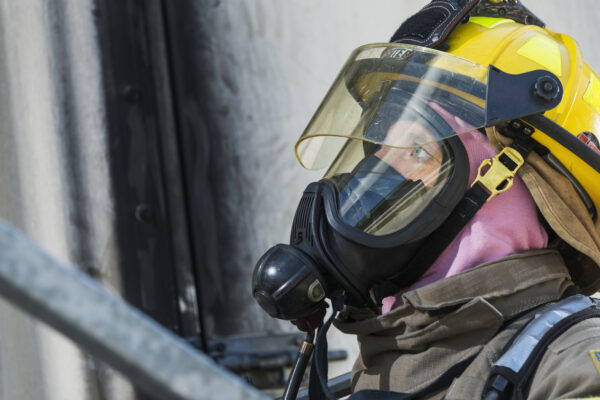
A firefighter entering a burning structure has only seconds to react when conditions change. Every breath they take depends on one system working exactly as intended, and that system is called a firefighter breathing apparatus or, more technically correct, a self-contained breathing apparatus (SCBA).
A well-maintained SCBA can mean the difference between a successful rescue and a life-threatening emergency, but the equipment is only one piece of the puzzle. Without proper training, routine maintenance, and verified breathing air quality, even the best breathing apparatus can’t provide the protection firefighters expect.
This guide explains how firefighter self-contained breathing apparatus systems work, from the facepiece and air cylinder to breathing air replenishment systems, maintenance, and compliance. You’ll also learn why breathing air quality testing is a critical part of every respiratory protection program and how departments can reduce risk through proactive inspection, testing, and documentation.
Key Takeaways:
- Firefighter SCBA is a complete respiratory protection system. Safe operation depends on properly functioning equipment, trained personnel, and clean breathing air.
- Filtering respirators can’t replace SCBA in fire environments. Only positive-pressure, open-circuit SCBA provide protection in immediately dangerous to life or health (IDLH) atmospheres.
- Breathing air quality is just as important as the equipment itself. Every cylinder refill should come from a properly maintained and routinely tested breathing air replenishment system.
- Routine inspections, fit testing, and hydrostatic testing support compliance and readiness. Preventive maintenance helps departments identify issues before they compromise firefighter safety or regulatory compliance.
- Independent breathing air testing strengthens respiratory protection programs. Accredited third-party testing verifies air purity, supports compliance documentation, and gives departments confidence that every refill is safe for emergency operations.
What Is a Firefighter Self-Contained Breathing Apparatus?
A firefighter self-contained breathing apparatus (SCBA) is a respiratory protection system that supplies clean, compressed air from a cylinder carried by the firefighter. Unlike filtering respirators, an SCBA does not rely on surrounding air, making it suitable for atmospheres that are immediately dangerous to life or health (IDLH).
A complete SCBA includes the facepiece, air cylinder, regulator, harness, hoses, and monitoring devices. Together, these components protect firefighters from smoke, toxic gases, and oxygen-deficient environments during structural fires, rescues, and other emergency incidents.
Why Filtering Respirators Aren’t Enough
Respirators such as N95 masks or cartridge respirators filter contaminants from ambient air but don’tprovide oxygen. They can’t protect against unknown concentrations of toxic gases or oxygen-deficient environments commonly found during fires.
Firefighters may encounter hazards including:
- Carbon monoxide
- Hydrogen cyanide
- Dense smoke particulates
- Oxygen-deficient atmospheres
- Other hazardous combustion byproducts
Because these conditions are considered IDLH, firefighters require an independent air supply rather than filtered ambient air.
How Modern Firefighter SCBA Works
Most modern firefighter SCBA use an open-circuit, positive-pressure design.
How this works is compressed air flows from the cylinder through a regulator to the facepiece. As firefighters breathe, clean air is supplied while exhaled air is released into the atmosphere rather than recycled.
Positive pressure keeps the pressure inside the facepiece slightly higher than outside air, helping prevent smoke and toxic gases from leaking into the mask if the seal is briefly disturbed.
Filtering Respirators vs. Firefighter SCBA
| Equipment Type | Air Source | Protection Against IDLH Atmospheres | Typical Use |
| N95 respirator | Filters surrounding air | No | Dust, healthcare, construction |
| Cartridge respirator | Filtered ambient air | No | Industrial environments with known contaminants |
| Powered air-purifying respirator (PAPR) | Filtered ambient air | No | Healthcare, laboratories, manufacturing |
| Firefighter SCBA | Compressed breathing air carried by the user | Yes | Structural firefighting, rescue, confined spaces, hazardous atmospheres |
Core Components of Firefighter Breathing Apparatus Gear
An SCBA protects firefighters because several components work together as one integrated system. The facepiece, cylinder, regulator, and harness each perform a specific function and require routine inspection to remain reliable.
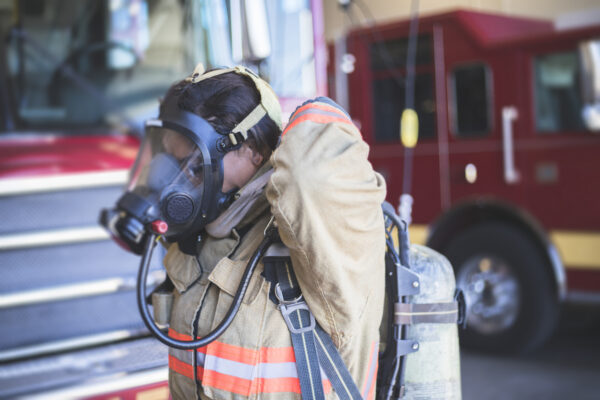
The Firefighter Breathing Apparatus Mask
The facepiece creates an airtight seal that prevents contaminated air from entering while delivering clean air from the regulator.
Modern firefighter masks often include:
- Heads-up displays (HUDs) showing remaining cylinder pressure
- Integrated communication systems
- Voice amplifiers
- Wide, anti-fog face shields for improved visibility
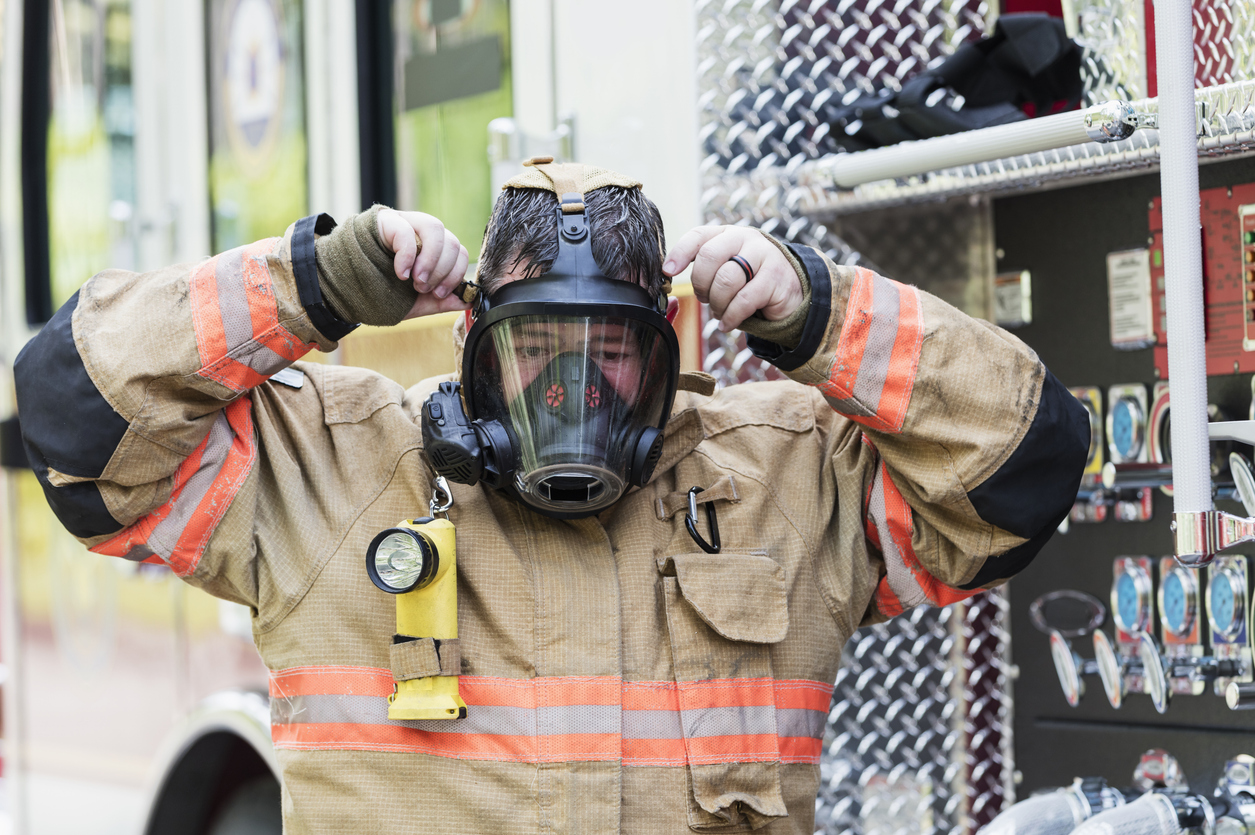
Before entering an IDLH environment, firefighters perform seal and function checks to verify the mask fits correctly and the SCBA is operating properly. Facial hair, damaged seals, or incorrect donning can compromise protection.
Firefighter Breathing Apparatus Tank and Cylinder
The cylinder stores compressed breathing air for the entire SCBA system. Modern departments primarily use lightweight carbon fiber composite cylinders, although steel and aluminum cylinders remain in service in some applications.
Most current SCBA cylinders are rated to 4,500 psi and commonly provide rated durations of 30, 45, or 60 minutes. Actual working time is often shorter because heavy physical activity significantly increases air consumption.
Because these cylinders are high-pressure vessels, they require routine inspections and scheduled hydrostatic testing. Composite cylinders also have a maximum service life established by the manufacturer and must be retired once that limit is reached.
Regulators, Harness, and Low-Air Alarm
The regulator reduces high-pressure air from the cylinder to a breathable level while maintaining positive pressure inside the facepiece.
The harness and backplate distribute the SCBA’s weight across the firefighter’s shoulders, back, and hips, improving comfort and mobility during demanding operations.
Every SCBA also includes a low-air warning system that activates when approximately one-quarter of the cylinder’s air remains. Audible alarms, HUD indicators, or vibrating alerts notify firefighters that it’s time to exit the hazard area according to department procedures.
How Firefighter Breathing Air Replenishment Systems Work
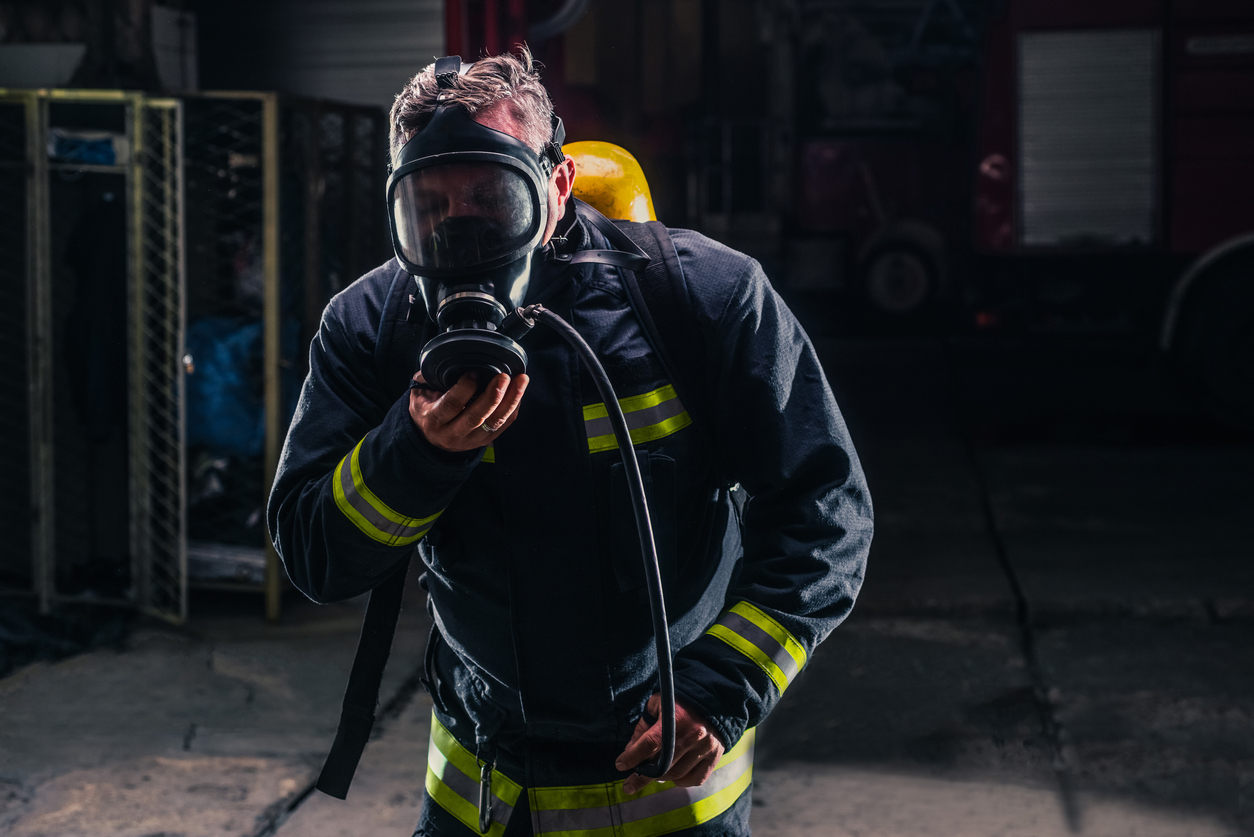
Spare SCBA cylinders can sustain operations for a limited time, but prolonged incidents require a dependable breathing air replenishment system. These systems refill cylinders with compressed breathing air that firefighters rely on during emergency response.
A typical replenishment system includes compressors, purification equipment, storage cylinders, fill stations, and monitoring devices. Together, they ensure every refill provides clean, breathable air suitable for IDLH environments.
Departments commonly use three replenishment methods:
- Cascade systems, which rapidly refill cylinders from high-pressure storage banks
- Mobile air units that provide on-scene refilling during extended incidents
- Fixed compressor fill stations, which are installed at fire stations or regional training facilities
Each method supports operational readiness, but all depend on one critical factor: breathing air quality.
Why Air Purity Testing Matters
Hydrostatic testing verifies that a cylinder is structurally safe. It doesn’t verify the quality of the air inside it.
Every refill introduces new compressed air from the department’s compressor system. If the compressor, filtration system, or intake becomes contaminated, every cylinder filled afterward may also be affected.
Potential contaminants include:
- Carbon monoxide
- Excess moisture
- Oil aerosols
- Carbon dioxide
- Hydrocarbon vapors
- Airborne particulates
Routine breathing air testing confirms that compressors and purification systems continue producing air that meets applicable breathing air quality requirements. Independent third-party testing also provides documented verification that departments can use to support maintenance and compliance programs.
Firefighter Breathing Air Replenishment Systems in the Field
Large fires and extended emergency responses require continuous air resupply to keep crews operating safely.
Mobile air units and cascade systems allow cylinders to be refilled near the incident, reducing downtime and preventing apparatuses from leaving the scene. During mutual aid responses, departments often coordinate shared air resources to ensure every company has access to compatible, properly filled cylinders.
Like any mechanical system, replenishment equipment can become contaminated if not maintained properly. Common risks include:
- Compressor intakes near exhaust fumes
- Saturated purification filters
- Oil carryover from compressors
- Moisture accumulation
- Damaged hoses or fill connections
Routine maintenance combined with accredited breathing air testing helps identify these issues before contaminated air reaches firefighters.
Firefighter Wearing Breathing Apparatus Mask: Training and Fit Testing
Reliable SCBA performance depends on both the equipment and the firefighter using it. Proper training and fit testing ensure firefighters can safely operate in hazardous environments and respond appropriately if equipment problems occur.
Respiratory protection programs are primarily governed by OSHA 29 CFR 1910.134, while firefighter-specific equipment and operational requirements are addressed through applicable NFPA standards.
Required Firefighter Breathing Training
Before using SCBA in hazardous environments, firefighters receive training on equipment operation, inspection, emergency procedures, and air management.
Training typically includes:
- SCBA inspection before use
- Proper donning and doffing
- User seal checks
- Air management techniques
- Emergency procedures for equipment failures
- Low-air alarm response
- Cleaning and routine inspections
Departments also reinforce these skills through recurring practical exercises.
Qualitative vs. Quantitative Fit Testing
A properly fitted facepiece is essential for respiratory protection.
- Qualitative fit testing (QLFT) uses taste or smell test agents to determine whether the mask maintains an adequate seal.
- Quantitative fit testing (QNFT) uses specialized instruments to measure leakage and calculate an objective fit factor.
OSHA requires fit testing before initial use, at least annually, and whenever physical changes or a different facepiece could affect the seal.
Live-Fire and Confined-Space Training
Hands-on training prepares firefighters to use SCBA under realistic conditions while managing stress and air consumption.
Departments commonly incorporate SCBA into:
- Live-fire evolutions
- Search and rescue drills
- Confined-space training
- Firefighter survival exercises
- Rapid intervention crew (RIC) scenarios
These exercises build confidence and reinforce emergency procedures before firefighters encounter actual incidents.
Why Proper Face Seal Matters
Even the best SCBA can’t protect a firefighter if contaminated air bypasses the facepiece.
Seal failures are commonly caused by:
- Facial hair along the sealing surface
- Facial scars or significant weight changes
- Incorrect facepiece size
- Improper donning
- Damaged seals or straps
Performing a user seal check before every entry helps ensure the facepiece provides the protection it was designed to deliver.
Firefighter Breathing Training Requirements
| Training Type | Frequency | Governing Standard | Who Conducts It |
| Initial SCBA training | Before first use | OSHA 29 CFR 1910.134; applicable NFPA standards | Qualified department instructor |
| SCBA refresher training | As needed when equipment or procedures change; recurring departmental training | OSHA 29 CFR 1910.134 | Fire department training division |
| Facepiece fit testing | Before initial use, at least annually, and after significant facial changes | OSHA 29 CFR 1910.134 | Qualified fit test administrator |
| Live-fire SCBA training | Initial qualification and recurring departmental training | Applicable NFPA standards | Certified fire instructor |
| Confined-space SCBA training | Before assigned duties and periodic refresher training | OSHA requirements and department procedures | Qualified confined-space instructor |
| Emergency SCBA drills | Regularly throughout the year | Department SOPs and applicable NFPA guidance | Company officers or training division |
Maintaining Firefighter SCBA Breathing Apparatus Gear
Routine maintenance keeps firefighter SCBA ready for emergency use and helps departments meet regulatory and manufacturer requirements. An effective maintenance program covers the entire respiratory protection system, including the SCBA, cylinders, and breathing air supply OSHA has eTools to help employers and workers select the right gear and maintain compliance with that gear.
Daily, Monthly, and Annual Inspection Schedules
Fire departments typically follow a layered inspection schedule.
Daily or before-use inspections include:
- Checking cylinder pressure
- Inspecting the facepiece, straps, and harness
- Verifying regulator operation
- Testing low-air alarms and electronic displays
- Looking for damaged hoses or fittings
Monthly inspections involve more detailed functional checks, while annual servicing is performed by qualified technicians who inspect, test, and replace worn components as needed. Keeping accurate maintenance records helps demonstrate compliance and track equipment history.
Cylinder Hydrostatic Retesting Timelines
Because SCBA cylinders store air at very high pressures, they require periodic hydrostatic testing to verify their structural integrity.
Many modern composite cylinders require testing every five years, along with mandatory retirement after the manufacturer’s specified service life. Departments should also perform routine visual inspections for dents, cuts, heat damage, or valve defects between testing intervals.
Mask Cleaning, Regulator Servicing, and Replacement Parts
After each use, facepieces should be cleaned and disinfected according to manufacturer instructions.
Routine maintenance includes:
- Inspecting lenses and seals
- Checking inhalation and exhalation valves
- Replacing worn straps and gaskets
- Servicing regulators at recommended intervals
- Using only manufacturer-approved replacement parts
Preventive maintenance helps ensure reliable performance when firefighters enter hazardous environments.
Why Breathing Air Quality Testing Belongs in Every Maintenance Cycle
Maintaining the SCBA alone isn’t enough. The breathing air filling each cylinder must also be verified.
Compressor performance can change over time because of worn filters, mechanical issues, or contaminated intake air. Routine breathing air testing helps departments:
- Verify air purity
- Detect contaminants before exposure occurs
- Confirm filtration systems are working properly
- Identify maintenance issues early
- Support compliance documentation
Independent breathing air testing complements routine compressor maintenance by confirming the entire breathing air system continues producing safe, compliant air.
Common Compliance Gaps in Firefighter Breathing Equipment Programs
Most compliance issues stem from missed inspections, incomplete records, or overlooked maintenance rather than equipment failure. Regular audits help departments identify and correct these gaps before they affect firefighter safety.
Expired Hydrostatic Test Dates on Cylinders
One of the most common issues is allowing cylinders to remain in service after their hydrostatic test date has expired.
Departments should maintain an inventory that tracks:
- Manufacture dates
- Hydrostatic test history
- Retirement dates
- Current service status
Digital maintenance tracking can reduce the risk of overdue testing.
Inconsistent Fit Testing Records
Annual fit testing is required, but documentation can become incomplete over time.
Common problems include:
- Missing annual fit test records
- Firefighters using unapproved facepiece models
- Failure to retest after facial changes
- Poor documentation of corrective actions
Maintaining centralized records helps ensure every firefighter has a properly fitted facepiece.
Untested or Undocumented Breathing Air Replenishment Systems
Departments often focus on SCBA maintenance while overlooking compressors and fill stations.
Common compliance gaps include:
- Missing breathing air quality reports
- Incomplete compressor maintenance records
- Delayed filter replacement
- Lack of documented air quality verification
Routine third-party breathing air testing helps verify that refill systems continue producing compliant breathing air.
Outdated SCBA Models Not Meeting Current NFPA Standards
Older SCBA may remain functional but can present operational challenges as standards evolve.
Departments should periodically evaluate equipment for:
- Manufacturer support availability
- Replacement part availability
- Compatibility with newer communication systems
- Modern safety features
- Long-term replacement planning
A phased replacement strategy helps avoid unexpected equipment shortages while improving firefighter safety.
FAQ: Firefighter Breathing Apparatus
How long does a firefighter SCBA tank last under real working conditions?
Although cylinders are rated for 30, 45, or 60 minutes, strenuous firefighting often reduces actual working time because firefighters consume air much faster under heavy workloads.
How often should a breathing apparatus firefighter cylinder be hydrostatically tested?
Testing intervals depend on the cylinder type and manufacturer requirements. Many modern composite cylinders require hydrostatic testing every five years, along with retirement at the end of their approved service life.
What’s the difference between firefighter air breathing apparatus and industrial SCBA?
Both provide self-contained breathing air, but firefighter SCBA are specifically designed for structural firefighting, extreme heat, and emergency rescue operations, while industrial SCBA are intended for other hazardous workplaces.
Who tests the air quality in firefighter breathing air replenishment systems?
Breathing air is commonly tested by accredited third-party laboratories that verify air purity and help departments document compliance with applicable breathing air quality requirements.
Keeping Firefighters Breathing Safely
Firefighter respiratory protection depends on three elements working together: well-maintained equipment, trained personnel, and verified breathing air quality. If any one of these fails, the entire SCBA program is put at risk.
Departments invest heavily in SCBA equipment and firefighter training. Giving the same attention to breathing air quality helps ensure every cylinder refill delivers clean, compliant air when it matters most.
TRI Air Testing provides accredited breathing air quality testing and compliance support for fire departments operating fixed compressor systems, mobile air units, and cascade fill stations. Our independent testing services help verify breathing air quality, support maintenance programs, and strengthen respiratory protection compliance.
Contact TRI Air Testing today to schedule breathing air testing and help ensure every breath your firefighters take is backed by verified, compliant compressed air.



Related Articles

Review: FRI 2011, Atlanta
TRI Air Testing’s Sandra Dudek was in Atlanta recently for the International Association of Fire...
The 6th Industrial Fire, Safety & Security Show
The 6th Annual Industrial Fire, Safety & Security Show will be held November 30-December 1, 2011...
Happy Holidays to Our Overseas Soldiers & Firefighters
In its weekly e-newsletter, Fire Chief magazine highlighted American firefighters serving as soldiers in Iraq,...
