

Scuba Air Tank Safety: What Every Diver and Dive Shop Should Know

Table of Contents
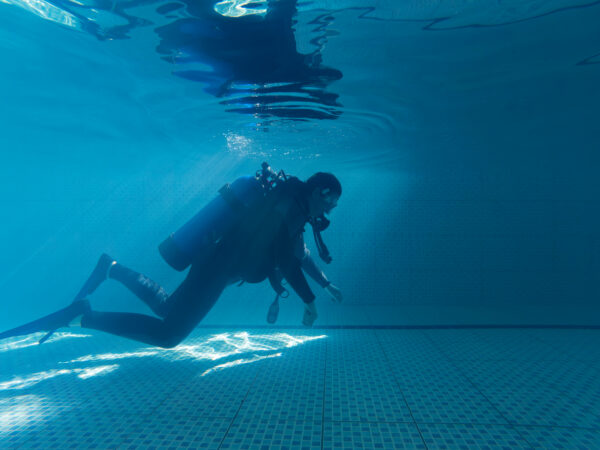
Your scuba diving air tank is the most important piece of equipment you own as a diver. A well-built, clean, and well-maintained tank is what makes safe diving possible. It has to do two jobs at once: hold air that is safe to breathe, and safely contain thousands of pounds of pressure. If either job fails, the risk to the diver grows fast.
Depth adds another layer to this risk. As you go deeper, air quality matters even more. A small contaminant that would barely affect you at the surface can become dangerous underwater, because pressure amplifies its effects on your body.
This is why tank safety comes down to two separate factors:
- Breathing-air purity: Is the air itself clean and free of contaminants?
- Cylinder integrity: Is the tank structurally sound enough to hold pressure safely?
A tank can hold clean air but still be unsafe if the cylinder is damaged. Just as easily, a cylinder can pass every structural inspection and still be filled with contaminated air. Neither factor makes up for a failure in the other.
For dive shop owners, fill station operators, safety officers, and recreational divers, understanding both sides of this equation is essential. This guide covers the standards, testing requirements, and best practices that help ensure every cylinder is safe to fill and every breath underwater is safe to take.
Key Takeaways
- Scuba breathing air must meet stricter standards than ordinary compressed air. Diving air is typically tested against CGA Grade E requirements, which establish limits for oxygen content, carbon monoxide, moisture, oil mist, and other contaminants.
- Depth magnifies the risks associated with contaminated air. As pressure increases underwater, the physiological effects of contaminants can become significantly more dangerous than they would be at the surface.
- Air quality testing and hydrostatic testing serve different purposes. Air purity testing verifies the safety of the breathing air, while hydrostatic testing confirms that the cylinder itself can safely withstand pressure.
- PADI dive centers are required to verify breathing-air quality through regular testing. Quarterly testing and proper documentation help demonstrate compliance, reduce liability exposure, and build trust with divers.
- Accredited laboratory testing provides the most defensible results. ISO/IEC 17025-accredited laboratories offer independent verification that breathing air meets recognized standards and produce documentation that stands up to audits, insurance reviews, and regulatory scrutiny.
Why the Air in Your Scuba Tank Is Not Just Compressed Air
Ascuba cylinder contains specialized compressed air. Unlike the compressed air used for tools or industrial equipment, scuba air is intended for direct human respiration under pressure and must meet strict purity requirements.
Carbon monoxide, excessive moisture, oil mist, and other contaminants in the compressed air in a scuba diving air tank may affect diver safety, equipment performance, or both. As a result, dive operators must verify air quality against recognized breathing-air standards as an integral part of scuba air compressor maintenance.
How Depth Changes Everything About Air Quality
Pressure changes the way contaminants affect the body. As a diver descends, every gas in the air the diver is breathing exerts a greater effect due to increased ambient pressure.
Carbon monoxide is a good example. A concentration that might produce mild symptoms at the surface becomes significantly more dangerous at depth because the diver is exposed to a greater partial pressure of the contaminant. The same principle applies to other unwanted substances (moisture, oil, mist) in the air supply.
What “Breathing Air” Actually Means: CGA Grade E Defined
In the United States, scuba breathing air is commonly evaluated against ANSI/CGA G-7.1. This standard defines several air grades, with CGA Grade E serving as the recognized benchmark for scuba diving.
Grade E establishes requirements for oxygen concentration and limits for contaminants such as carbon monoxide, carbon dioxide, moisture, and oil mist. These limits are specifically intended for breathing air used under pressure.
CGA Air Grade Table
| Air Grade | Typical Use | O₂ % | CO Limit | Moisture Limit (Dew Point) | Oil / Hydrocarbon Limit | Why Scope Matters |
| D | Workplace respirators (Industrial, Firefighting) | 19.5%-23.5% | 10 ppm | ≤ 24 ppm (-65°F)* | ≤ 5 mg/m³ (Condensed hydrocarbons) | Standard for OSHA general occupational safety. Lacks total volatile hydrocarbon testing required for diving. |
| E | Scuba diving (Recreational & Commercial) | 20.0%-22.0% | 10 ppm | ≤ 67 ppm (-50°F) | ≤ 5 mg/m³ (Oil mist) + ≤ 25 ppm (Total gaseous hydrocarbons) | Mandatory baseline for scuba. Adds gaseous hydrocarbon testing to prevent toxic off-gassing under pressure. |
| N | Analytical / laboratory applications | Application-specific | ≤ 0.5 ppm | ≤ 7 ppm (-85°F) | ≤ 0.1 ppm | Intended for high-precision laboratory instruments (e.g., GC carrier gas), not breathing gas. |
* Note on Dew Point Requirements: CGA standards state that moisture level should be at least 10°F (-12.2°C) lower than the lowest expected temperature to prevent freezing in regulators. For high-pressure or cold-water scuba operations, authorities like the U.S. Navy enforce significantly drier limits (often ≤ 24 ppm / -65°F or colder).
What Contaminates Scuba Tank Air, and Where It Comes From
Breathing-air contamination typically originates from three sources:
- The compressor intake environment
- The compressor itself
- Conditions that develop inside cylinders and delivery systems over time
Understanding these contamination pathways helps operators prevent problems before they affect diver safety.
Compressor Intake Location: A Commonly Overlooked Risk
Air quality begins at the compressor intake. If the intake is located near vehicles, generators, fuel-burning equipment, or building exhaust systems, contaminants can be drawn directly into the scuba air compressor.
Carbon monoxide is particularly dangerous because it can’t be detected by sight, smell, or taste and may enter the air supply through nearby combustion sources. Because divers can’t identify carbon monoxide contamination without testing, proper intake placement and regular air analysis are critical.
Intakes should be positioned well away from exhaust sources and evaluated whenever operating conditions change.
Oil Carryover, Moisture, and What Happens Inside the Scuba Diving Air Tank
Contamination can also originate within the compressor system itself. Worn components, inadequate maintenance, or saturated filters may allow oil mist and hydrocarbon contaminants to enter the breathing-air stream.
Moisture presents another concern. If water vapor is not adequately removed during compression, it can accumulate within cylinders and distribution systems, accelerating corrosion and reducing equipment lifespan.
Routine scuba air compressor maintenance helps prevent these issues, but maintenance alone can’t verify air quality. Independent testing confirms whether the air being delivered to divers actually meets breathing-air specifications.
Scuba Hydrostatic Testing: The Structural Side of Tank Safety
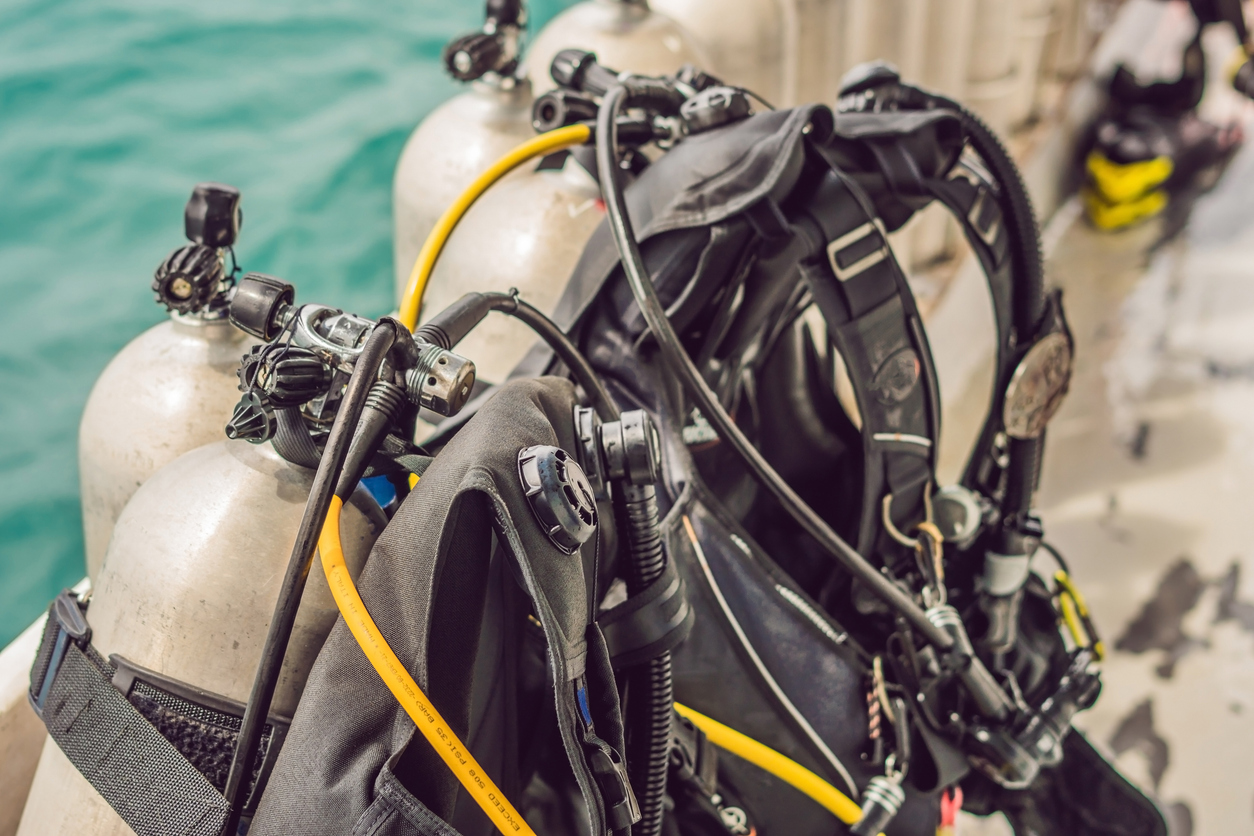
Hydrostatic testing is the primary method used to verify cylinder integrity and identify scuba air tanks that should be removed from service.
What Scuba Hydrostatic Testing Actually Tests
During hydrostatic testing, a cylinder is filled with water and pressurized to approximately 5/3 of its service pressure, about 5,000 psi for a typical 3,000 psi scuba diving air tank.
Technicians measure how much the cylinder expands under pressure and whether it returns to its original dimensions afterward. Excessive permanent expansion indicates structural weakness and results in failure.
For divers, the hydrostatic test stamp on a cylinder confirms that the scuba diving air tank passed an approved requalification test and met structural performance requirements at the time of testing.
DOT Requirements and the 5-Year Requalification Cycle
Under 49 CFR 180.205, most scuba cylinders must undergo hydrostatic testing every five years.
Fill stations are responsible for verifying that a cylinder’s hydrostatic qualification remains current before filling it. An expired cylinder must be requalified before it can legally be returned to service.
The diving industry also recommends annual visual inspections (VIPs), which help identify:
- Corrosion
- Thread damage
- Contamination
- Other visible defects
While not federally required for privately owned cylinders, annual inspections are widely regarded as a best practice, particularly for scuba air tanks exposed to frequent use or saltwater environments.
Scuba Diving Air Tank Inspection and Testing Requirements at a Glance
| Inspection Type | Frequency | Regulatory Authority | Who Performs It | Pass/Fail Consequence | Why Scope Matters |
| Annual Visual Inspection (VIP) | Annually (Every 12 months) | Industry best practice (CGA / Dive Agencies) | Certified Visual Inspector (at a licensed dive shop) | Fail: Cylinder is rolled, cleaned, or condemned depending on the severity of internal corrosion/ damage. | Detects internal and external moisture, pitting, and corrosion before they cause a structural failure. |
| Hydrostatic Testing | Every 5 years | Department of Transportation (DOT – 49 CFR 180.205) | DOT-Authorized Testing Facility (RIN holder) | Fail: Legally condemned. Tank markings are defaced or the cylinder is physically destroyed so it can’t hold pressure. | Measures elastic expansion. Verifies structural integrity by pressurizing the tank to 5/3 its service pressure. |
| Eddy Current Testing | Annually (typically alongside the VIP) | DOT special permits / Industry guidance | Certified Visual Inspector using specialized testing equipment | Fail: Immediate condemnation. Neck cracks cannot be repaired. | Specifically mandatory for older aluminum cylinders (pre-1990, 6351 alloy) to detect invisible hairline neck cracks. |
Scuba Hydrostatic Testing vs. Air Purity Testing: Two Different Certifications
Hydrostatic testing evaluates the cylinder. Air purity testing evaluates the breathing air.
A scuba diving air tank can pass hydrostatic testing and still contain contaminated air. Likewise, a cylinder filled with Grade E breathing air may fail hydrostatic testing because of structural deterioration.
Because the two tests address different risks, neither replaces the other. A complete scuba safety program requires both.
How Scuba Diving PADI Certification Requirements Connect to Air Quality
For PADI-affiliated dive centers and resorts, breathing-air quality is a documented operational requirement. To help ensure diver safety, PADI requires compressed breathing air to be tested at least quarterly against CGA Grade E specifications.
These requirements provide an objective standard for air quality and help operators demonstrate that their fill stations consistently produce safe breathing air.
What PADI Dive Centers Are Required to Document
A valid air quality test certificate should provide clear, traceable documentation showing when the sample was collected, where it was analyzed, and how the results compare to applicable CGA Grade E limits.
At a minimum, operators should expect documentation that includes:
- The sample collection date
- Identification of the laboratory performing the analysis
- The laboratory’s accreditation status
- Measured contaminant levels
- Oxygen concentration results
- Confirmation that results meet applicable CGA Grade E requirements
- Documentation linking the sample to the scuba air compressor or fill station tested
These records serve multiple purposes. They help demonstrate compliance with PADI requirements, provide supporting documentation during insurance reviews or audits, and establish evidence that a dive shop has exercised due diligence in protecting customers and staff.
From a liability perspective, a complete record of air quality verification helps demonstrate that appropriate safety procedures were followed and that breathing air was regularly evaluated against recognized standards.
For divers, the ability of a dive shop to readily produce current air quality documentation is often a strong indicator of the shop’s overall commitment to safety and operational excellence.
Why Third-Party Accredited Testing Is the Standard PADI Expects
Not all air quality testing methods provide the same level of confidence.
Many scuba tank air compressor systems include monitoring devices, and some operators perform routine spot checks using portable analyzers. These tools can be valuable for operational monitoring, but they are not designed to replace comprehensive laboratory analysis. There are a few reasons why:
- Certain contaminants, including trace hydrocarbons, oil mist, and other chemical compounds, may require specialized analytical methods that exceed the capabilities of many field instruments.
- Human senses offer little protection against contamination. Many dangerous substances, including carbon monoxide, are colorless, odorless, and impossible to detect without testing.
- Field monitoring does not produce the documented, traceable results that training organizations, insurers, and auditors require.
This is why third-party accredited laboratory testing remains the industry benchmark for breathing-air verification.
An ISO/IEC 17025-accredited laboratory has demonstrated technical competence in performing specific testing procedures and maintaining documented quality systems. Accreditation confirms that testing methods, equipment calibration, personnel qualifications, and reporting processes are independently evaluated against internationally recognized standards.
For dive shop operators, A2LA accreditation provides an additional layer of assurance. The American Association for Laboratory Accreditation (A2LA) is one of the leading accreditation bodies that assesses laboratories for compliance with ISO/IEC 17025 requirements. When a laboratory holds A2LA accreditation for breathing-air testing, operators can have greater confidence that reported results are accurate, traceable, and defensible.
In practical terms, accredited third-party testing provides independent verification that breathing air meets CGA Grade E specifications. It also produces documentation that carries significantly greater credibility with training organizations, insurers, auditors, regulators, and customers than informal testing methods alone.
What a Valid Dive Air Test Certificate Should Include
Here is the corrected table with the testing frequency updated to reflect local regulations and industry standards alongside standard practice:
Scuba Air Test Certificate Requirements
| Data Point | Why It Matters | Red Flag If Missing |
| Lab accreditation (A2LA/ISO 17025) | Demonstrates that testing was performed by a laboratory operating under recognized quality and competency standards. | No evidence that testing methods, equipment, or quality controls have been independently verified. |
| Sample collection date | Confirms the results are current and satisfy required testing intervals (typically quarterly or as mandated by local regulations). | Impossible to determine whether the certificate reflects the compressor’s present operating condition. |
| Contaminant results vs. Grade E limits | Shows measured contaminant concentrations and verifies compliance with applicable CGA Grade E requirements. | Certificate states only “pass” or “fail” without providing actual analytical results. |
| O₂ percentage | Confirms oxygen concentration falls within acceptable breathing-air specifications (19.5%-23.5%). | No verification that oxygen levels meet CGA Grade E requirements. |
| Oil/hydrocarbon results | Identifies compressor lubricant carryover and potential filtration or maintenance issues. | Potential contamination sources remain undocumented and unverified. |
| CO result | Verifies carbon monoxide concentrations remain below allowable limits ($\le 10\text{ ppm}$) for safe breathing air. | One of the most dangerous contaminants has not been independently evaluated. |
| Laboratory chain of custody | Provides traceability between sample collection, handling, analysis, and reporting. | Questions may arise regarding sample integrity, identification, or validity of results. |
On-Site Testing vs. Customer-Collected Sampling Kits
Every dive operation has different testing needs. A single-location dive shop may require a straightforward quarterly testing program, while a commercial diving contractor or multi-site resort operation may need a more comprehensive approach.
For many operators, customer-collected sampling kits provide an efficient and flexible solution. Sampling kits allow staff to collect air samples on their own schedule without coordinating a site visit. The samples are then returned to the laboratory for analysis and reporting.
This approach works particularly well for smaller operations, independent dive shops, and facilities that need to satisfy routine testing requirements while minimizing operational disruption.
Larger facilities or organizations with complex compressed-air systems may benefit from on-site testing services. On-site support can provide additional expertise during sample collection, evaluate multiple scuba air compressors or fill stations, and help address operational questions that arise during the testing process.
The appropriate choice depends on the size of the operation, the complexity of the fill system, and the level of support required.
This is also where TRI Air Testing’s history directly connects to the diving industry. TRI’s patented air sampling equipment was originally developed in 1975 for U.S. Navy Divers, the same operational environment that helped establish many of the breathing-air performance expectations still reflected in today’s diving standards.
That heritage is significant because it means TRI has been addressing compressed breathing-air quality challenges in high-consequence diving environments for decades. Long before many modern breathing-air regulations were adopted, TRI was developing methods to verify the safety and purity of compressed air used in demanding underwater operations.
For dive shop operators, that experience translates into testing methods designed specifically for breathing-air applications where reliability, accuracy, and documentation matter most.
Frequently Asked Questions About Scuba Tank Air Testing
How often should a dive shop test its compressed air?
PADI requires affiliated dive centers to test compressed breathing air at least quarterly. Additional testing may be appropriate after major scuba air compressor maintenance, equipment changes, or filter replacement.
What is CGA Grade E air and why does it apply to scuba diving?
CGA Grade E is the breathing-air specification commonly used for scuba diving in the United States. It establishes limits for contaminants such as carbon monoxide, moisture, carbon dioxide, and oil mist while defining acceptable oxygen content.
What is the difference between scuba hydrostatic testing and air purity testing?
Hydrostatic testing evaluates the cylinder’s structural integrity. Air purity testing evaluates the quality of the breathing air. One verifies the scuba diving air tank; the other verifies the air. Both are necessary for a complete safety program.
Can I test my dive shop air with an in-house analyzer instead of a lab?
In-house analyzers can assist with routine monitoring but generally can’t identify every contaminant required for comprehensive breathing-air compliance. Accredited laboratory testing provides more complete analysis and stronger documentation.
What accreditations should I look for in a scuba air testing laboratory?
Look for ISO/IEC 17025 accreditation and verify that the accreditation applies to breathing-air testing. A2LA accreditation provides additional independent verification of laboratory competence and quality systems.
The Bottom Line on Scuba Tank Air Safety
Scuba diving air tank safety depends on two separate requirements: breathing-air purity and cylinder integrity. One protects divers from contaminated air, while the other protects them from equipment failure under pressure. Both are essential.
For dive shop operators, compliance means maintaining current hydrostatic testing, conducting routine inspections, verifying breathing-air quality through regular testing, and keeping documentation that demonstrates compliance with recognized standards.
For divers, a trustworthy fill station should be able to provide evidence of both current air quality testing and proper cylinder inspection practices.
TRI Air Testing has supported the dive industry since 1975, when its patented sampling equipment was originally developed for U.S. Navy Divers. Today, that experience continues to support dive operators through accredited testing, reliable documentation, and proven sampling methods designed specifically for breathing-air applications.
Ready to strengthen your scuba air safety program? Contact TRI Air Testing to request a sampling kit or discuss a customized breathing-air testing program for your operation.

Related Articles

Diving into DEMA
The annual Diving Equipment & Marketing Association (DEMA) Show is an international trade-only event for...

Win a Dive Vacation in Mexico!
TRI announces its latest contest: a DIVE Vacation in Mexico. The rules and mantra for...
Managing Moisture: SCBA, SCUBA and OSHA Air Quality
Moisture in the air is not in and of itself dangerous to breathe (so long...
