

Industrial Air Quality Testing Services & Solutions

Table of Contents
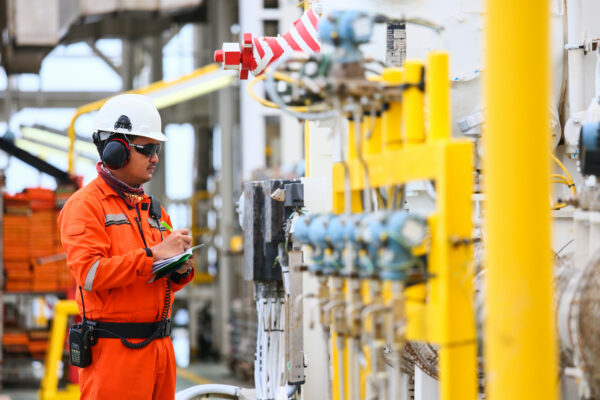
Industrial environments generate a complex mix of airborne contaminants, including dust, fumes, volatile organic compounds (VOCs), oil aerosols, combustion byproducts, moisture, and biological contaminants. Some threaten employee health. Others compromise product quality, damage equipment, or jeopardize regulatory compliance. Without a structured testing program, many of these risks remain invisible until they trigger an incident, audit failure, customer complaint, or costly operational disruption.
That’s why industrial air quality testing has become a critical component of modern environmental health and safety (EHS) programs. Effective testing helps organizations understand worker exposure, verify compressed air purity, evaluate HVAC performance, identify contamination sources, and generate the documentation needed to satisfy regulators, auditors, and customers.
In this guide, we’ll explain what industrial air quality testing is, how it supports compliance and workforce protection, the technologies used to monitor air quality, and what to look for when selecting an accredited testing partner.
Key Takeaways
- Industrial air quality testing covers multiple air streams. Effective programs evaluate workplace air, compressed air, process gases, and HVAC-distributed air because each presents unique compliance, safety, and operational risks.
- Air quality failures can have serious consequences. Poor air quality can contribute to OSHA citations, failed audits, product contamination, equipment damage, worker illnesses, and costly production disruptions.
- Monitoring sensors and laboratory testing serve different purposes. Sensors provide real-time visibility and trend data, while ISO 17025-accredited laboratory testing delivers the defensible results required for compliance, audits, and regulatory reporting.
- Industrial hygiene testing is essential for protecting workers. Personal exposure monitoring and workplace air sampling help organizations assess risks, validate controls, and demonstrate due diligence under OSHA requirements.
- Accreditation and independence matter when choosing a testing partner. ISO 17025 accreditation, A2LA recognition, validated sampling protocols, and audit-ready reporting help ensure results are accurate, credible, and suitable for regulatory review.
What Is Industrial Air Quality Testing and Why Does It Matter
Industrial air quality testing is the systematic measurement, analysis, and evaluation of airborne contaminants within manufacturing, processing, warehousing, and other industrial environments. Its purpose is to identify potential health, safety, compliance, and operational risks associated with airborne particles, gases, vapors, and biological contaminants.
Unlike general indoor air quality assessments, industrial air quality testing focuses on complex environments where workers, equipment, products, and processes can all be affected by air quality conditions. Effective testing programs help organizations:
- Understand exposure risks
- Verify environmental controls
- Maintain regulatory compliance
- Support uninterrupted operations
Industrial facilities typically require monitoring across three distinct air streams:
- Ambient workplace air: Refers to the air employees breathe while performing their duties. Testing may evaluate exposure to dust, fumes, VOCs, gases, metal particulates, silica, mold, and other airborne hazards.
- Compressed air and process gas: These often come into direct contact with products, packaging, equipment, or critical manufacturing processes. Contamination from oil aerosols, moisture, particulates, microorganisms, or chemical residues can compromise product quality, damage equipment, and create compliance concerns.
- HVAC-distributed air: Consists of the conditioned and recirculated air moving throughout a facility. Testing evaluates how effectively ventilation, filtration, and air handling systems maintain healthy indoor conditions. Poor HVAC performance can contribute to contaminant migration, uneven airflow, elevated particulate levels, and reduced indoor environmental quality across production and occupied spaces.
Regulations for Industrial Indoor Air Quality
Understanding the key regulations governing industrial environments helps organizations develop testing programs that reduce risk, support compliance efforts, and demonstrate due diligence during inspections and audits.
OSHA’s Role in Workplace Air Standards
OSHA regulates workplace air quality through the General Duty Clause and substance-specific Permissible Exposure Limits (PELs) under 29 CFR 1910.1000. These limits establish acceptable worker exposure levels for airborne contaminants such as:
- Silica
- Metal fumes
- Solvents
- Hazardous gases
Because OSHA enforcement is often triggered by employee complaints, incidents, illnesses, or inspections, many organizations don’t discover air quality issues until a problem occurs. Industrial hygiene sampling data frequently serves as the foundation for OSHA enforcement actions and exposure investigations.
ISO, ANSI, and Industry-Specific Standards
Beyond OSHA requirements, many facilities must comply with additional standards governing compressed air quality and indoor environmental conditions.
ISO 8573-1 establishes compressed air purity classifications for particulates, moisture, and oil content, helping organizations verify that compressed air is suitable for specific applications. Industries such as pharmaceuticals, food and beverage manufacturing, and medical device production often rely on ISO 8573-1 testing to satisfy quality and audit requirements.
ANSI and ASHRAE standards guide ventilation, filtration, airflow management, and indoor environmental quality within industrial facilities.
Many regulated industries, including pharmaceutical, food and beverage, aerospace, electronics, and medical device manufacturing, impose additional requirements beyond baseline OSHA and ISO frameworks.
| Regulatory Body | Standard/Regulation | Applies To | Key Requirement | Enforcement Mechanism |
| OSHA | Occupational Safety and Health Act / OSHA Standards (29 CFR 1910) | Most private-sector employers and workplaces | Maintain worker exposures below applicable Permissible Exposure Limits (PELs) and provide a safe workplace | Workplace inspections, citations, fines, and corrective action orders |
| EPA | Clean Air Act (CAA) | Facilities with air emissions that may impact the environment | Control and report regulated air emissions; obtain required permits | Permits, inspections, enforcement actions, and civil penalties |
| ISO | ISO 8573 | Compressed air systems used in manufacturing and industrial processes | Meet specified compressed air purity classes for particles, water, and oil | Customer audits, certification requirements, and quality management programs |
| FDA | Current Good Manufacturing Practices (cGMP) | Pharmaceutical, biotechnology, food, and medical device manufacturers | Maintain controlled environments that prevent contamination and protect product quality | FDA inspections, warning letters, product recalls, and enforcement actions |
| State Environmental Agencies | State Air Quality Regulations | Facilities operating within state jurisdictions | Comply with state-specific emissions, monitoring, and reporting requirements | Permitting programs, inspections, fines, and enforcement orders |
| Local Air Quality Districts | Regional Air Quality Rules and Permits | Facilities located within local air districts | Meet local emissions limits, monitoring requirements, and permit conditions | Local inspections, permit enforcement, and monetary penalties |
Indoor Air Quality in Industrial Facilities: Key Contaminants and Sources
Industrial environments contain numerous airborne contaminants that can affect worker safety, product quality, and operational performance.
Common Airborne Contaminants in Manufacturing Environments
- Particulates and respirable dust: Activities such as grinding, cutting, sanding, machining, welding, and material handling can generate airborne dust and fine particles that remain suspended in the air for extended periods. Respirable particles are small enough to penetrate deep into the lungs. Metalworking operations may produce metallic dusts and fumes, while woodworking facilities often generate fine wood dust that can create both respiratory hazards and combustible dust risks.
- Oil aerosols and hydrocarbons: These are commonly generated in machining operations, compressed air systems, pneumatic equipment, and manufacturing processes that utilize lubricants or coolants. In compressed air systems, oil contamination may originate from compressor lubricants or downstream equipment. Excessive oil aerosols can affect product quality, damage sensitive equipment, contaminate manufacturing processes, and create worker exposure concerns.
- Moisture and biological growth: Sources may include HVAC systems, cooling towers, condensate buildup, process water systems, roof leaks, and poorly controlled humidity levels. Excess moisture creates conditions that support mold growth, bacterial proliferation, and other biological contaminants. These contaminants affect worker comfort, increase health risks, and compromise environmental controls.
- Gases and VOCs: Industrial operations frequently generate gases, vapors, and volatile organic compounds (VOCs) through manufacturing processes. Common sources include welding operations, chemical processing, painting and coating applications, cleaning solvents, adhesives, fuel storage, and various production activities.
- Carbon monoxide and combustion byproducts: Facilities that utilize forklifts, generators, boilers, furnaces, diesel-powered equipment, or combustion-based processes must carefully monitor for carbon monoxide and related combustion byproducts. Carbon monoxide is particularly hazardous because it is colorless, odorless, and difficult to detect without specialized monitoring equipment.
How Contaminants Enter the Air Supply
Airborne contaminants don’t respect boundaries. They love to spread across multiple areas of a facility, which means testing everywhere is absolutely essential.
- Point-source generation: Manufacturing processes such as welding, machining, grinding, mixing, or chemical handling can release contaminants directly into the surrounding air. Without effective local exhaust ventilation or source controls, these pollutants can spread into adjacent work areas.
- HVAC system distribution: These ventilation systems are designed to improve air quality, but when they’re unbalanced, poorly filtered, or not maintained, they can spread contaminants through a building instead.
- Compressed air system contamination: Air compressors draw in ambient air from their surroundings, meaning contaminants present near compressor intakes can be introduced into the compressed air stream. If filtration and treatment systems are inadequate, contaminants such as particulates, moisture, oil aerosols, and airborne chemicals may ultimately reach production equipment, products, or critical processes.
- Cross-contamination between operations: Activities occurring in one production area can affect neighboring spaces through airflow patterns, pressure imbalances, open doors, shared ventilation systems, or employee movement.
Contamination can travel in unexpected ways, which is why air quality testing needs to follow a plan rather than just respond to problems. Testing one spot only tells you about that one spot. A thorough approach covers multiple areas, air sources, and conditions across the facility, giving you a full picture of where risks exist. This helps you find hidden issues, decide what to fix first, and keep operations safer and up to code.
Industrial Air Quality Monitoring: Technologies and Approaches

Industrial air quality monitoring combines real-time surveillance with accredited laboratory analysis to provide a complete understanding of facility conditions.
Industrial Air Quality Sensors: What They Measure and Where They Fall Short
Industrial air quality sensors have become increasingly popular as organizations seek continuous visibility into workplace conditions. These devices provide real-time monitoring capabilities that can detect changes in air quality, trigger alerts, and help facility managers respond quickly to emerging concerns.
Depending on the application, facilities may deploy several different sensor technologies:
- Photoionization detectors (PIDs) are commonly used to monitor VOCs) and certain hazardous gases. PIDs use ultraviolet light to ionize airborne compounds, producing a measurable electrical signal that correlates with contaminant concentration.
- Electrochemical sensors are widely used for detecting specific gases such as carbon monoxide, hydrogen sulfide, sulfur dioxide, oxygen, and nitrogen dioxide. They’re frequently installed in confined spaces, mechanical rooms, manufacturing facilities, and areas where combustion-related hazards may be present.
- Optical particle counters (OPCs) use laser-based technology to detect and quantify airborne particles. These systems are commonly deployed in cleanrooms, pharmaceutical manufacturing environments, electronics production facilities, and industrial workplaces where particulate contamination is a concern.
- Infrared gas analyzers (often called NDIR, or Non-Dispersive Infrared) measure gas concentrations by detecting how specific gases absorb infrared light. These instruments are commonly used for monitoring carbon dioxide, methane, carbon monoxide, and other industrial gases.
These tools are useful, but they don’t replace lab testing. Monitors give estimates based on sensors and calibration, while accredited labs deliver precise, validated results using standardized methods. Lab results hold up to regulatory review, support compliance reporting, and satisfy audit requirements.
Industrial Air Quality Monitor vs. Laboratory Analysis: Choosing the Right Tool
Industrial air quality monitors and laboratory testing aren’t competing approaches. In reality, they serve complementary functions.
Industrial air quality monitors serve as first-line surveillance tools, while laboratory analysis provides the validated data required for regulatory compliance, root-cause investigations, and audit documentation.
| Technology | What It Detects | Strengths | Limitations | Best Use Case |
| PID | VOCs and certain hazardous gases | Real-time detection, highly sensitive to VOCs, portable and responsive | Does not identify specific compounds, requires calibration, susceptible to environmental factors | Continuous monitoring in chemical processing, coating, and solvent-handling operations |
| Electrochemical Sensor | Specific gases such as CO, H₂SSO₂ O₂ NO₂ | High sensitivity and selectivity for target gases, cost-effective, suitable for fixed installations | Limited lifespan, cross-sensitivity to other gases, requires routine maintenance | Worker safety monitoring, confined spaces, combustion-related hazard detection |
| OPC | Airborne particles and particulate matter by size and concentration | Real-time particulate monitoring, particle sizing capability, useful for contamination control | Cannot identify particle composition, performance affected by humidity and particle characteristics | Cleanrooms, pharmaceutical manufacturing, electronics production, dust monitoring |
| NDIR | CO₂CH₄CO | Accurate, stable, continuous monitoring with minimal drift | Limited to gases that absorb infrared light, higher equipment cost | Fixed environmental monitoring systems and process control applications |
| Accredited Laboratory Analysis (ISO 17025) | Particulates, gases, VOCs, oil aerosols, moisture, biological contaminants, and other analytes depending on test method | Quantified, validated, legally defensible results suitable for audits and regulatory reporting | Not continuous, requires sample collection and laboratory turnaround time | Compliance verification, regulatory reporting, certification audits, root-cause investigations |
The most effective air quality programs combine continuous monitoring with periodic accredited testing. Regulators and auditors typically require laboratory-generated data, making sensor readings alone insufficient for compliance documentation.
Industrial Air Quality Monitoring Services: The Case for Third-Party Independence
Even facilities with sophisticated internal monitoring programs often rely on independent industrial air quality monitoring services to validate results and provide objective documentation.
Third-party testing organizations offer a level of credibility that internal monitoring programs can’t always provide. Because they have no stake in the outcome of the assessment, independent testing providers deliver unbiased results that can be presented confidently to regulators, auditors, customers, certification bodies, and other stakeholders.
Accreditation is another critical factor. Laboratories operating under ISO 17025:2017 accreditation must demonstrate technical competence, validated testing methods, rigorous quality controls, and ongoing proficiency verification. Accreditation provides assurance that sampling procedures, analytical methods, reporting practices, and quality systems meet internationally recognized standards.
TRI Air Testing’s ISO 17025 and A2LA accreditations back up every result they report. These credentials confirm the lab meets strict quality standards and that results are accurate, traceable, and accepted for regulatory, audit, and certification use.
For organizations that depend on reliable air quality data to support worker safety, product quality, and compliance objectives, independent third-party testing provides a level of assurance that internal monitoring alone cannot deliver. The result is audit-ready documentation, defensible compliance records, and greater confidence in the decisions made based on air quality data.
Industrial Hygiene Air Quality Testing: Protecting Your Workforce
Industrial air quality testing often focuses on compliance, equipment protection, and product quality, but one of its most important functions is safeguarding employee health. By measuring employee exposure to airborne hazards and comparing those results against established occupational exposure limits, industrial hygiene testing helps organizations make informed decisions about workplace safety, engineering controls, and regulatory compliance.
What Industrial Hygiene Testing Covers
Industrial hygiene air quality testing encompasses a range of sampling and analytical methods designed to evaluate employee exposure under actual working conditions. The goal isn’t to determine whether contaminants are present, but to understand who is being exposed, at what levels, and under what circumstances.
Common industrial hygiene testing methods include:
- Personal breathing zone sampling: Sampling equipment is attached directly to an employee and positioned within the breathing zone, typically within a few inches of the nose and mouth. As employees perform their normal job duties, the sampling device collects airborne contaminants that represent the workers’ actual exposure throughout the sampling period.
- Area sampling: Measures airborne contaminant concentrations at fixed locations throughout a facility. These samples help identify contamination sources, evaluate the effectiveness of ventilation systems, assess environmental conditions in specific work areas, and determine how contaminants migrate through a facility.
- Bulk material analysis: Involves testing raw materials, process materials, settled dusts, insulation, coatings, or other substances to determine their composition and potential hazards. This testing can help identify the source of airborne contaminants and support exposure assessments when hazardous materials may be present.
- Surface wipe testing: Evaluates contamination that has settled onto work surfaces, equipment, tools, and other areas throughout a facility. Wipe testing is commonly used to assess contamination from metals, hazardous chemicals, and other substances that may create secondary exposure pathways through skin contact or inadvertent ingestion.
Testing results are compared against OSHA Permissible Exposure Limits (PELs) and other occupational exposure criteria. Organizations use this data to evaluate engineering controls, verify workplace safety measures, and document due diligence during inspections, investigations, or workers’ compensation claims.
Sampling Methods and Chain of Custody
The accuracy of any industrial hygiene assessment depends on far more than laboratory analysis alone. Reliable results begin with proper sampling methodology in the field.
Several factors play a critical role in generating valid air quality data.
- Sample media selection: Different contaminants require different collection methods and media. Dusts, fibers, metals, VOCs, gases, and biological contaminants each have specific sampling requirements. Selecting the wrong media can result in inaccurate measurements, incomplete contaminant capture, or laboratory analysis limitations.
- Flow rate calibration: Sampling pumps must be calibrated to the correct flow rate before and after sample collection. Improper flow rates can significantly affect contaminant loading and ultimately compromise the accuracy of reported concentrations.
- Sampling duration: Sampling duration must align with the assessment objective and applicable regulatory requirements. Some evaluations require full-shift sampling to determine time-weighted average exposures, while others may focus on short-term tasks or peak exposure events. Insufficient sampling duration can lead to misleading conclusions about actual worker exposure.
- Chain of custody documentation: Chain of custody records are particularly important when results may be used for regulatory compliance, legal proceedings, certification audits, or occupational exposure investigations. Without proper documentation, even technically accurate laboratory results may be challenged or deemed inadmissible.
Errors during sample collection can invalidate results regardless of laboratory quality. TRI Air Testing’s patented sampling equipment and field-validated protocols help minimize collection errors and improve data reliability, ensuring clients receive defensible results that support critical health and compliance decisions.
Industrial Air Quality Testing Services: What to Look for in a Partner
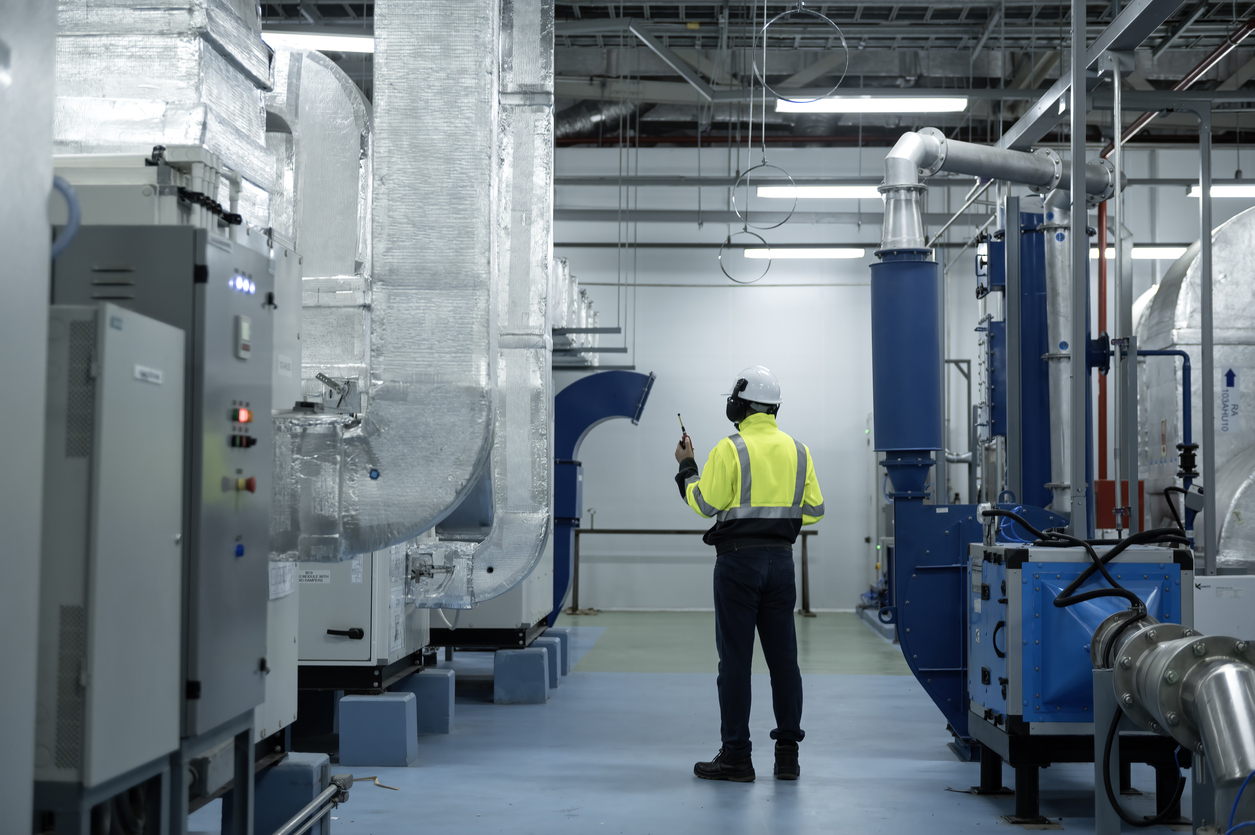
The quality of your testing partner directly affects the reliability of your data, the defensibility of your compliance documentation, and your ability to make informed decisions about worker safety, product quality, and operational risk.
Selecting the right testing partner can mean the difference between actionable results and costly uncertainty.
Accreditation Is Non-Negotiable
ISO 17025:2017 accreditation verifies a laboratory’s technical competence, validated methods, and ability to generate accurate, repeatable results. A2LA accreditation provides additional independent verification through rigorous technical assessments.
This differs significantly from ISO 9001 certification, which evaluates quality management systems but does not assess laboratory testing proficiency. When results are submitted to regulators, auditors, or customers, ISO 17025 accreditation is the standard that matters.
Flexibility That Fits Your Operation
Not every testing project requires a full on-site engagement. Customer-collected sampling kits allow facilities to collect samples according to validated procedures and submit them to TRI Air Testing for accredited laboratory analysis.
This approach reduces scheduling challenges, lowers costs, and provides greater flexibility without compromising analytical quality.
Reporting That Explains, Not Just Enumerates
The most valuable testing reports do more than present analytical results. They explain what was found, how results compare to applicable limits, and whether corrective action may be necessary.
TRI Air Testing’s reports are designed to serve as audit-ready documentation, helping organizations demonstrate compliance, communicate findings clearly, and make informed decisions based on reliable data.
Conclusion
Industrial air quality testing does more than satisfy a compliance requirement. It protects employee health, product quality, operational reliability, and your standing with regulators. A solid testing strategy, covering workplace air, compressed air, hygiene assessments, and HVAC evaluations, helps you catch problems before they become costly.
As regulations tighten and facilities grow more complex, accurate and defensible data matters more than ever. The right testing partner brings both accredited lab analysis and the expertise to help you interpret results, prepare for audits, and make confident decisions.
Ready to strengthen your air quality compliance program? Contact TRI Air Testing today to discuss your testing requirements and learn how our accredited air quality testing services can help protect your workforce, products, and operations.

Related Articles

Compressed Air Quality in Manufacturing
Compressed air systems consume a significant portion of the electricity used by manufacturing plants. A...
A Video is Worth a Thousand Pictures
Standardization is critical for manufacturing. A bolt made in Germany must fit perfectly with the...
Clean Compressed Air Is Beautiful
Did you know that the multi-billion dollar cosmetics industry is a huge compressed air user?...
